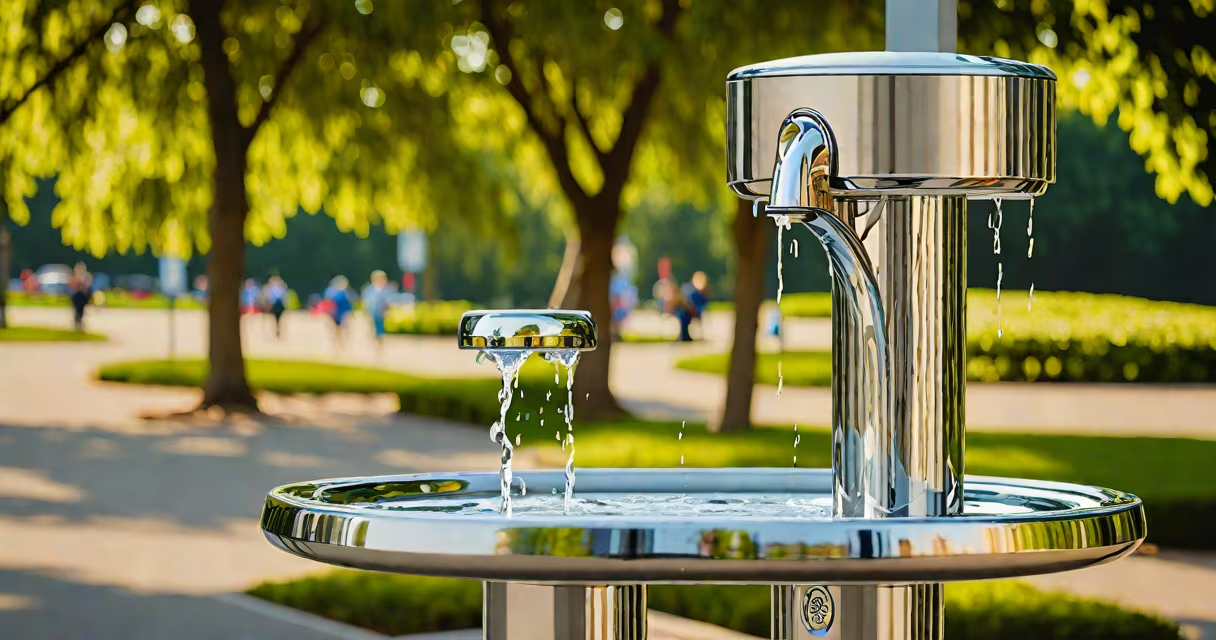
A drinking water fountain is a public fixture designed to deliver clean, drinkable water directly from a municipal supply or on-site filtration system. These units are installed in schools, parks, transit hubs, and office buildings to support hydration and reduce single-use plastic waste.
Most drinking water fountains operate via gravity-fed or pressurized systems. Water enters through a dedicated pipe connected to the building's plumbing or a filtered reservoir. A valve opens when a user presses a lever or activates a motion sensor, releasing a stream into a cup or directly into the mouth. The flow stops automatically when pressure is released.
According to the Centers for Disease Control and Prevention (CDC), public drinking fountains must meet NSF/ANSI Standard 61 for materials that come into contact with drinking water. This standard ensures components like valves, seals, and internal surfaces don't leach lead, copper, or other contaminants into the water supply.
Water flows from the main supply line into a distribution chamber beneath the fountain's basin. From there, it travels through a filter-commonly activated carbon or reverse osmosis-to remove chlorine, sediment, and heavy metals. The filtered water then moves to a storage tank or directly to the dispensing nozzle.
Touchless models use infrared sensors to detect hand movement near the spout. When a hand is detected, the valve opens. After a set delay, usually 3-5 seconds, the flow stops. This design reduces surface contamination and is especially effective in high-traffic areas like airports and hospitals.
Some fountains include temperature control. Cold water fountains use a refrigerated coil to cool water to 4°C (39°F). Warmer models may incorporate heat exchangers for hot water, though these are less common in public settings due to safety concerns.
Drinking water fountains vary by function, location, and design. The most common types are:
| Type | Best For | Key Features |
|---|---|---|
| Standard Pull-Down | Schools, offices | Manual lever, low maintenance, affordable |
| Touchless Sensor | Hospitals, transit stations | Hands-free operation, reduced germ transmission |
| Multiple Spouts | Parks, stadiums | Simultaneous access for multiple users |
| Hydration Stations | Gyms, universities | Integrated bottle fillers, LED indicators, Wi-Fi connectivity |
Materials used in construction include stainless steel, cast iron, and reinforced polymer. Stainless steel is preferred in public installations because it resists corrosion, supports easy cleaning, and complies with FDA food-contact standards. Units with visible rust or flaking paint should be avoided-they indicate internal degradation and potential contamination risk.
Non-obvious fact: Many older fountains in U.S. cities still use lead solder in joints. The Environmental Protection Agency (EPA) reports that even low levels of lead in water can impair cognitive development in children. Regular testing is required under the Lead and Copper Rule Revisions (LCRR) for all public water systems.
Public drinking water fountains serve as infrastructure for equitable access to safe hydration. In urban centers, they reduce reliance on bottled water, which contributes to plastic pollution. The United Nations estimates that over 8 million tons of plastic enter oceans annually-fountains help mitigate this by promoting reusable bottles.
During heatwaves, fountains become critical resources. In Phoenix, Arizona, city officials deployed 120 mobile fountains during summer months to assist homeless populations. Each unit dispensed 15 gallons per hour and was monitored remotely for usage and maintenance alerts.
At schools, fountains support student health. A 2022 study published in *The Journal of School Health* found that students in schools with accessible fountains drank 2.3 times more water daily than those without. Higher hydration levels correlated with improved concentration and reduced absenteeism.
Many people assume all public fountains provide safe water. That's not true. A 2021 investigation by the Environmental Working Group (EWG) tested 300 fountains across 15 states. Results showed 14% had detectable levels of E. coli-bacteria linked to gastrointestinal illness. Sources included faulty seals, stagnant water, and poor maintenance schedules.
Another misconception: "Fountains are sterile." In reality, biofilm-a slimy layer of microorganisms-can form inside pipes. The CDC warns that biofilm can harbor pathogens like Legionella and Pseudomonas. Regular flushing and quarterly disinfection are essential to prevent outbreaks.
I once inspected a fountain in a downtown library that had been inactive for six weeks. After turning it on, a thick film of greenish residue coated the spout. Testing revealed E. coli above EPA limits. The unit was shut down until repairs and chlorination were completed. This incident underscores that appearance doesn't reflect safety.
When using a drinking water fountain, look for:
If a fountain is located near a restroom or trash bin, avoid it. Proximity increases exposure to airborne bacteria and cross-contamination. Always wash hands before use.
Drinking water fountains are more than convenience features-they are important public health tools. Their effectiveness depends on consistent maintenance, transparent reporting, and user awareness. When properly managed, they reduce environmental impact, promote wellness, and ensure access to clean water for all.