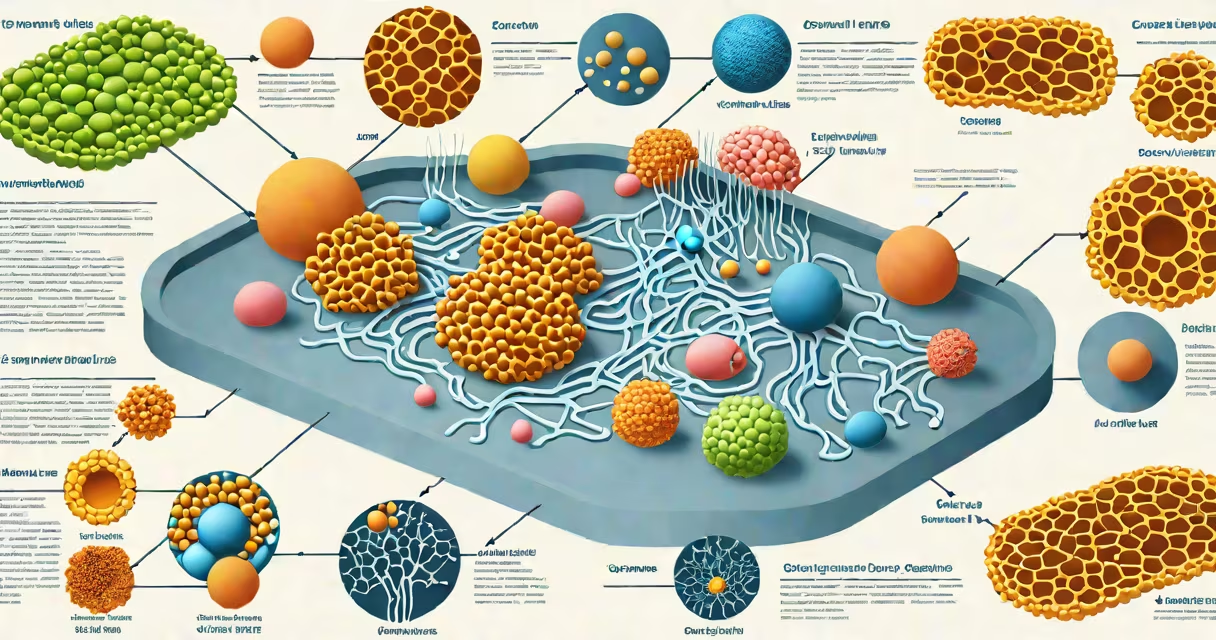
An organelle is a membrane-bound structure within a eukaryotic cell that performs a specific function essential to cellular operation. These components include the nucleus, mitochondria, lysosomes, and Golgi apparatus, each contributing to processes like protein synthesis, energy conversion, and waste management.
Organelles exist only in eukaryotic cells-organisms whose cells have a defined nucleus and internal membranes. Prokaryotes like bacteria lack organelles, relying instead on simpler internal arrangements. This distinction defines the complexity difference between single-celled eukaryotes such as yeast and prokaryotes like *Escherichia coli*.
Each organelle operates under precise biochemical control. For example, the mitochondrion generates ATP through oxidative phosphorylation, while the lysosome uses acidic enzymes to break down cellular debris. Without these specialized units, multicellular life as we know it could not exist.
Organelles maintain internal environments distinct from the cytoplasm. They achieve this through lipid bilayer membranes that regulate molecular passage. The nuclear envelope, for instance, contains pores that allow selective transport of RNA and proteins between the nucleus and cytoplasm.
Communication between organelles occurs via vesicle trafficking. A protein synthesized in the rough endoplasmic reticulum is packaged into a vesicle, transported to the Golgi apparatus for modification, then sent to its final destination-such as the plasma membrane or lysosome. This system ensures accuracy and efficiency in cellular logistics.
Disruption of organelle function leads to disease. Mutations affecting mitochondrial DNA cause disorders like Leigh syndrome, which presents with progressive neurological decline due to impaired energy production. According to the National Institutes of Health, mitochondrial diseases affect approximately 1 in 5,000 individuals.
The following table outlines the primary organelles found in animal and plant cells, their roles, and structural features.
| Organelle | Primary Function | Key Structural Features |
|---|---|---|
| Nucleus | Stores genetic material; controls gene expression | Double membrane with nuclear pores; contains chromatin |
| Mitochondria | Produces ATP via aerobic respiration | Double membrane; inner membrane folded into cristae |
| Lysosome | Degrades waste materials and pathogens | Single membrane; acidic interior (pH ~5) |
| Golgi Apparatus | Modifies, sorts, and packages proteins | Stacked flattened sacs (cisternae) |
| Endoplasmic Reticulum (ER) | Protein and lipid synthesis | Rough ER has ribosomes; smooth ER lacks them |
Plant cells contain additional organelles absent in animal cells. Chloroplasts, for example, conduct photosynthesis using chlorophyll. They possess their own circular DNA and double membranes, suggesting evolutionary origins from symbiotic cyanobacteria-a concept supported by the endosymbiotic theory.
A common misconception is that all organelles are membrane-bound. Some structures, like ribosomes and centrosomes, are not enclosed by membranes yet still qualify as functional organelles in a broader biological sense. However, strictly speaking, the term "organelle" applies only to membrane-enclosed units in eukaryotes.
Many assume organelles are static entities. In reality, they dynamically change shape, location, and composition. Mitochondria fuse and divide continuously in response to energy demands. This process, called mitochondrial dynamics, is regulated by proteins such as Drp1 and mitofusins.
Another error is equating organelles with entire cell systems. The cytoskeleton, for example, provides structural support and enables intracellular transport but is not classified as an organelle because it lacks a membrane. Similarly, the nucleolus-responsible for ribosome assembly-is a substructure within the nucleus, not a standalone organelle.
One non-obvious fact: some organelles can move independently. In neurons, mitochondria travel along axons via motor proteins like kinesin and dynein. This movement ensures energy delivery to synapses, which require high ATP levels during signal transmission. Disruptions in this transport contribute to neurodegenerative diseases such as Alzheimer's and Parkinson's.
Tay-Sachs disease results from a deficiency in hexosaminidase A, an enzyme normally housed in lysosomes. Without this enzyme, GM2 gangliosides accumulate in neuronal cells, leading to progressive paralysis and early death. The condition affects about 1 in 300,000 live births in the general population but rises to 1 in 3,600 among Ashkenazi Jews due to founder mutations.
Diagnosis involves measuring enzyme activity in white blood cells. Treatment remains largely supportive, though experimental approaches like enzyme replacement therapy and gene therapy are being tested. This case illustrates how a single organelle malfunction can cascade into systemic failure.
Understanding the definition of an organelle reveals the precision of cellular design. Each unit evolved to handle a narrow task, enabling complex organisms to thrive. From energy production to waste processing, organelles form the foundation of cellular life.