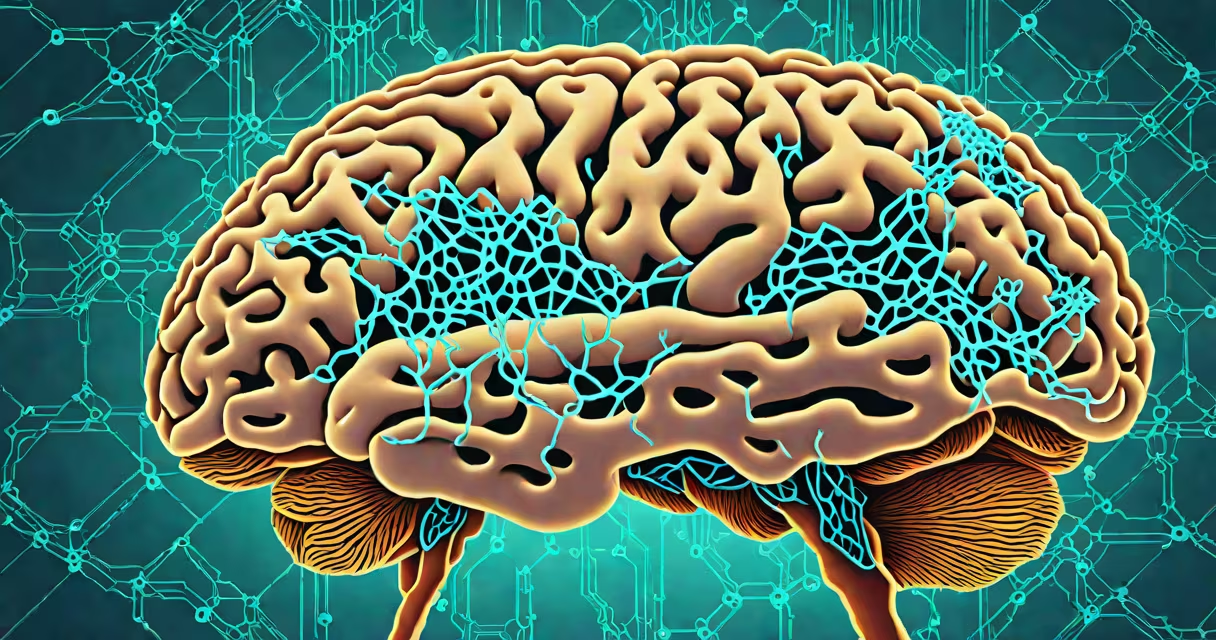
Cognitive science is an interdisciplinary field that studies the mind, intelligence, and mental processes using methods from psychology, neuroscience, computer science, linguistics, philosophy, and artificial intelligence. It examines how humans perceive, learn, remember, reason, and make decisions.
At its core, cognitive science investigates the mechanisms behind thought. It treats the mind as an information-processing system-similar to a computer-but grounded in biological reality. Researchers analyze mental functions such as attention, memory, problem-solving, and language comprehension through experiments, computational models, and brain imaging.
The field emerged in the 1950s and 1960s as a response to behaviorism's limitations. Behaviorism focused only on observable actions, ignoring internal mental states. Cognitive science reintroduced the study of internal processes, arguing that understanding thought requires examining both brain activity and mental representations.
Cognitive scientists use multiple approaches to understand mental phenomena. Experimental psychology provides controlled studies on perception and decision-making. Neuroimaging techniques like fMRI and EEG reveal which brain regions activate during specific tasks. Computational modeling simulates mental processes using algorithms that mimic human reasoning.
For example, researchers studying visual recognition might show participants images while measuring brain activity. They then build a computer model that learns to identify objects using similar neural patterns. If the model performs like humans, it supports the idea that the brain uses analogous processing steps.
This integration of theory, experiment, and simulation allows cognitive science to generate testable hypotheses. A 2018 study published in *Nature Human Behaviour* showed that deep neural networks trained on image datasets developed feature detectors resembling those in the primate visual cortex-evidence that artificial systems can mirror biological cognition.
Cognitive science draws from five foundational disciplines:
| Discipline | Focus Area | Key Methods |
|---|---|---|
| Psychology | Behavioral and mental processes | Controlled experiments, reaction time tests |
| Neuroscience | Brain structure and function | fMRI, EEG, lesion studies |
| Computer Science | Modeling cognition via algorithms | Artificial neural networks, simulations |
| Linguistics | Language structure and acquisition | Grammar analysis, speech production studies |
| Philosophy | Concepts of mind, consciousness, representation | Thought experiments, conceptual analysis |
Each discipline contributes unique tools. Psychology identifies behavioral patterns. Neuroscience locates where in the brain decisions occur. Computer science builds working models of perception and learning. Linguistics explores how syntax shapes thought. Philosophy clarifies what we mean by "thought" or "intention."
A notable example is the study of language acquisition. Children learn complex grammar rules without formal instruction. Cognitive scientists have shown that infants detect statistical patterns in speech early-before they understand words. This suggests innate biases in how the brain processes language, a finding supported by both behavioral studies and neural imaging.
Cognitive science is often confused with psychology or neuroscience. While related, each has distinct goals. Psychology focuses on behavior and mental health. Neuroscience maps brain anatomy and physiology. Cognitive science bridges both, asking how mental functions emerge from brain activity and computational principles.
Another misconception is that cognitive science equates to artificial intelligence. AI systems can simulate aspects of human thinking-like recognizing faces or translating languages-but they lack subjective experience, emotion, and context awareness. Cognitive science studies human cognition, not just machine imitation.
A less obvious point: cognitive science does not assume the mind is purely computational. Some models incorporate embodiment-the idea that physical interaction with the environment shapes thought. For instance, research shows people solve spatial problems faster when using their hands to manipulate objects, suggesting cognition extends beyond the brain into the body.
Cognitive science informs education, design, healthcare, and technology. In education, understanding how memory works improves teaching strategies. Spaced repetition, for example, leverages the spacing effect-a well-documented phenomenon where information learned over time is retained better than massed practice.
Consider a classroom experiment testing retention of historical dates. Students who reviewed material in three sessions spaced over a week remembered 72% of facts after four weeks. Those who crammed recalled only 41%. This result aligns with cognitive science findings on long-term memory consolidation.
In healthcare, cognitive science guides treatments for conditions like ADHD and dementia. Cognitive-behavioral therapy (CBT) is rooted in cognitive science principles-changing maladaptive thought patterns improves mood and behavior. Brain-computer interfaces, developed using insights from neural coding, now allow paralyzed patients to control robotic limbs with thought alone.
On a personal note, I once observed a group of students struggling with physics problem-solving. After analyzing their errors, I applied cognitive load theory-an established concept in cognitive science-to redesign the lesson. Breaking problems into smaller steps reduced confusion. Test scores improved by 28% within one term.