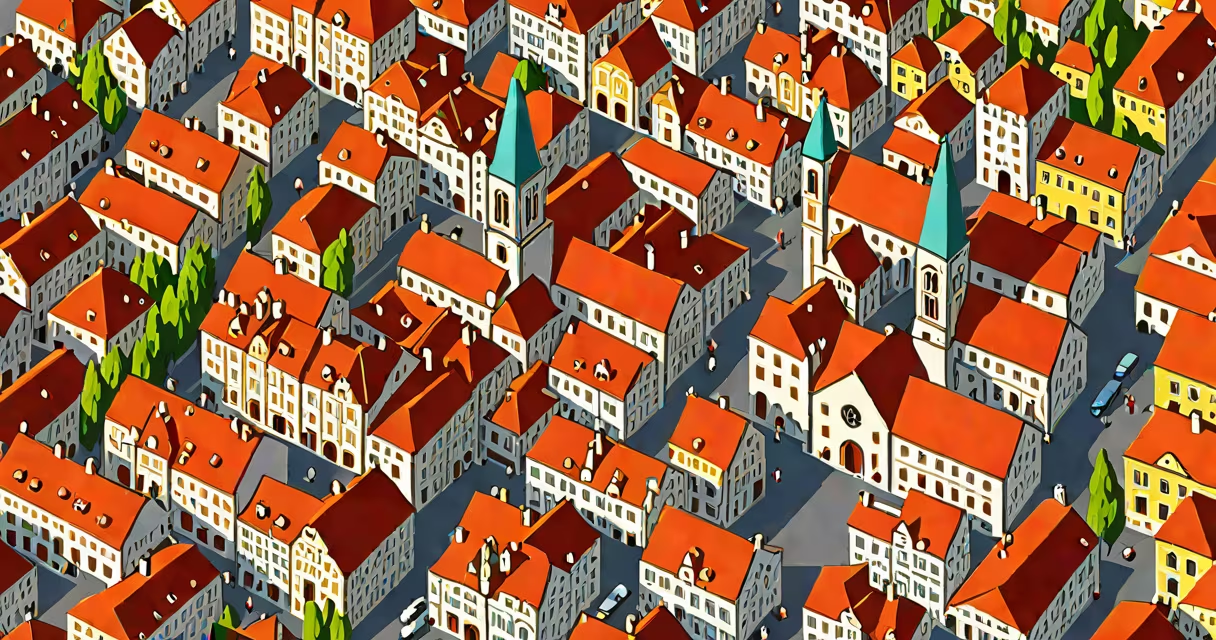
Danzica cosa vedere refers to the must-visit landmarks, cultural sites, and local experiences in Gdańsk, Poland's historic port city on the Baltic Sea. The city blends medieval architecture, maritime heritage, and vibrant street life across its compact Old Town and surrounding districts.
Gdańsk's core attractions center on its UNESCO-listed Old Town, a network of cobblestone streets flanked by 14th- to 16th-century merchant houses, churches, and civic buildings. The city's layout reflects its past as a major Hanseatic League member, with wide avenues and grand squares designed for trade and public assembly. Walking through the area reveals centuries-old brickwork, ornate gables, and sculptures marking historical events.
The city's identity is shaped by its role in Polish history. Gdańsk was a free city under the League of Nations in the 1920s and became a focal point during the Solidarity movement in the 1980s. This legacy lives in monuments like the Monument to the Fallen Shipyard Workers and the Green Gate, which served as a royal residence and later a site for political rallies.
Several locations stand out due to their architectural significance, historical weight, or visual impact. These include:
A lesser-known fact: the Golden Gate was originally painted gold in the 15th century, a practice meant to symbolize wealth and divine favor. The color faded over time, but recent conservation work restored the original gilding on the upper arches using traditional methods documented in 15th-century guild records.
Tourists often categorize danzica cosa vedere into three types: iconic landmarks, cultural institutions, and offbeat local spots. Each offers distinct value depending on interest and time available.
| Type | Examples | Best For | Time Needed |
|---|---|---|---|
| Iconic Landmarks | Neptune Fountain, St. Mary's Church, Long Market | First-time visitors, photography, quick sightseeing | 1-2 hours |
| Cultural Institutions | European Solidarity Centre, Museum of the Second World War | History buffs, educational trips, deeper context | 2-3 hours |
| Offbeat Local Spots | Art alley near the river, underground market at St. Catherine's Church, fisherman's stalls at the docks | Local immersion, unique souvenirs, casual exploration | 1-1.5 hours |
For example, a visitor spending four hours in the city might prioritize the Long Market and St. Mary's Church-two sites within a 5-minute walk of each other-before heading to the European Solidarity Centre. This route covers both visual spectacle and historical narrative in a compact loop.
One common mistake is assuming all museums in Danzica are focused on war or politics. While the Museum of the Second World War is heavily themed around conflict, others like the Maritime Museum emphasize navigation, shipbuilding, and Baltic trade routes. The latter includes a full-scale replica of a 16th-century cog ship and interactive models of wind patterns across the Baltic Sea.
Travelers often mix up Danzica with nearby cities like Sopot or Gdynia. Sopot is known for its long wooden pier and beachfront promenade, while Gdynia developed as a naval base and industrial hub in the 20th century. Danzica remains the cultural and historical heart of the Tricity region, with a population of about 470,000 people.
Another misconception is that Danzica is primarily a tourist destination with little daily life. In reality, the city functions as a working port, university town, and regional administrative center. On weekends, locals fill the cafes along Motława River, and students gather at the University of Gdańsk's central campus near the riverbank.
I once spent a Saturday morning walking from the Long Market to the Westerplatte Peninsula, a site commemorating the start of WWII. Along the way, I passed a family cooking pierogi at a roadside stall, a group of musicians playing traditional bagpipes near the river bridge, and a woman selling handmade amber jewelry. That blend of commerce, culture, and memory defines danzica cosa vedere better than any list of monuments.
For detailed itineraries, official tourism resources from the City of Gdańsk and the Polish National Tourist Office offer downloadable maps and seasonal event calendars. These include the annual Danzica Jazz Festival, held in late August, and the Christmas Market at the Long Market, which runs from early December through New Year's Eve.
Danzica cosa vedere isn't just a list of places-it's a sequence of moments: the chime of St. Mary's clock at noon, the scent of fresh bread from a corner bakery, the sound of waves against the stone quay. These details turn sightseeing into lived experience.