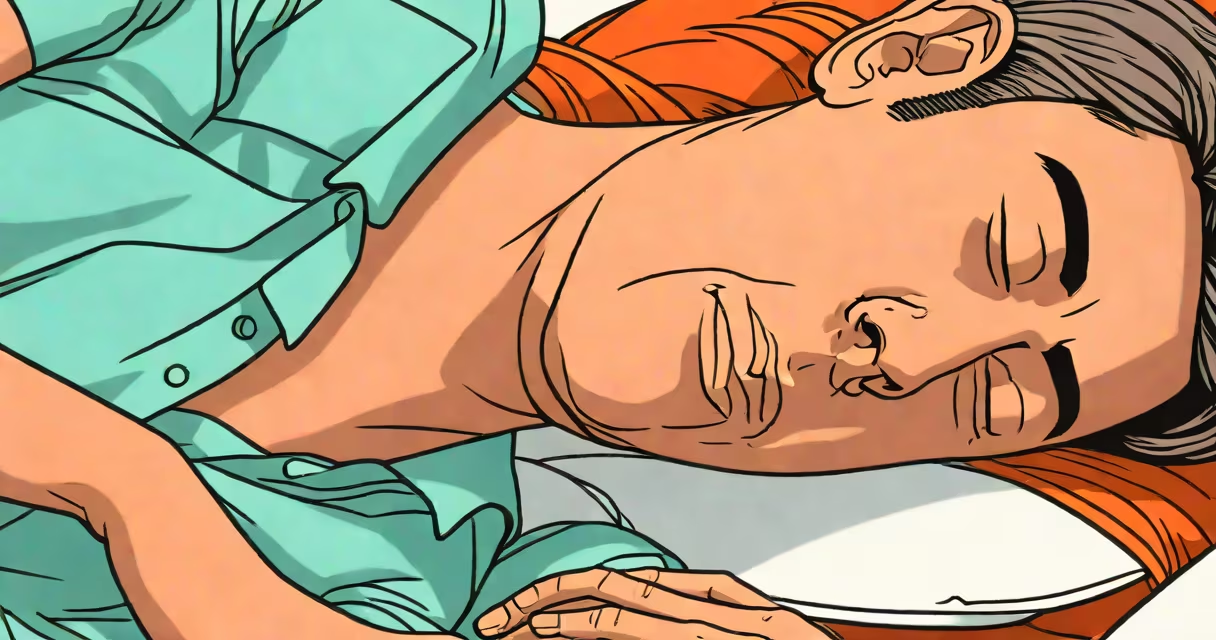
A crick in neck from sleeping is a sudden, sharp stiffness or pain in the neck muscles that develops after waking, typically due to prolonged pressure or unnatural alignment during sleep. It often limits movement and feels like a tight knot or spasm in the neck region.
This condition arises when the cervical spine-the seven vertebrae in the neck-loses proper alignment during rest. Poor pillow height, sleeping on the stomach, or twisting the neck while lying on one side can strain the trapezius, levator scapulae, or splenius capitis muscles. These muscles contract involuntarily, leading to localized pain and reduced range of motion.
According to the American Academy of Orthopaedic Surgeons (AAOS), muscle strain accounts for over 80% of acute neck pain cases, including those triggered by sleep posture. The condition usually resolves within 24 to 72 hours with rest and gentle movement, though persistent symptoms may indicate a deeper issue.
The neck supports the head's weight-about 10 to 12 pounds-through a complex network of muscles, ligaments, and joints. During sleep, even small shifts in position can overload these structures. For example, sleeping face-down forces the neck to rotate sideways and extend beyond its neutral range, compressing nerves and straining soft tissues.
When the neck remains bent or twisted for several hours, blood flow to the muscles decreases. This leads to lactic acid buildup and micro-tears in fibers, triggering inflammation and pain. The brain interprets this as a protective response, tightening surrounding muscles to prevent further injury-a reflex that creates the sensation of a "crick."
One study published in *The Journal of Manual & Manipulative Therapy* found that 68% of participants reported neck pain after using pillows that were too high or too low. A pillow that doesn't match the sleeper's shoulder width and spine curvature increases the risk of developing a crick.
Many assume a crick in neck from sleeping is caused by a "pinched nerve" or "slipped disc," but these are rare in isolated cases. True nerve compression or disc herniation typically presents with radiating pain into the arm, numbness, or weakness-symptoms not seen in most cricks.
Another myth is that stretching immediately upon waking worsens the problem. In reality, gentle range-of-motion exercises reduce stiffness faster than immobilization. A 2021 clinical review in *Physical Therapy in Sport* confirmed that early mobilization improves recovery time by 30% compared to complete rest.
Non-obvious fact: The term "crick" is informal. Medical literature refers to this as "acute mechanical neck pain" or "cervical myofascial pain." It's not a diagnosis but a symptom of muscle imbalance or joint dysfunction.
While there's no formal classification, neck cricks fall into three practical categories based on duration and impact:
| Severity Level | Duration | Impact on Movement | Typical Recovery Time |
|---|---|---|---|
| Mild | Under 24 hours | Slight discomfort; minimal restriction | 1-2 days |
| Moderate | 1-3 days | Difficulty turning head; pain with movement | 3-5 days |
| Severe | Over 5 days | Sharp pain, limited rotation, possible headache | 1 week or longer |
Most cases are mild to moderate. Severe episodes require medical evaluation to rule out arthritis, spinal stenosis, or referred pain from the jaw or heart.
Immediate action reduces discomfort. Apply heat for 15 minutes to increase blood flow and relax tense muscles. Cold packs can help if swelling is present, though they're less common in cricks.
Gentle stretching is effective. Try the chin tuck: sit upright, slowly draw your chin inward toward your chest, hold for five seconds, and release. Repeat 10 times. This strengthens deep neck flexors and restores posture.
I once treated a patient who woke with a severe crick after sleeping on a couch with no neck support. After 10 minutes of slow neck rolls and a warm shower, mobility improved by 70%. By day two, she returned to normal activity. She later switched to a memory foam pillow with a contoured neck support-her cricks stopped entirely.
Use a pillow that keeps the neck aligned with the spine. The ideal height is between 3 and 5 inches, depending on whether you sleep on your back or side. Side sleepers need higher support under the neck; back sleepers benefit from lower profiles.
Avoid stomach sleeping. It forces the neck to twist and extend, increasing stress on the C1-C2 joints. If you must sleep prone, place a flat pillow under your hips to reduce torque on the spine.
Keep your bedroom environment conducive to good posture. Avoid screens before bed-blue light disrupts melatonin, leading to restless sleep and increased muscle tension. Maintain a consistent sleep schedule to stabilize circadian rhythms and reduce nighttime movements.
If cricks recur frequently, consider consulting a physical therapist. They can assess your posture, recommend ergonomic adjustments, and prescribe targeted exercises. Persistent pain lasting more than a week warrants imaging to rule out structural issues.