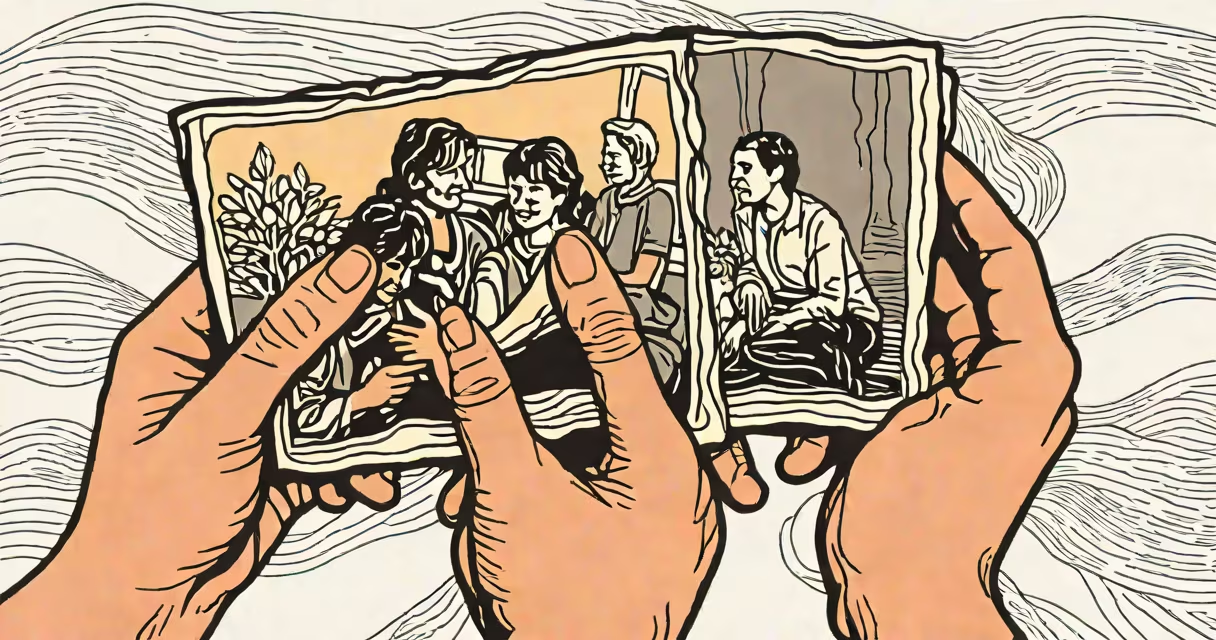
To cherish means to deeply value and protect someone or something emotionally, treating it with care and affection. It implies a lasting sense of appreciation, often tied to personal memories or long-term relationships.
The verb "cherish" describes a feeling of warmth and reverence toward people, objects, or experiences that hold significant emotional weight. It's not casual admiration-it's a deliberate act of preserving something meaningful. For example, someone might cherish a letter from a deceased parent, not just because it's written, but because it represents love and connection.
According to Merriam-Webster, "cherish" includes meanings such as "to nurture or build," "to hold dear," and "to regard with affection." The Oxford English Dictionary notes that the term has roots in Old French *chier* (to love), which evolved into Middle English *cherishen*, meaning to nourish or protect. This historical layer reinforces that cherishing is not passive-it involves active protection and emotional investment.
Cherishing operates on both emotional and behavioral levels. You don't just feel fondness-you act on it. A person who cherishes their child may prioritize their well-being, remember small details, and make consistent efforts to support them. This behavior reflects ongoing care, not just fleeting emotion.
Consider a grandmother who keeps her grandson's childhood drawings in a special box. She doesn't display them publicly. She opens the box only on birthdays or holidays. That ritual of retrieval and quiet viewing shows she cherishes the memories-not just the art. The act of preservation, even in private, signals deep emotional significance.
Cherishing can apply to intangible things too. Someone might cherish a moment of silence during a difficult time, not because it was joyful, but because it offered peace. The value lies in the emotional resonance, not the event's external outcome.
While "cherish" is often associated with people, it applies to many subjects. The following table outlines common categories and examples:
| Type | Example | Why it's cherished |
|---|---|---|
| People | A mother cherishes her daughter's first steps | Symbolizes growth, love, and personal milestone |
| Objects | An artist cherishes a paintbrush used in a breakthrough piece | Represents creative achievement and effort |
| Memories | A veteran cherishes a photo from his deployment | Links past to identity; holds emotional weight |
| Values | Someone cherishes honesty in relationships | Reflects personal ethics and trust |
Each example shows that cherishing is not universal-it depends on individual meaning. What one person holds dear, another may overlook. A family heirloom might be meaningless to a stranger but carry decades of history to a descendant.
"Cherish" is often mistaken for "like" or "appreciate," but those are weaker forms. You can like a song, appreciate a gift, but cherishing requires deeper commitment. Like is fleeting; cherishing is enduring.
Another frequent error is assuming cherishing implies possession. Not true. You can cherish a person you've lost, a memory you can't change, or a dream you haven't achieved. Cherishing isn't about control-it's about valuing despite impermanence.
A lesser-known fact: in older religious texts, "cherish" appears in passages about spiritual devotion. The King James Bible uses the word in Ephesians 4:2: "Be ye kind one to another, tenderhearted, forgiving one another, even as God for Christ's sake hath forgiven you." While not direct translation, the concept of cherishing aligns with Christian ideals of compassion and forgiveness. This shows the word's moral dimension-beyond sentiment, it carries responsibility.
In 1992, a soldier wrote a letter home to his sister. He didn't expect it to survive. But after he died in combat, she kept it sealed in a drawer. She never read it again-she just kept it. In 2023, she donated it to a veterans' museum.
She said, "I didn't reread it. I didn't need to. Just knowing it was there-safe, untouched-meant he was still with me."
This is cherishing. Not consumption. Not performance. Not sharing. It's silent, private, and rooted in emotional continuity. The letter wasn't valuable because of its content-it was valuable because of what it represented: love, loss, and memory.
Understanding "cherish" means recognizing its contrast with similar words. Here's how it differs:
For synonyms, consider: treasure, hold dear, prize, honor, revere. These aren't interchangeable. "Treasure" suggests physical or emotional hoarding. "Revere" implies respect, sometimes formal. "Cherish" sits between affection and duty-a blend of warmth and responsibility.
When you're looking for alternatives, a short love message might use "cherish" to express intent. But the word itself resists casual use. It's reserved for moments that matter.
I once spent a week sorting through my grandfather's belongings after his death. Among folded letters and old tools, I found a small notebook. Inside were sketches of trees, weather patterns, and dates. No captions. Just observations.
I didn't understand it until I realized-he'd been recording the seasons near his house for thirty years. He never showed anyone. He just did it, quietly. I now keep the notebook on my desk. I don't open it often. But when I do, I feel connected. I'm not reading data-I'm honoring a lifetime of attention.
That's cherishing. Not performance. Not display. It's presence.
Cherish means what it says: to hold something close, not just in hand, but in heart. It's not about frequency of contact, but depth of meaning. Whether it's a person, a memory, or a quiet habit, cherishing is the act of saying, "This matters."
Use the word deliberately. It's not a substitute for "love" or "care"-it's a specific form of emotional commitment. And when you say, "I cherish you," you're not just expressing feeling. You're making a promise to protect and value what's sacred to you.