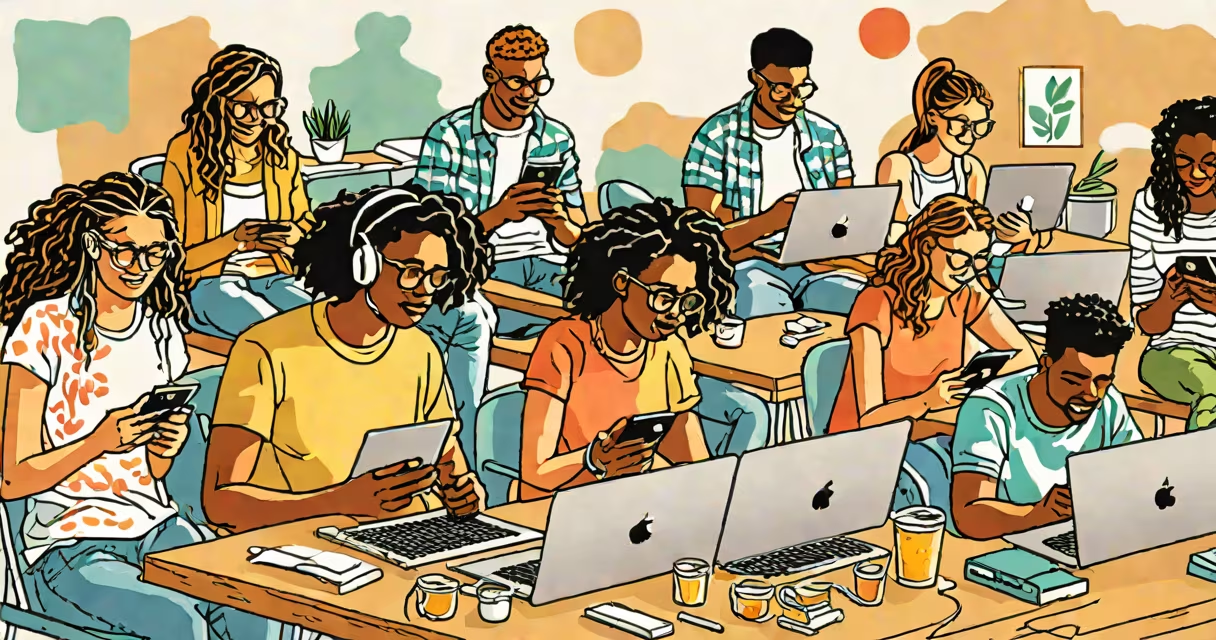
Characteristics of Gen Z refer to the defining behavioral, cultural, and psychological traits of individuals born between 1997 and 2012, who grew up immersed in digital technology and global social movements. This generation is shaped by economic instability, climate anxiety, and widespread internet access, resulting in distinct values and communication styles.
Gen Z is the first generation to be born entirely within the digital age. They did not experience a pre-internet childhood. Their formative years coincided with the rise of smartphones, social media platforms like Instagram and TikTok, and constant connectivity. As a result, their attention spans, learning methods, and social interactions differ from previous generations.
According to Pew Research Center, 95% of U.S. teens aged 13 to 17 have access to a smartphone, and 45% say they are online almost constantly. This level of integration shapes how they consume information, build relationships, and express identity. Their worldview is formed through curated feeds, viral content, and algorithmic recommendations, which influence both personal beliefs and public discourse.
Gen Z prioritizes authenticity, inclusivity, and purpose. They reject traditional advertising that feels inauthentic. A 2023 McKinsey report found that 66% of Gen Z consumers prefer brands that align with their values, especially around sustainability, racial equity, and LGBTQ+ rights. This is not performative-it reflects lived experiences shaped by school shootings, climate protests, and social justice movements.
They communicate through visual and audio formats. Text messages are less common than voice notes, memes, and short-form video. On TikTok, videos under 60 seconds dominate engagement. This preference stems from cognitive load management-information is processed faster when delivered in digestible, emotionally resonant chunks.
A 2022 study by the American Psychological Association found that 70% of Gen Z adults reported experiencing anxiety or depression. This mental health burden correlates with high academic pressure, job insecurity, and exposure to traumatic news cycles. Unlike past generations, they openly discuss therapy, boundaries, and emotional labor, often using humor to cope.
Gen Z enters the workforce with different expectations. They prioritize flexibility, autonomy, and meaningful work. A 2023 survey by LinkedIn revealed that 78% of Gen Z job seekers consider company culture and diversity initiatives more important than salary when choosing employers.
They value skill-based hiring over formal degrees. Many pursue micro-credentials, online certifications, or freelance gigs. Platforms like Upwork and Fiverr host millions of Gen Z freelancers offering services ranging from graphic design to social media management. These roles offer immediate feedback, portfolio building, and income control-features absent in traditional entry-level jobs.
At universities, Gen Z students demand inclusive curricula and mental health resources. In 2022, student-led movements at colleges like UCLA and NYU pushed for expanded counseling staff and gender-neutral housing. These actions reflect a generation that sees activism not as protest but as institutional change.
Gen Z is frequently labeled lazy or entitled. This mischaracterization overlooks structural realities. The average Gen Z adult faces higher student debt, rising housing costs, and uncertain job markets. According to the Federal Reserve, median household wealth for those aged 25-34 in 2022 was $18,000-down from $37,000 in 2007.
Another myth is that Gen Z lacks focus. In reality, they exhibit high task-switching efficiency. A 2021 University of California study showed Gen Z participants completed multi-step problem-solving tasks 22% faster than Millennials, though with slightly lower accuracy. This trade-off reflects adaptive cognition in complex environments.
Some assume Gen Z is disengaged from politics. But voter turnout among 18-24-year-olds rose to 51% in the 2020 U.S. election-the highest since 1996. Social media campaigns like #BlackLivesMatter and #MeToo drove registration efforts. Gen Z doesn't vote for party loyalty-they vote for policy alignment.
| Aspect | Gen Z (1997-2012) | Millennials (1981-1996) |
|---|---|---|
| Primary device | Smartphone | Desktop/laptop |
| Content preference | Short video (TikTok, Reels) | Long-form articles, YouTube |
| Work values | Flexibility, purpose, mental health support | Job security, career progression |
| Political engagement | Issue-based, digital mobilization | Party-affiliated, voting-focused |
| Financial outlook | High debt, low savings, gig economy reliance | Homeownership peak, stable employment |
In 2021, a 21-year-old Gen Z creator named Maya Chen launched a TikTok account focused on sustainable fashion. She documented thrift store hauls, DIY clothing repairs, and ethical brand reviews. Within 18 months, she gained 2.4 million followers and partnered with eco-conscious brands like Patagonia and Tentree.
Her success wasn't based on polished production. Videos were filmed on her phone, edited with free apps, and posted at 8 PM local time-when Gen Z is most active. She monetized through affiliate links, brand deals, and a Patreon for exclusive content. Her audience didn't buy products-they bought trust.
This model reflects a core characteristic of Gen Z: they value transparency and co-creation. They don't want to be sold to-they want to be involved. As one follower commented: "I feel like she's my friend, not a celebrity." That emotional connection drives engagement far beyond traditional advertising.
While broad patterns exist, Gen Z is diverse by race, geography, and socioeconomic status. A Black Gen Z individual in Detroit may prioritize racial justice advocacy, while a Gen Z person in Tokyo may focus on environmental policy due to regional flooding. Rural Gen Zers face different challenges than urban ones-access to broadband, mental health care, and education varies widely.
Even within subcultures, behaviors differ. Some Gen Z members embrace digital minimalism, limiting screen time and avoiding social media. Others thrive in hyper-connected spaces like Discord communities or fanfiction forums. These differences show that characteristics of Gen Z are not uniform-they are contextual and evolving.
One fact often overlooked: Gen Z is the most racially and ethnically diverse generation in U.S. history. The U.S. Census Bureau reports that 54% of Gen Z identify as non-white. This demographic shift influences everything from music preferences to political priorities. For example, K-pop and Latin trap dominate streaming charts-not because of marketing, but because Gen Z audiences actively seek out global sounds.
Understanding characteristics of Gen Z requires moving beyond stereotypes. They are not lazy, disconnected, or overly sensitive. They are pragmatic, socially aware, and digitally fluent. Their choices reflect adaptation to a world marked by rapid change, inequality, and uncertainty.
When engaging with Gen Z-whether in business, education, or policy-focus on authenticity, flexibility, and shared values. Their behavior is not random. It is a response to lived conditions, technological access, and cultural momentum. Recognizing this helps avoid missteps and unlocks meaningful collaboration.