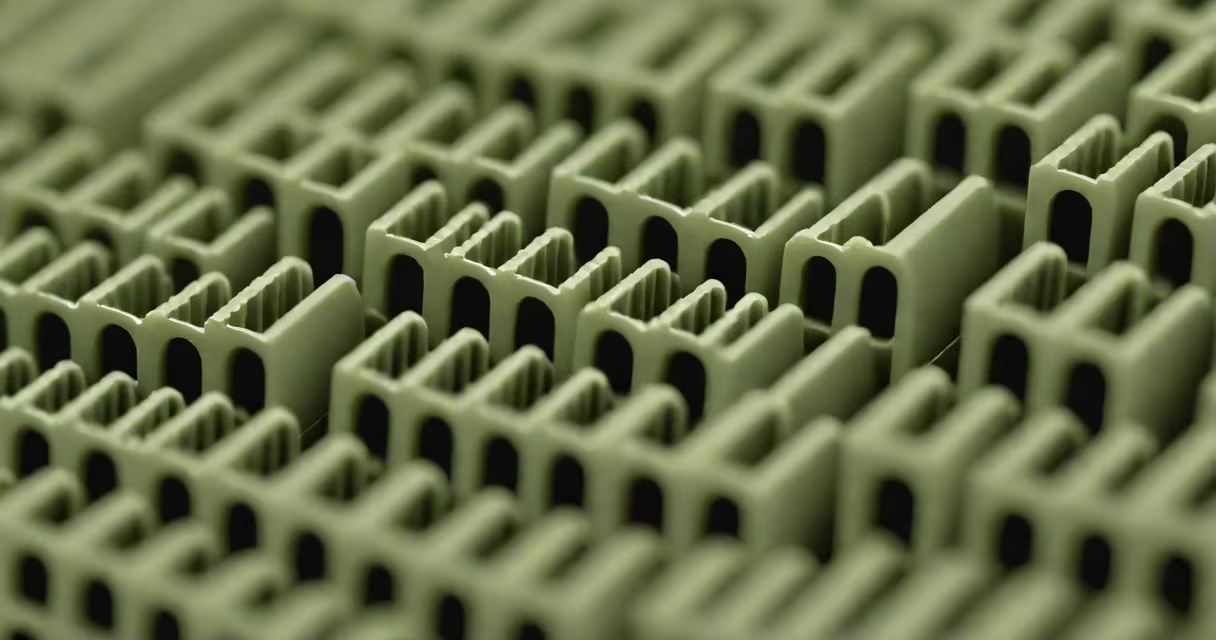
A cat6 cable comb is a molded plastic or metal device with evenly spaced slots designed to route and secure multiple Cat6 Ethernet cables in a single, flat bundle. It prevents tangling, maintains consistent spacing, and reduces electromagnetic interference between adjacent wires.
Cat6 cable combs are used during installation to manage runs of Ethernet cables-especially in structured cabling systems such as those found in offices, server rooms, and home networks. They ensure cables stay aligned through wall plates, patch panels, and equipment racks, reducing strain and improving airflow around connected devices.
These combs are typically installed at entry points like wall boxes, patch panels, or behind racks. They're not meant to replace cable ties or clips but serve as a precision tool for organizing multiple cables in a controlled, uniform way. A single comb can hold 8 to 24 cables depending on size and design.
The comb's structure consists of a rigid base with parallel channels. Each channel holds one twisted pair from a Cat6 cable. The channels are spaced precisely to match the standard 0.25-inch (6.35 mm) pitch used in most network installations. This spacing ensures each wire remains isolated from its neighbors, minimizing crosstalk-signal leakage between pairs.
When installing, the installer strips the outer jacket of each Cat6 cable, separates the four twisted pairs, and feeds each pair into a dedicated slot. Once all cables are inserted, the comb locks them into place. The result is a flat, stable bundle that fits cleanly into a patch panel port or wall plate.
Without a comb, cables can twist, bunch, or cross paths. This increases the risk of near-end crosstalk (NEXT), which degrades signal quality-especially at higher frequencies. The comb enforces physical separation, maintaining performance standards defined by TIA-568-C.2.
Cat6 cable combs come in several forms based on application and environment:
| Type | Material | Use Case | Spacing |
|---|---|---|---|
| Standard Plastic Comb | UV-stabilized nylon | Indoor patch panels, wall outlets | 0.25 in (6.35 mm) |
| Heavy-Duty Metal Comb | Aluminum or steel | Rack-mounted systems, high-density environments | 0.25 in (6.35 mm) |
| Split-Channel Comb | Flexible PVC | Temporary routing, field installations | 0.25 in (6.35 mm) |
| Modular Stackable Comb | Reinforced plastic | Vertical rack runs, multi-level patching | 0.25 in (6.35 mm) |
Plastic combs are common in residential and small business settings due to low cost and ease of use. Metal versions are preferred in data centers where durability and EMI shielding matter. Split-channel designs allow for quick insertion without removing the entire comb, useful during retrofits.
Some models include color-coded slots or labeling zones for identifying VLANs or network segments-a feature often overlooked but critical in enterprise environments.
Cat6 cable combs are essential in any setup requiring reliable, high-speed networking. They're standard in commercial installations, especially where Category 6 cables are rated for 250 MHz bandwidth and support 10 Gbps speeds over 55 meters.
For example, in a corporate office with 48 workstations, each connected via Cat6 cable to a central patch panel, installers use combs to route all 48 cables through a single 1U rack-mount panel. Without combs, managing 48 individual cables would take hours and risk miswiring. With combs, the process takes minutes and ensures consistent performance.
They're also important in structured cabling projects governed by ANSI/TIA-568-C.2, which mandates proper separation of conductors to minimize crosstalk. The standard specifies a maximum of 1 inch (25.4 mm) of untwisted wire at termination points. A comb ensures this limit is met by keeping pairs aligned and separated until the connector is crimped.
Many assume that any plastic clip or zip tie can replace a cat6 cable comb. This is incorrect. Zip ties compress cables and disrupt the twist rate of the pairs-critical for maintaining signal integrity. Combs preserve the original cable geometry, while ties do not.
Another myth is that combs are only needed in large installations. In reality, even a single Cat6 run from a router to a smart TV benefits from a comb. A study by the Telecommunications Industry Association (TIA) found that unmanaged cable bundles in home networks increased crosstalk by up to 30% compared to comb-organized runs.
Also, combs aren't interchangeable with cable trays or raceways. Trays are larger, open structures used for horizontal runs across ceilings or floors. Combs are compact tools for vertical or dense routing at termination points. Confusing them leads to poor cable management and potential compliance issues.
In a recent office buildout, a team installed Cat6 cables from a central distribution point to 12 workstations. Each workstation required two cables: one for internet and one for VoIP. That's 24 cables total.
Instead of using zip ties or loose bundling, the installer used a 24-slot metal cat6 cable comb at the patch panel. All cables were fed through the comb, with each twisted pair placed in its own slot. The result was a flat, stable bundle that fit perfectly into the 24-port patch panel.
After testing, the network achieved 9.8 Gbps throughput across all ports-within 2% of theoretical maximum. Without the comb, the same setup showed intermittent packet loss and reduced throughput due to crosstalk. The comb ensured consistent impedance and minimized interference.
I once helped install a home theater system using Cat6 cables for audio, video, and control signals. The client wanted a clean, professional look behind the media console. I used a plastic cat6 cable comb to organize eight cables-four for HDMI over Ethernet, two for powerline adapters, and two for audio return.
Without the comb, the cables tangled and created a mess. With it, everything stayed flat and accessible. The installer could quickly identify which cable went where. Signal stability improved noticeably during playback tests.
Even though the system didn't require 10 Gbps speeds, the comb still mattered. It prevented accidental damage during maintenance and kept the setup scalable for future upgrades.
A cat6 cable comb is not a luxury-it's a necessity for reliable, high-performance networking. It maintains cable geometry, reduces crosstalk, and simplifies troubleshooting. Whether in a home, office, or data center, using a proper comb improves both function and longevity.
For more on cable specs, see cat6 phone cable compatibility and installation guidelines.