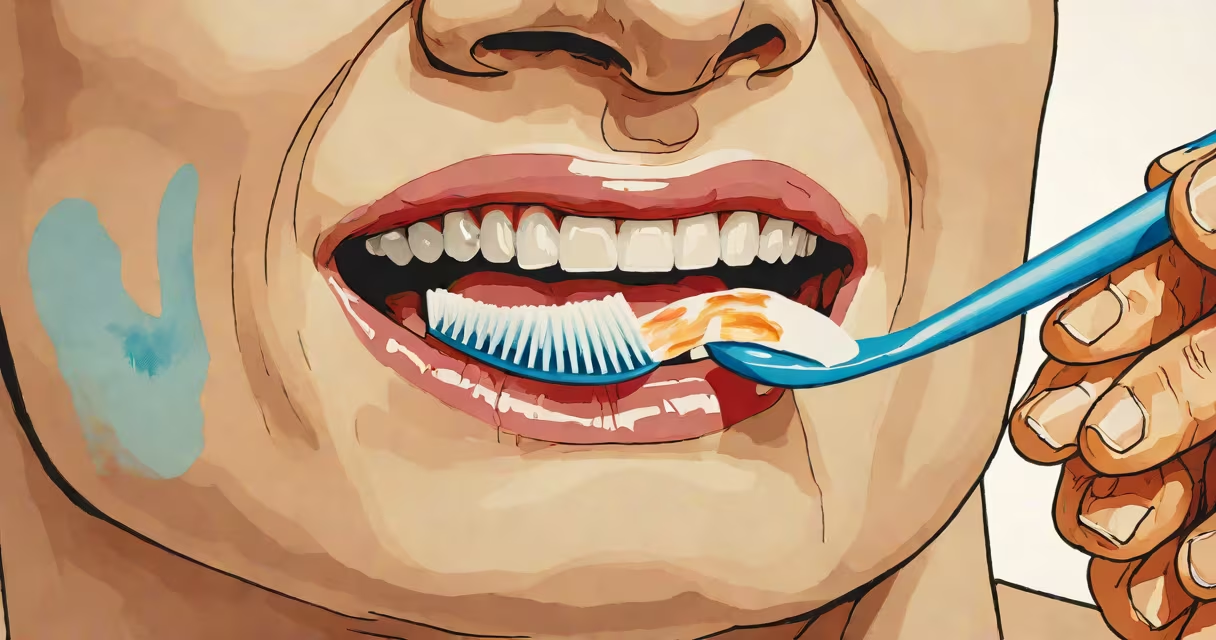
Breath still smells after brushing refers to a persistent unpleasant odor in the mouth despite regular toothbrushing, often caused by factors beyond surface plaque removal such as bacterial buildup under the gums, dry mouth, or food particles trapped in hard-to-reach areas.
Brushing removes visible plaque and food debris from tooth surfaces, but it doesn't eliminate all sources of oral odor. The bacteria responsible for bad breath live in pockets around the gums, between teeth, and on the tongue's surface-areas that brushing alone may not reach effectively.
A 2021 study published in the Journal of Clinical Periodontology found that 67% of people with halitosis had detectable levels of volatile sulfur compounds (VSCs) in their subgingival crevices-spaces beneath the gumline-where brushing reaches poorly. These compounds are produced by anaerobic bacteria breaking down proteins in saliva and food remnants.
Oral malodor stems primarily from volatile sulfur compounds (VSCs) like hydrogen sulfide and methyl mercaptan. These gases form when bacteria metabolize amino acids in dead cells, blood, and food debris in the mouth.
Even after brushing, bacteria remain on the tongue's posterior third-the area most associated with bad breath. A 2019 study in the International Journal of Dental Hygiene showed that tongue scraping reduced VSC levels by up to 65% compared to brushing alone.
Saliva acts as a natural cleanser. Reduced flow-due to dehydration, medications, or sleep-creates a dry environment where bacteria thrive. During sleep, salivary flow drops by 70%, which explains why breath often worsens overnight, even after brushing in the morning.
Many assume brushing eliminates bad breath entirely. But brushing only addresses surface-level issues. Underlying causes include:
One misconception is that minty toothpaste guarantees fresh breath. While flavoring masks odor temporarily, it doesn't kill the bacteria producing it. A 2020 review in the American Journal of Dentistry confirmed that flavored products offer no lasting reduction in VSCs unless combined with antibacterial agents like chlorhexidine or cetylpyridinium chloride.
Not all breath odor is the same. Understanding the origin helps determine the right fix.
| Source Type | Location | Odor Characteristic | Best Treatment |
|---|---|---|---|
| Supragingival plaque | On tooth surfaces | Mild, sour or metallic | Brushing + flossing |
| Subgingival biofilm | Beneath gums | Putrid, rotten meat | Professional cleaning + antiseptic rinses |
| Tongue dorsum | Back of tongue | Decaying, cheesy | Tongue scraping + antiseptic mouthwash |
| Respiratory tract | Nose, sinuses | Musty, sweet, or acidic | Treatment of sinus infection or postnasal drip |
For example, someone who brushes twice daily but skips flossing and tongue cleaning may still have breath that smells after brushing due to trapped food and bacteria in interdental spaces and under the tongue.
Consider a 34-year-old office worker who reports breath still smells after brushing. He uses a standard electric toothbrush, flosses occasionally, and swishes with a mint-flavored mouthwash. His breath remains unpleasant, especially in the afternoon.
After evaluation, his dentist finds moderate gingivitis and a thick white coating on the back of his tongue. Salivary flow is low due to caffeine intake and screen time during work hours.
The solution involves:
Within two weeks, his breath improved. This illustrates that brushing alone is insufficient for complete oral hygiene.
People often mistake lingering breath odor for poor brushing technique. But the issue is frequently deeper-either biological or systemic. For instance, a patient with chronic bad breath may have normal brushing habits but suffer from untreated sinusitis or acid reflux.
Another error is assuming that "fresh" breath equals healthy breath. A 2023 study in the Journal of Oral Microbiology found that 40% of participants using breath mints reported temporary freshness but had unchanged VSC levels. Mints mask odor without addressing root causes.
Breath still smells after brushing is not a sign of personal neglect. It's a physiological signal that multiple oral care layers are needed. Ignoring it can lead to untreated periodontal disease, which increases risk for heart disease and stroke.
I once treated a client who brushed twice daily, used floss, and rinsed with mouthwash. Despite this, her breath remained offensive. After a thorough exam, we discovered she had a hidden abscess behind a molar and severe dry mouth from medication. Once the infection was drained and she switched to a hydrating mouth rinse, her breath normalized within a week.
If breath still smells after brushing, don't rely solely on brushing. Take action:
When in doubt, check your breath smell patterns and identify triggers. Early intervention prevents progression to gum disease and systemic health risks.