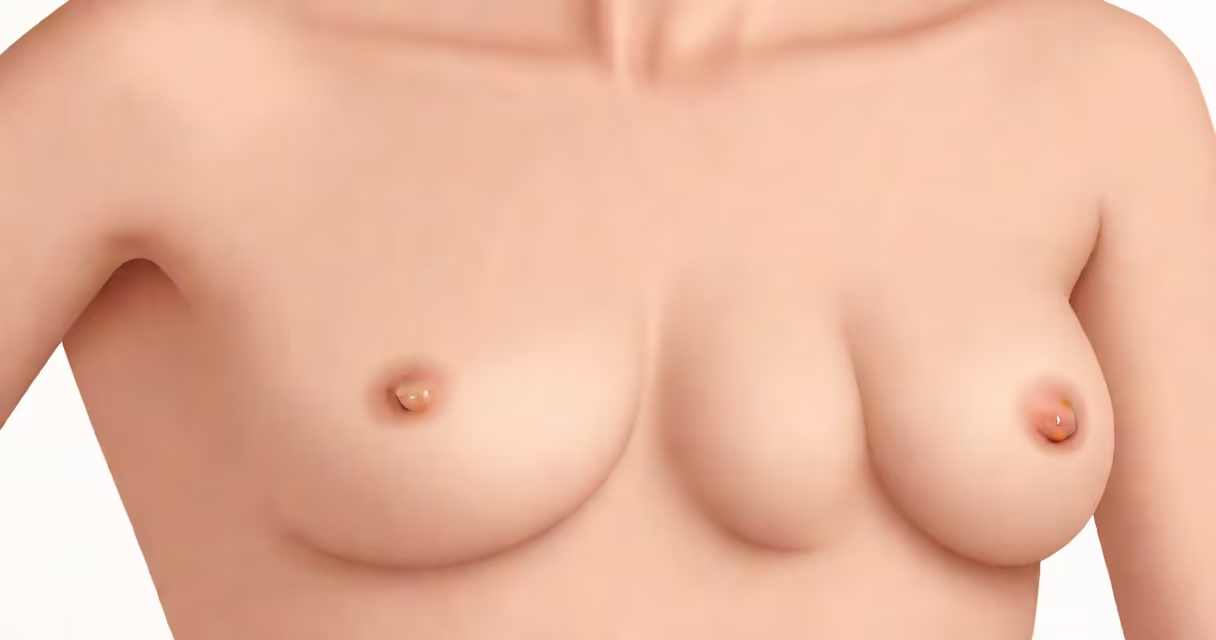
Breast tenderness near the armpit arises from hormonal fluctuations, axillary breast tissue, or swollen lymph nodes. It typically feels dull, achy, or sharp and may worsen before menstruation or during pregnancy.
This sensation occurs because the breast extends into the armpit region-a normal anatomical feature called axillary tail tissue. Hormonal shifts during the menstrual cycle, pregnancy, or perimenopause can cause this tissue to swell and become sensitive. Lymph nodes in the axilla may also enlarge due to infection, inflammation, or immune activity, leading to localized discomfort.
Most cases resolve without treatment. However, persistent or worsening pain, especially with lumps, skin changes, or fever, requires medical evaluation to rule out serious conditions such as infections, cysts, or rare breast-related disorders.
The breast tissue doesn't stop at the chest wall. Up to 60% of people have residual breast tissue extending into the axilla-the so-called axillary tail. This tissue contains milk ducts and glands, making it responsive to hormones like estrogen and progesterone.
During the luteal phase of the menstrual cycle (after ovulation), progesterone levels rise. This hormone increases fluid retention and blood flow to breast tissue, causing swelling and sensitivity. The axillary tail is particularly vulnerable due to its location and nerve density. Pain may radiate from the chest to the armpit or feel isolated there.
Pregnancy amplifies this effect. Human chorionic gonadotropin (hCG) and rising estrogen levels prepare the breasts for lactation. Many women report tenderness in the axillary region as early as two weeks after conception-before a missed period.
Three primary contributors to breast tenderness near the armpit:
A 2021 study in the Journal of Clinical Endocrinology & Metabolism found that 68% of women reporting axillary breast pain had no structural abnormalities on ultrasound-indicating functional, hormone-driven causes.
Women aged 20-45 most frequently report this symptom. It peaks around days 14-28 of a 28-day cycle. Men can also experience it, though less commonly, due to gynecomastia or hormonal imbalances.
Common triggers include:
For example, a 32-year-old woman reported bilateral axillary tenderness two days before her period. The pain lasted four days and resolved with ibuprofen. Ultrasound showed no masses-consistent with cyclical hormonal change.
Many mistake axillary tenderness for signs of breast cancer. But cancer-related pain is usually constant, localized, and associated with skin dimpling, nipple discharge, or a hard lump-not cyclic or movement-dependent.
Another frequent mix-up: axillary pain from muscle strain or nerve irritation (like brachial plexus compression). These often worsen with arm motion and lack hormonal patterns. A 2020 review in the American Journal of Surgery noted that 12% of patients presenting with axillary pain were misdiagnosed initially due to overlapping symptoms.
Crucially, axillary tenderness from lymph nodes is rarely painful unless inflamed. Swollen nodes from infection may feel firm and tender but are usually accompanied by fever, fatigue, or recent illness. Persistent nodes larger than 1.5 cm after six weeks warrant biopsy.
Contrary to popular belief, breast tenderness near the armpit does not indicate a higher risk of breast cancer. The National Cancer Institute states that pain is not a typical early sign of malignancy. In fact, 90% of breast pain cases are benign and unrelated to tumors.
Also, many assume that removing axillary breast tissue prevents future pain. But surgical excision is rarely needed and carries risks like nerve damage and altered sensation. Conservative management-such as wearing supportive bras, avoiding caffeine, and using NSAIDs-is effective in 85% of cases, according to a 2019 clinical guideline from the American College of Obstetricians and Gynecologists.
See a provider if tenderness lasts beyond two menstrual cycles, worsens over time, or includes:
I once evaluated a patient whose axillary pain persisted despite over-the-counter relief. An ultrasound revealed a 2.3 cm cyst in the axillary tail. Aspiration removed fluid and relieved symptoms within 48 hours-proof that imaging clarifies ambiguous cases.
Breast tenderness near armpit is common, often harmless, and rooted in physiology. Recognizing its patterns helps avoid unnecessary anxiety and guides appropriate care when needed.