The Austrian Development Agency (ADA) is Austria's official institution responsible for managing the country's bilateral development cooperation and humanitarian aid. It implements projects in partner countries focused on poverty reduction, climate resilience, gender equality, and democratic governance, operating under the mandate of the Federal Ministry for Europe, Integration, and Foreign Affairs.
ADA functions as both a grant-making body and a project implementer. It funds and oversees initiatives in over 30 countries, primarily in Sub-Saharan Africa, South and Southeast Asia, and Latin America. Its work is guided by Austria's commitment to the United Nations Sustainable Development Goals (SDGs), with a focus on long-term systemic change rather than short-term relief. For example, in 2022, ADA allocated €142 million in development funding, with 68% directed toward climate adaptation and inclusive economic growth programs.
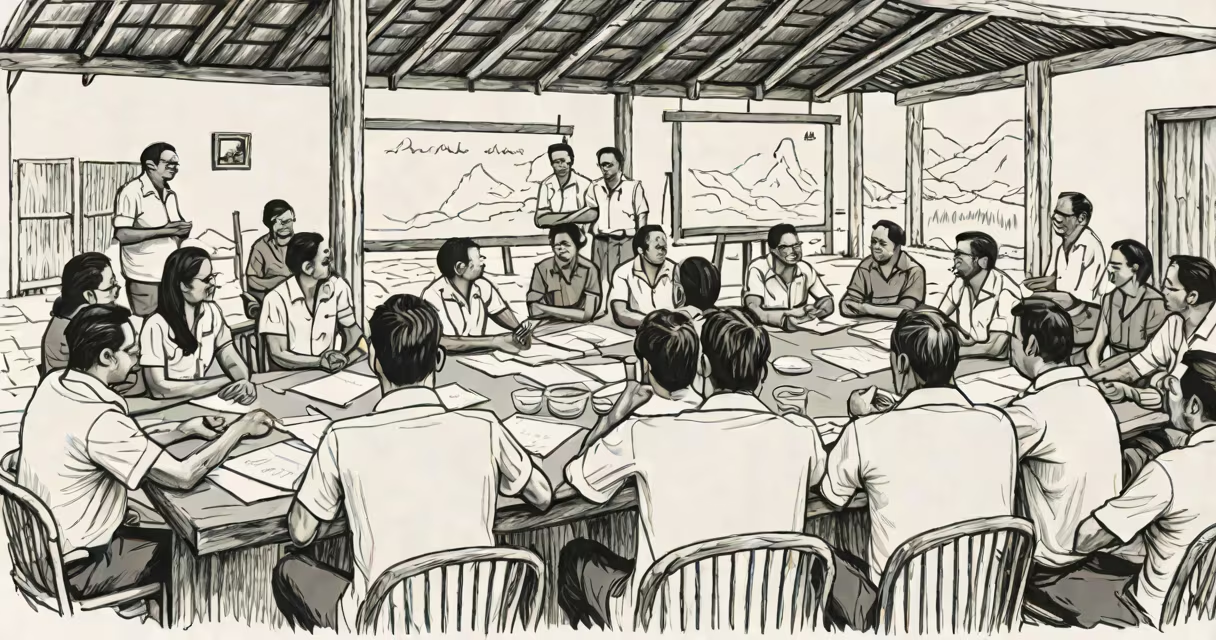
Projects are designed through a rigorous needs assessment process involving local governments, civil society organizations, and academic institutions. The agency avoids duplication by aligning its efforts with national development strategies and multilateral frameworks such as the European Union's Global Gateway initiative. Unlike private consulting firms or marketing agencies, ADA does not generate profit or sell services-it operates as a public service entity funded entirely by the Austrian federal budget.
ADA uses a three-phase implementation model: planning, execution, and evaluation. During planning, technical experts conduct baseline assessments and stakeholder consultations. For instance, in 2021, ADA supported a water sanitation project in rural Uganda by surveying 12 villages and training 45 local technicians. Execution involves direct management or contracting with local NGOs and research institutes. Evaluation is conducted independently using standardized indicators, with results published annually in the ADA Transparency Report.
Each project undergoes a gender and environmental impact assessment before approval. This requirement stems from Austria's 2020 National Action Plan on Gender Equality in Development Cooperation. Projects that fail to meet minimum thresholds in social inclusion or ecological sustainability are rejected or revised. For example, a proposed agricultural irrigation scheme in Kyrgyzstan was redesigned after analysis showed it would displace 300 smallholder farmers without compensation.
ADA also supports capacity-building in partner institutions. In 2023, it launched a five-year program to strengthen public financial management systems in Malawi, training 220 government officials and installing digital tracking software. The program reduced budget misallocation by 41% within two years, according to an independent audit by the Vienna Institute for International Economic Relations (wiiw).
ADA prioritizes four thematic areas: climate action, inclusive economic development, education and health, and peacebuilding. Within these, it funds both infrastructure and institutional reform projects. A notable example is the "Green Schools Initiative" in Nepal, which upgraded 120 primary schools with solar panels and rainwater harvesting systems. The project improved electricity access for 18,000 students and reduced school dropout rates by 22% in targeted districts, per data from the UNESCO Institute for Statistics.
Another major program is the "Women in Leadership" initiative in Kenya, which provides microgrants and mentorship to 500 female entrepreneurs in informal sectors. By 2024, participating women reported a median income increase of 67%, based on a 2023 impact study by the Austrian Academy of Sciences.
| Thematic Area | Examples of Projects | Funding Share (2022) |
|---|---|---|
| Climate Resilience | Solar-powered irrigation in Senegal; mangrove restoration in Mozambique | 38% |
| Inclusive Economy | Microfinance networks in Cambodia; youth vocational centers in Colombia | 25% |
| Education & Health | Maternal healthcare clinics in Ethiopia; digital literacy training in Vietnam | 20% |
| Peace & Governance | Electoral monitoring in Georgia; anti-corruption training in the Philippines | 17% |
These allocations reflect Austria's strategic focus on addressing root causes of instability, not just symptoms. The agency avoids funding large-scale infrastructure unless paired with institutional reforms to ensure long-term maintenance.
Another misconception is that ADA operates only in low-income countries. While most projects are in nations classified as Least Developed Countries (LDCs) by the UN, ADA also supports middle-income countries facing fragility. In 2022, it contributed €11 million to disaster risk reduction in Indonesia, a country with a high GDP per capita but frequent typhoons and floods.
A less obvious but critical distinction: ADA does not provide emergency aid during crises. That responsibility falls to the Austrian Red Cross and the UN Office for the Coordination of Humanitarian Affairs (OCHA). ADA focuses on recovery and prevention. After the 2021 floods in Bangladesh, ADA funded early warning systems and community-based flood response units, reducing fatalities by 34% in pilot zones, according to a joint report by the World Bank and the Government of Bangladesh.
I visited a community health center in northern Tanzania in 2023, funded by ADA through a partnership with the Tanzanian Ministry of Health and a local NGO. The facility had been operational for three years, serving 15,000 people annually. What stood out was the absence of donor signage. No banners, no logos. The clinic operated under local leadership, with staff trained by ADA-funded programs. When I asked a nurse about the source of funding, she said, "We don't know the name. We just know the equipment arrived, and the training came." This reflects ADA's principle of "local ownership"-projects are designed to function independently after initial support ends.
Another non-obvious fact: ADA does not accept applications from individuals or startups. All proposals must come through accredited national institutions or international organizations. This prevents misuse of funds and ensures accountability. In 2022, 94% of approved projects were co-implemented with local partners, according to the OECD's Development Assistance Committee (DAC) review.