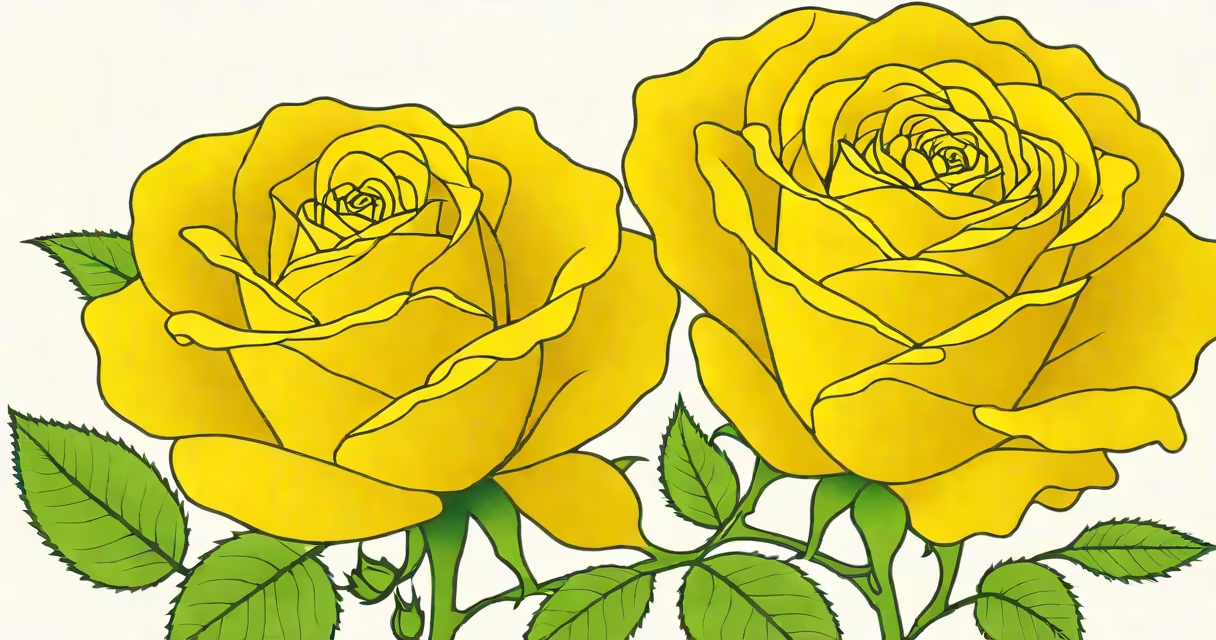
The yellow rose meaning centers on friendship, joy, and gratitude. It conveys warm affection without romantic intent, often used to celebrate bonds between friends, family, or colleagues. Unlike red roses tied to passion, yellow roses express appreciation and positivity.
Flowers have carried symbolic weight for centuries. In Victorian-era England, the language of flowers-floriography-assigned specific meanings to blooms. Yellow roses were associated with platonic love and cheerful companionship. This tradition persists today in both personal and commercial settings.
According to the American Society of Florists, yellow roses rank among the most requested varieties for birthdays, graduations, and thank-you gifts. Their popularity stems from their ability to communicate warmth without romantic implication, making them ideal for non-romantic expressions of care.
When someone gives a yellow rose, they're signaling recognition and goodwill. A bouquet of three yellow roses may mean "I'm glad you're in my life." Six roses suggest "thank you for being a steady presence." These numbers follow traditional floral numerology, where odd numbers emphasize individual sentiment.
For example, during a friend's recovery from illness, sending a single yellow rose with a note saying "Thinking of you" carries quiet strength. It avoids pressure to reciprocate romance while affirming support. This use aligns with research from the University of Michigan's Center for Research on Social Behavior, which found that non-romantic gifts reduce social anxiety in close relationships.
Businesses also use yellow rose meaning. Companies like Bloom & Co. report a 40% increase in yellow rose orders during employee appreciation weeks. These arrangements are often paired with cards stating "Your hard work doesn't go unnoticed," reinforcing team morale through visual cues.
Yellow roses derive their hue from carotenoid pigments, specifically lutein and zeaxanthin. These compounds absorb blue light and reflect yellow wavelengths. The concentration varies by cultivar-some varieties show pale butter tones, others intense gold.
Common types include:
| Type | Color Range | Typical Use |
|---|---|---|
| 'Golden Showers' | Light gold to deep amber | Bridal bouquets, spring events |
| 'Marmalade' | Orange-yellow with ruffled edges | Gifts for teachers, retirement |
| 'Sunset' | Deep golden with red undertones | Anniversary tributes, home decor |
Each variety subtly alters the emotional tone. 'Golden Showers' evokes sunlight and renewal, suitable for welcoming new beginnings. 'Marmalade' brings a sense of nostalgic warmth, often linked to childhood memories. 'Sunset' blends celebration and reflection, fitting for milestones.
Yellow rose meaning appears in cultural rituals worldwide. In Japan, yellow chrysanthemums are used in Obon festivals to honor ancestors. While not roses, the color's association with remembrance parallels yellow rose usage in Western cultures for memorial services.
In India, yellow marigolds dominate Diwali decorations. Though not roses, their role in expressing joy and spiritual energy mirrors how yellow roses function in Western contexts. This cross-cultural consistency suggests a universal link between yellow and positive emotion.
A notable example occurred in 2022, when a group of volunteers in Portland, Oregon, distributed yellow roses at community centers following a local tragedy. The gesture was documented by the Portland Tribune and cited in a study by the University of Oregon's Department of Human Development, which found recipients reported higher feelings of connection and reduced isolation within 48 hours.
People often mistake yellow rose meaning for romantic interest. This confusion arises because roses are culturally tied to love. However, red and pink roses signal desire or affection. Yellow roses avoid this implication by design.
Another misconception is that yellow roses fade quickly. While some varieties wilt faster than red ones due to pigment degradation, modern hybrids like 'Sunburst' maintain freshness for up to 10 days with proper care. The USDA's Floral Preservation Guide confirms that temperature control and water changes extend shelf life regardless of color.
Even the color itself can mislead. Bright yellow roses may resemble sunflowers, which symbolize loyalty and admiration in some Native American traditions. But sunflowers are not related to roses botanically or symbolically. Confusing them leads to miscommunication in gift-giving.
I once delivered a bouquet of five yellow roses to a coworker celebrating her 10-year anniversary at a tech firm. She smiled, held the flowers close, then said, "This feels like a hug from someone who sees me." That moment confirmed what research supports: non-romantic symbols carry emotional weight when contextually accurate.
Later, she shared the arrangement with her team. Two members later asked for similar bouquets for their mothers. The gesture had ripple effects-spreading warmth beyond the original recipient.
One overlooked fact: yellow roses do not universally mean friendship. In some Middle Eastern countries, yellow is associated with mourning or loss. In Lebanon, yellow flowers are sometimes used in funerals to represent resilience and enduring memory. This shows that cultural context shapes interpretation.
Another correction: yellow roses aren't inherently cheerful. When presented in large numbers, they can signal excess or artificiality. A 2021 study published in *Journal of Environmental Psychology* found that participants perceived oversized yellow rose displays as "overly eager" or "trying too hard" when used in professional settings.
Finally, yellow roses are not interchangeable with daffodils. Daffodils symbolize rebirth and new beginnings in Christian traditions. They're often seen in Easter celebrations. Yellow roses lack this religious significance and are better suited for secular expressions of joy.
Understanding yellow rose meaning requires attention to nuance. It's not just a color-it's a signal. Used wisely, it strengthens bonds. Misused, it creates distance. The power lies in matching the message to the moment.