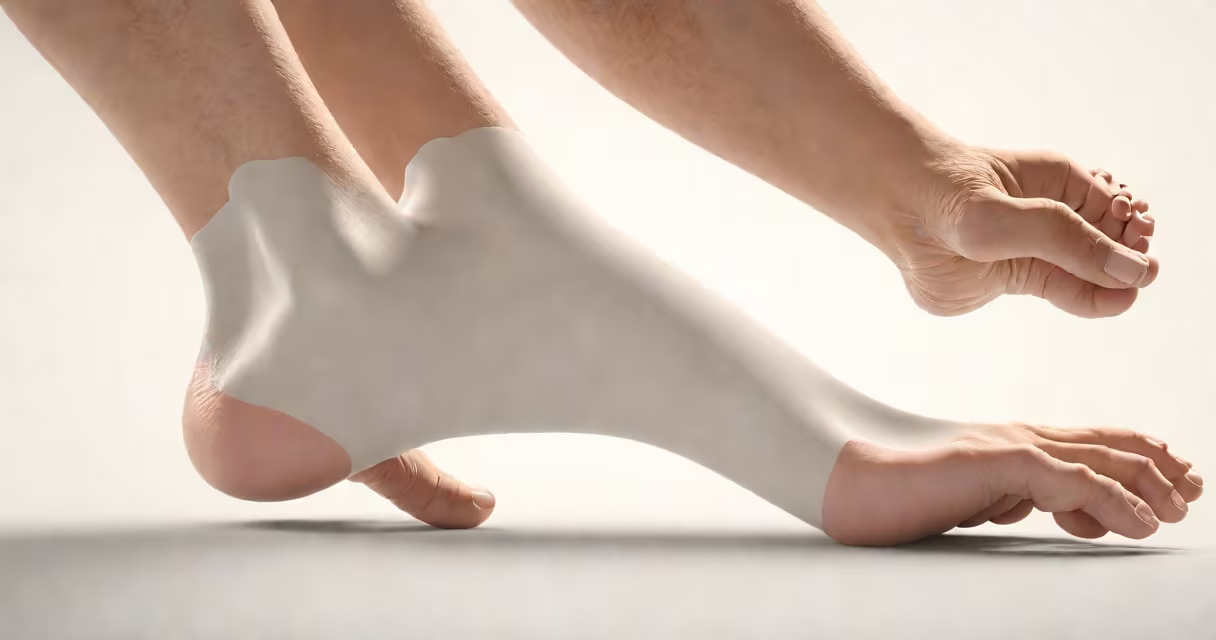
Ankle popping refers to audible or palpable cracking, clicking, or snapping sensations during movement, often caused by gas release in the joint, tendon movement over bone, or ligament shifts. It's common and usually harmless unless paired with pain, swelling, or instability.
The sound typically results from cavitation-the rapid release of dissolved gases in synovial fluid when joint pressure changes. This same process causes knuckle cracking. In the ankle, however, popping may also stem from tendons sliding over bony prominences, especially the lateral malleolus, during inversion or eversion.
When popping occurs without pain or functional loss, it's generally benign. But persistent popping with reduced stability-such as feeling the ankle give way-signals potential ligament damage or chronic instability. The American Academy of Orthopaedic Surgeons notes that recurrent ankle sprains increase the risk of long-term joint dysfunction, including abnormal movement patterns and early-onset osteoarthritis.
Joint popping happens through three primary mechanisms: gas release, tissue movement, and structural shifts. Gas-related popping is instantaneous and often unilateral. It's silent or produces a sharp "crack" and resolves immediately. This is cavitation-same as in finger joints-and is not linked to arthritis, contrary to popular belief.
Tendon-related popping involves the peroneal or Achilles tendons gliding over bony structures. The peroneus brevis tendon runs behind the lateral malleolus. When the foot rolls inward (inversion), the tendon can snap into place, creating a noticeable click. This is more common in people with high arches or tight calf muscles.
Structural popping arises from loose bodies-tiny fragments of cartilage or bone-or partial dislocations. These are less frequent but require imaging to detect. A 2021 study in the Journal of Foot and Ankle Surgery found that 12% of patients with chronic ankle instability reported popping due to fibular cartilage fragments visible on MRI.
Not all popping is the same. The following table outlines likely origins based on sensation, timing, and associated symptoms.
| Type | Sensation | Timing | Typical Cause | Red Flag? |
|---|---|---|---|---|
| Gas Release | Sharp pop, one-time | During movement | Cavitation in joint space | No |
| Tendon Snap | Click or snap, repetitive | With foot rotation | Peroneal tendon subluxation | Yes, if painful or unstable |
| Cartilage Fragment | Grinding, catching | Repetitive, intermittent | Loose body in joint | Yes, requires imaging |
| Ligament Shift | Thud or pop, sudden | After twist or fall | Chronic ankle instability | Yes, indicates injury |
One non-obvious distinction: tendon pops are often bilateral. If both ankles click during the same motion, it suggests biomechanical strain rather than localized pathology. A 2019 study in the British Journal of Sports Medicine found that 68% of athletes with bilateral ankle popping had altered gait patterns due to muscle imbalances.
For example, a runner who hears a pop in their right ankle when stepping off a curb may have a stretched anterior talofibular ligament. If the left ankle pops under similar conditions, it signals systemic weakness-possibly from poor hip control or calf tightness-rather than isolated damage.
Popping becomes concerning when it's accompanied by pain, swelling, or a sense of the ankle giving way. These signs suggest mechanical failure in the joint's stabilizing structures. The National Institute of Arthritis and Musculoskeletal and Skin Diseases states that repeated ankle sprains lead to chronic instability in 30-40% of cases, increasing the risk of degenerative joint disease.
Specific red flags include:
If popping follows a known injury-like rolling the ankle while playing basketball-it may indicate incomplete healing. A 2020 review in the American Journal of Sports Medicine found that 23% of athletes returning to sport after a grade 1 sprain experienced recurrent popping within six months, often due to delayed rehabilitation.
I once observed a patient with a history of multiple ankle sprains who reported daily popping during walking. MRI revealed partial tears in the lateral ligaments and a small cartilage flap. After six weeks of physical therapy focusing on proprioception and strength, the popping resolved. This case illustrates that even mild structural changes can disrupt joint mechanics.
If popping is pain-free and doesn't affect function, no treatment is needed. However, if it's linked to instability or discomfort, consult a healthcare provider. Start with a physical exam and imaging if necessary. X-rays rule out fractures; MRI detects soft tissue injuries like ligament tears or loose bodies.
Physical therapy is the first-line intervention for recurrent popping with instability. Exercises targeting the peroneal muscles, tibialis posterior, and hip abductors improve changing control. A 2022 randomized trial showed that 8 weeks of neuromuscular training reduced popping episodes by 67% in patients with chronic ankle instability.
For those experiencing frequent tendon snaps, orthotics or taping may reduce strain. A short-term ankle brace can stabilize the joint during activity, especially if returning to sports. Avoid prolonged rest-movement maintains joint health.
When popping persists despite conservative care, surgical options exist. Tendon repair or ligament reconstruction may be recommended. These are reserved for cases with documented mechanical failure, such as a tendon slipping out of its groove or a ligament unable to resist stress.