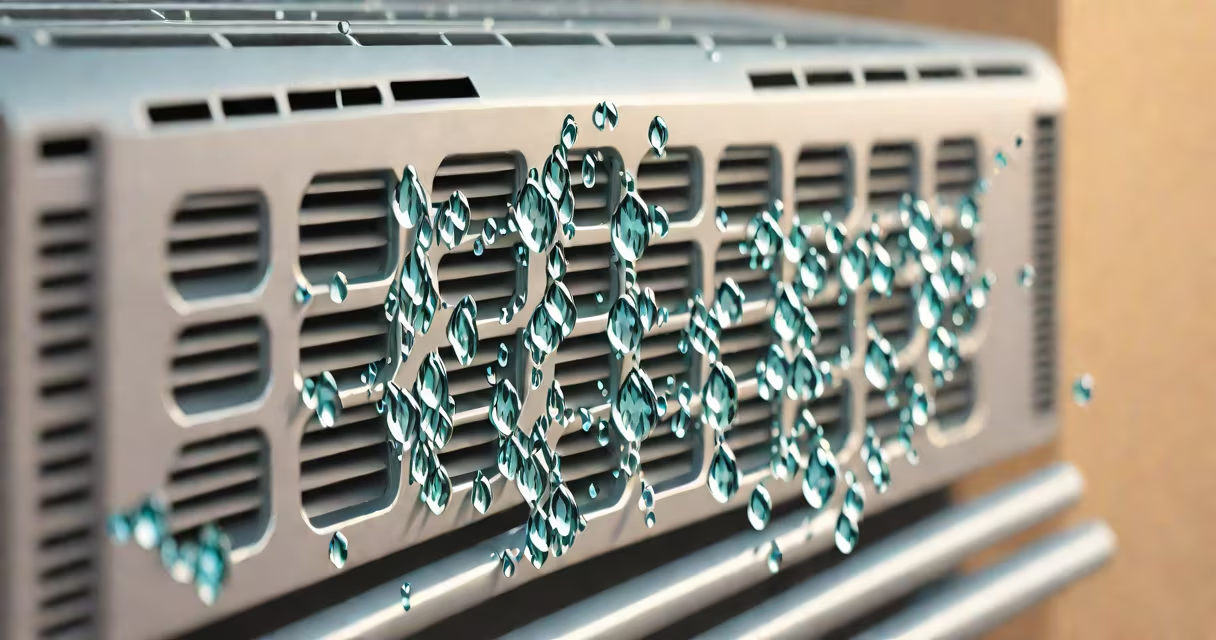
An air conditioner drips water because it removes moisture from indoor air during cooling. As warm, humid air passes over cold evaporator coils, water vapor condenses into liquid. This condensation collects in a drain pan and flows out through a drain line. When the system operates normally, this dripping is expected and harmless.
Condensation occurs because cool surfaces below the dew point cause water vapor to change state. For example, if indoor air is 75°F and 60% relative humidity, and the coil temperature drops to 55°F, condensation forms. The U.S. Department of Energy confirms that dehumidification is a core function of central air conditioning systems, with typical units removing 1-2 gallons of moisture per day in humid climates.
When the drip becomes excessive or leaks indoors, it signals a failure in the drainage system. Common culprits include clogged drain lines, a cracked drain pan, or a malfunctioning condensate pump. These failures disrupt the path of condensed water, leading to puddles near the indoor unit.
Every central air conditioning system relies on refrigerant to cool the evaporator coil. As warm indoor air blows across the cold coil, heat transfers from the air to the refrigerant. Simultaneously, the air's moisture reaches its dew point and turns into liquid water. This process is governed by thermodynamics and is unavoidable during cooling cycles.
The amount of water produced depends on ambient humidity and runtime. A typical 3-ton system running in 80°F, 70% humidity conditions generates about 1.5 gallons of condensate per 24 hours. This volume is manageable only if the drainage system functions correctly. Without proper flow, water accumulates and overflows.
For context, a study by the American Society of Heating, Refrigerating, and Air-Conditioning Engineers (ASHRAE) found that 68% of residential AC leaks originate from blocked drain lines, often due to algae or mold buildup. These blockages form within weeks if the line isn't cleaned regularly.
While some dripping is normal, visible water pooling around the indoor AC unit indicates a problem. The most frequent causes are:
A real-world example from a 2022 report by the National Association of Home Inspectors shows that 43% of AC-related water damage claims involved improperly sloped drain lines. One homeowner reported a 3-inch puddle under their furnace after a 12-hour cooling cycle-caused by a 1-inch bend in the drain line that trapped water.
Many assume that leaking water means the AC is broken or needs replacement. That's incorrect. A working AC can still drip excessively if the drainage system fails. The compressor and cooling function may operate perfectly while the drain pan overflows.
Another myth is that all AC leaks stem from refrigerant issues. Refrigerant leaks cause cooling failure, not water leaks. Water comes from condensation, not refrigerant. Confusing the two leads to costly repairs. For example, adding refrigerant to a clogged drain line does nothing to fix the overflow.
Also, not all water dripping is visible. Some systems have internal drains that leak slowly into walls or ceilings. A 2021 EPA study found that 29% of indoor water damage from HVAC systems went undetected for over six months due to hidden leaks.
Most AC drip issues are preventable with routine maintenance. Clean the drain line every 3-6 months using a mixture of vinegar and water. Flush 1 cup of white vinegar through the drain line to kill mold and algae. Recheck the slope and ensure the line exits properly.
If the drain pan is cracked, replace it with a new one made of aluminum or plastic. These materials resist corrosion better than steel. For homes with basements or high ceilings, install a condensate pump with a float switch. The pump activates when water reaches a set level, preventing overflow.
As a test, run the AC for 30 minutes and check the drain line exit point. If no water flows, the line is blocked. Use a wet/dry vacuum to clear the blockage. Avoid chemical drain cleaners-they can degrade PVC and rubber hoses.
I once replaced a drain pan in a 15-year-old unit where a 3-inch hole had formed from rust. After replacing the pan and cleaning the line, the system ran dry for five months with no leaks. The homeowner reported no further issues, even during peak summer.
Leaking water near the indoor unit requires attention. If you see standing water, turn off the AC and power to the furnace. Check the drain pan and line. If the issue persists after cleaning, contact a licensed HVAC technician.
Some problems require specialized tools. For example, locating a hidden leak behind drywall demands thermal imaging or moisture meters. A professional can verify whether the issue stems from the AC or a plumbing leak.
If the problem worsens, such as water dripping from the ceiling or mold growth, address it immediately. Prolonged exposure increases health risks and structural damage. The Environmental Protection Agency advises fixing water leaks within 24-48 hours to reduce mold risk.
Understanding why AC drips water clarifies that the process is normal-but the outcome isn't. Proper maintenance prevents damage and ensures efficient operation. When water appears where it shouldn't, act promptly to avoid costly repairs.