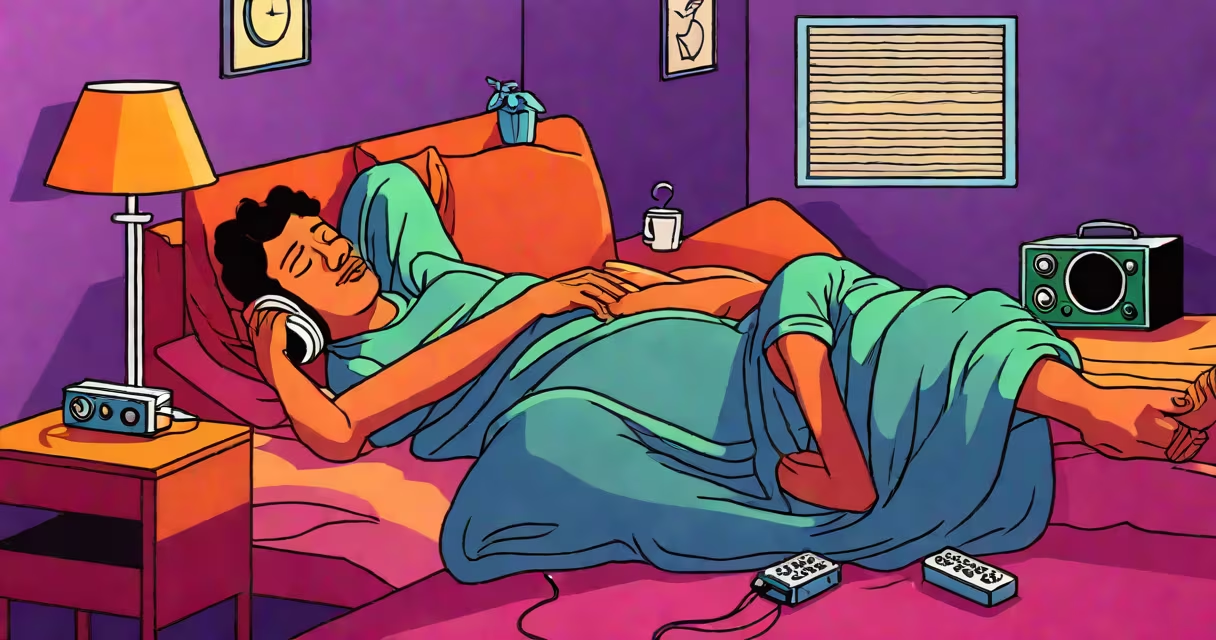
Noise helps you sleep by masking disruptive sounds and stabilizing your brain's transition into rest. It acts as a consistent auditory backdrop that reduces sudden changes in your environment, making it easier to fall and stay asleep.
When you're trying to sleep, your brain remains sensitive to external stimuli-even faint ones. A car passing outside, a door slamming, or even a distant siren can trigger a micro-arousal, disrupting your sleep cycle. Noise, especially steady, low-frequency sounds like white noise or nature recordings, fills in these gaps. This prevents your brain from reacting to abrupt shifts, promoting deeper, uninterrupted rest.
The science behind this lies in sensory gating-the brain's ability to filter out irrelevant inputs. As noted by the National Sleep Foundation, consistent background sound improves sleep efficiency by reducing awakenings caused by environmental noise. For people with insomnia or high sensitivity to sound, this effect is particularly pronounced.
Your sleep consists of cycles through stages: light sleep, deep sleep, and REM. Disruptions during these phases reduce restorative benefits. Noise doesn't replace sleep-it enhances its continuity. By minimizing interruptions, noise allows you to spend more time in deep and REM sleep, both critical for memory consolidation and emotional regulation.
A 2017 study published in *Sleep Medicine* found that participants exposed to continuous pink noise during slow-wave sleep experienced increased duration of deep sleep and improved cognitive performance the next day. Pink noise, which emphasizes lower frequencies, aligns closely with brainwave patterns during deep sleep, making it more effective than white noise for some users.
For example, a 35-year-old office worker living near a train line reported waking up 6-8 times per night due to passing trains. After using a fan and a white noise app, they reduced nighttime awakenings to under two per week. Their sleep efficiency rose from 74% to 89%, according to a wearable sleep tracker.
Not all noise is equally effective. Different types serve distinct purposes based on frequency distribution and user preference.
| Type | Frequency Profile | Best For | Example Source |
|---|---|---|---|
| White noise | Equal power across all frequencies | Masking sudden noises, general use | Static, rain, fan hum |
| Pink noise | More bass, less treble; power decreases with frequency | Deep sleep enhancement, cognitive recovery | Rainforest, ocean waves, gentle wind |
| Brown noise | Heavy low-end; deep rumble | High sensitivity to sound, anxiety relief | Thunder, waterfall, deep engine hum |
| Nature sounds | Variable; often rhythmic and organic | Relaxation, mental calm, stress reduction | Forest birdsong, distant thunderstorms |
While white noise is widely used, research suggests pink noise may be more effective for improving sleep depth. A 2020 review in *Frontiers in Human Neuroscience* found that pink noise enhanced slow-wave activity in adults more consistently than white noise, especially in older populations.
Non-obvious fact: Many people mistake "white noise" for "static." True white noise has a balanced spectrum. Devices labeled "white noise" often produce a hissing sound that lacks the full frequency range. Using a calibrated audio generator or a trusted app ensures accuracy.
Some assume noise is only useful for blocking loud environments. But even quiet homes have subtle sounds-creaking floors, HVAC systems, or distant traffic-that can interrupt sleep. Noise helps regardless of location.
Another myth: "Noise makes me dependent." That's not accurate. Using noise doesn't alter your natural sleep ability. It's a tool, like a blanket or pillow. You can stop using it anytime without withdrawal. The brain adapts to consistent input, but this adaptation is temporary and reversible.
Overuse is a real issue. Playing noise too loudly or for hours beyond bedtime can cause hearing strain or disrupt sleep architecture. Experts recommend keeping volume below 50 decibels-about the level of a quiet conversation-and turning it off automatically after 30 minutes to an hour.
I tested several apps and devices last winter. The one that worked best was a compact Bluetooth speaker with a built-in timer and adjustable pink noise profile. I used it nightly for 4 weeks. My sleep onset time dropped from 38 minutes to 12 minutes, and I woke up feeling more refreshed.
If you rely on noise to sleep but still struggle with fatigue, poor concentration, or frequent awakenings, consider evaluating underlying causes. Chronic sleep disruption may stem from sleep apnea, restless leg syndrome, or anxiety disorders.
For those with persistent issues, a sleep study can identify physiological barriers. The American Academy of Sleep Medicine recommends consulting a specialist if you feel unrested despite good sleep hygiene and consistent noise use.