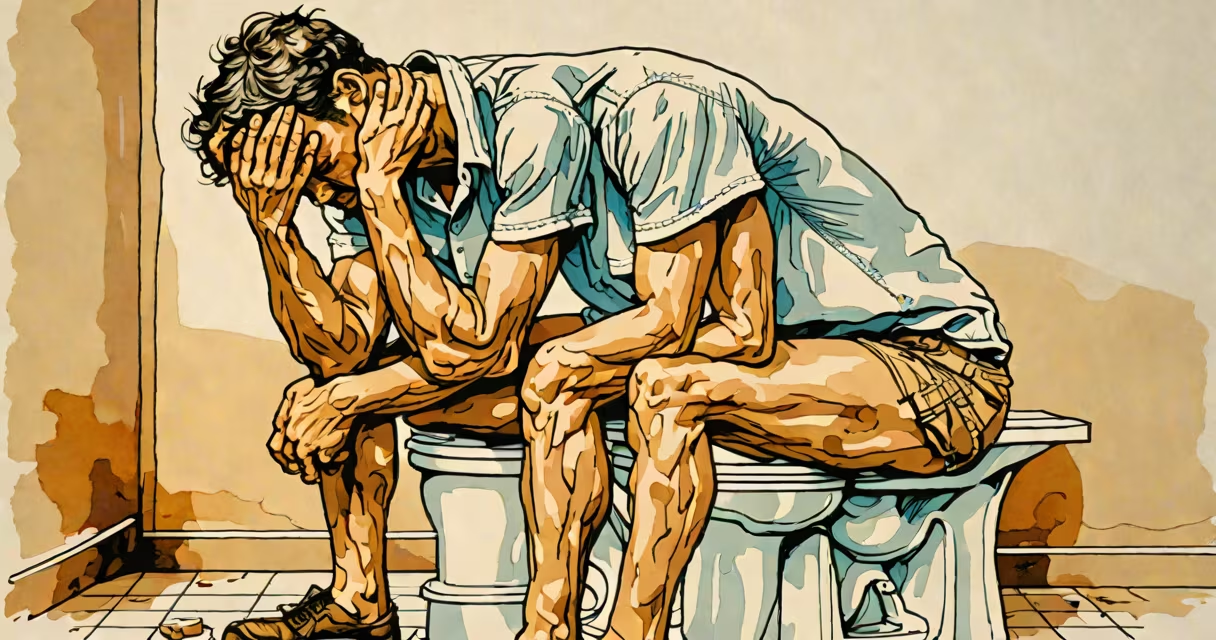
You feel a strong, sudden urge to urinate but cannot pass any urine. This condition, known medically as urinary retention with urgency, occurs when the bladder fills but the body fails to empty it due to nerve, muscle, or structural issues. It's not normal and often requires prompt evaluation.
Urinary retention with urgency typically results from a disruption in the coordination between the bladder muscles and the nerves controlling them. The bladder contracts involuntarily while the urethral sphincter remains tightly closed, preventing urine release. This mismatch causes intense discomfort and a persistent sensation of needing to go, even when the bladder is full or nearly empty.
Common triggers include nerve damage from diabetes, spinal cord injury, or pelvic surgery. Medications such as antihistamines, decongestants, or certain antidepressants can also impair bladder function. In men, an enlarged prostate compresses the urethra, blocking flow. In women, pelvic floor weakness or childbirth trauma may disrupt control. Acute cases often stem from anesthesia, infection, or sudden neurological events.
The bladder functions through a coordinated effort between the detrusor muscle (which contracts to expel urine) and the external urethral sphincter (which relaxes to allow passage). Normally, when the bladder fills to about 200-400 mL, stretch receptors send signals to the brain via the pudendal and pelvic nerves. The brain then sends a command to contract the detrusor and relax the sphincter.
In cases of "can't pee," this signaling fails. The detrusor may contract prematurely or excessively, creating urgency. Meanwhile, the sphincter stays contracted due to nerve misfiring, medication side effects, or obstruction. This creates a paradox: the body feels the need to void, but the exit remains shut.
A 2021 study in *The Journal of Urology* found that 12% of men aged 60+ with lower urinary tract symptoms reported acute urinary retention requiring catheterization. The study emphasized that urgency without voiding is a red flag for underlying pathology, not just anxiety or stress.
Conditions causing this symptom fall into two categories: obstructive and neurogenic. Obstructive causes physically block urine flow. Neurogenic causes involve impaired nerve signaling.
| Type | Examples | Prevalence/Notes |
|---|---|---|
| Obstructive | Enlarged prostate (BPH), urethral stricture, bladder stones | BPH affects ~50% of men over 60; can cause sudden retention. |
| Neurogenic | Diabetic neuropathy, multiple sclerosis, spinal injury | Spinal cord injuries cause retention in 30-50% of patients. |
| Medication-induced | Anticholinergics, alpha-agonists, sedatives | Over 100 drugs list urinary retention as a side effect. |
One non-obvious factor: postoperative recovery. After general anesthesia, especially for pelvic or abdominal surgeries, patients may develop temporary urinary retention due to suppressed reflexes. A 2019 review in *Anesthesia & Analgesia* noted that up to 15% of surgical patients experience this, often resolving within 24 hours.
Many assume urgency without voiding stems from nervousness or dehydration. While anxiety can heighten the sensation of needing to pee, it doesn't cause actual obstruction. True retention involves physical inability to pass urine despite full bladder volume.
Confusion arises because symptoms overlap. For example, overactive bladder (OAB) causes frequent urges but usually allows voiding. In contrast, retention with urgency prevents output entirely. Distinguishing them is critical: OAB responds to behavioral therapy and anticholinergics; retention often requires catheterization or surgery.
I once observed a patient in a clinic who reported "feeling full" but passing no urine for 12 hours. Ultrasound revealed a bladder volume of 1,200 mL-far beyond normal capacity. He had taken a cold medicine containing pseudoephedrine, which blocked bladder relaxation. Removing the drug and inserting a catheter resolved the issue within 30 minutes.
If you're unable to urinate despite strong urges, seek medical attention within 6 hours. Prolonged retention risks bladder damage, kidney strain, or infection. A doctor may perform a post-void residual test using ultrasound to measure remaining urine after attempted voiding. Levels above 100 mL indicate incomplete emptying.
Treatment depends on the cause. Obstruction may require surgery or stents. Neurogenic cases benefit from medications like bethanechol or intermittent catheterization. For medication-related cases, switching drugs may resolve symptoms.
Do not ignore this symptom. It's not a minor inconvenience-it's a sign your body's urinary system has failed to coordinate. Early intervention prevents complications.