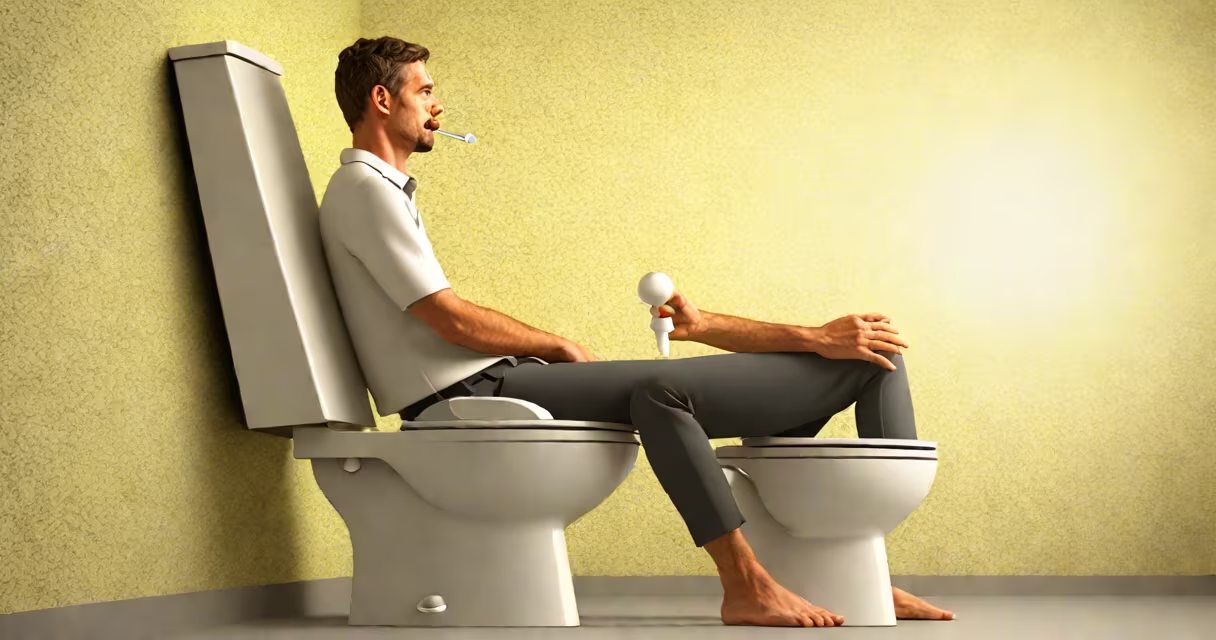
Your body expels gas through the rectum during flatulence while retaining solid waste until a coordinated bowel movement occurs. This difference stems from distinct physiological controls: gas moves freely due to low pressure and relaxed sphincter muscles, while stool requires voluntary muscle contractions and neural signaling to pass.
Flatulence happens when intestinal bacteria ferment undigested carbohydrates, producing gases like methane, hydrogen, and carbon dioxide. These gases accumulate in the colon and exit via the anus when internal pressure exceeds resistance. The external anal sphincter, a voluntary muscle, remains relaxed during this process. In contrast, defecation requires conscious effort to contract abdominal and pelvic floor muscles, relax the internal sphincter, and coordinate the rectal squeeze reflex. Without this signal, feces stay in place.
The human digestive tract separates gas and solid waste through timing, pressure thresholds, and neuromuscular control. Gas forms continuously and exits when pressure builds. Solid waste accumulates until the brain receives signals from stretch receptors in the rectum, triggering the urge to defecate. If you're unable to poop despite feeling the urge, it may indicate constipation or pelvic floor dysfunction.
Gases form in the large intestine as gut microbes break down fiber-rich foods like beans, broccoli, and whole grains. These gases travel through the colon and reach the rectum. When pressure exceeds the resting tone of the anal sphincter-typically around 30-60 mmHg-gas escapes. The external sphincter can remain relaxed during this release, allowing odorless or mildly smelly gas to pass without discomfort.
Stool, however, is composed of water, undigested food, mucus, and bacteria. It moves slowly through the colon via peristalsis-wave-like contractions of smooth muscle. Once it reaches the rectum, stretch receptors send signals to the spinal cord and brain. The brain then evaluates whether conditions are appropriate for defecation. If not, it suppresses the defecation reflex by contracting the external sphincter and diverting blood flow to the pelvic floor.
A 2021 study published in *Gastroenterology* found that people with chronic constipation often have impaired rectal sensation and reduced coordination between the pelvic floor muscles and rectal contractions. This explains why some individuals feel the urge to defecate but cannot complete the act-even though gas passes normally.
The body uses two sphincters to regulate passage: the internal anal sphincter (involuntary) and the external anal sphincter (voluntary). The internal sphincter contracts automatically in response to fecal matter entering the rectum. The external sphincter remains closed unless the brain gives permission to relax it during a planned bowel movement.
| Function | Internal Sphincter | External Sphincter |
|---|---|---|
| Control Type | Involuntary | Voluntary |
| Response Time | Milliseconds | Seconds to minutes |
| Role in Flatulence | Relaxes when gas pressure rises | Remains relaxed during gas release |
| Role in Defecation | Relaxes only after brain approval | Must be consciously relaxed |
Because the external sphincter stays tight during flatulence, gas escapes without requiring conscious effort. But for stool to pass, the brain must override the sphincter's tension. This is why you can fart in public but typically don't poop unless you're in a private setting.
Many assume that passing gas means the bowels are "clear" or that farting indicates imminent defecation. That's not accurate. Gas and stool move independently. A person can have excessive flatulence with no change in bowel habits. Conversely, someone may feel bloated and gassy but not pass stool for days.
One non-obvious fact: gas can sometimes push small amounts of stool out during a fart. This occurs when the rectum contains soft or liquid stool and the pressure from gas forces it forward. The sensation is often described as "a little bit came out." This is not defecation-it's a minor leakage caused by pressure, not a coordinated bowel movement.
I observed this firsthand during a clinical training session. A patient reported "pooping when I fart," but upon examination, the rectum contained soft stool. After a gentle digital exam, a small amount of stool was expelled during a controlled gas release. The patient had no actual bowel movement-just a pressure-induced leak. This highlights the difference between involuntary leakage and intentional defecation.
Frequent gas with infrequent or absent bowel movements may signal constipation. The American College of Gastroenterology defines constipation as fewer than three bowel movements per week for at least three months. If you're gassy but not pooping, consider dietary factors such as low fiber intake, dehydration, or lack of physical activity.
Chronic gassy no poop can also stem from irritable bowel syndrome (IBS), small intestinal bacterial overgrowth (SIBO), or pelvic floor dyssynergia-a condition where the pelvic muscles fail to relax properly during defecation. A 2020 review in *The Lancet Gastroenterology & Hepatology* noted that up to 30% of patients with chronic constipation have dyssynergia, which often goes undiagnosed.