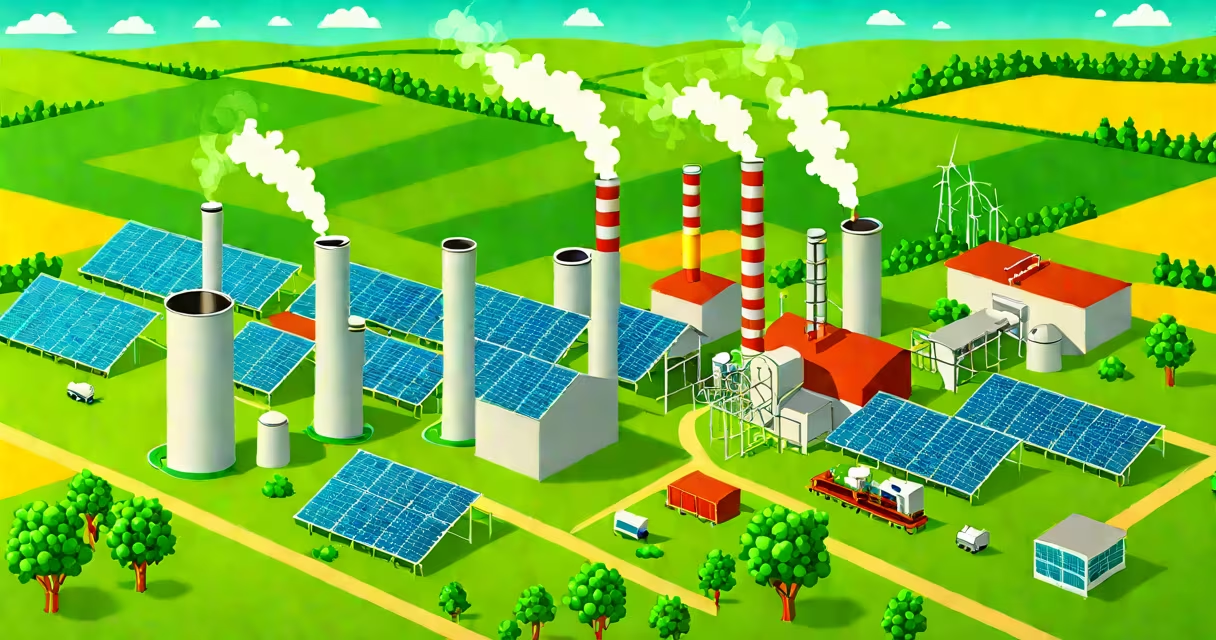
Biomass energy is good because it uses organic materials like wood chips, crop residues, and waste to generate electricity and heat while reducing reliance on fossil fuels and lowering net greenhouse gas emissions. It turns waste into usable energy, supports rural economies, and offers a stable alternative to intermittent renewables.
Biomass energy systems burn organic matter or convert it through chemical processes to release stored energy. The feedstock-plants, agricultural byproducts, forestry residues, or even municipal solid waste-is collected, processed, and fed into a combustion chamber or gasifier. Heat from burning produces steam, which drives turbines to generate electricity. Alternatively, anaerobic digestion converts wet biomass into biogas, primarily methane, which can be burned for power or upgraded to renewable natural gas.
Unlike fossil fuels, biomass is considered carbon-neutral over its lifecycle. When plants grow, they absorb CO₂ from the atmosphere. When burned, they release roughly the same amount back. This cycle keeps atmospheric carbon levels stable-provided harvesting doesn't exceed regrowth rates. According to the U.S. Department of Energy, sustainably managed biomass can reduce carbon emissions by up to 80% compared to coal-fired power.
At a typical biomass facility, such as the one in Davenport, Iowa, wood waste from local sawmills is shredded and fed into a boiler. The heat creates high-pressure steam that spins a turbine connected to a generator. The plant produces 50 megawatts-enough to power around 50,000 homes annually-and operates continuously, unlike solar or wind, which depend on weather.
Another model uses anaerobic digesters on dairy farms. Cow manure is collected and placed in sealed tanks without oxygen. Microbes break it down into biogas, which is burned to run generators. The leftover sludge becomes fertilizer. A farm in Wisconsin using this system reduced its methane emissions by 90% and cut energy costs by 60%.
These systems work because biomass is abundant and locally available. The U.S. Environmental Protection Agency estimates that the U.S. generates over 1 billion tons of biomass annually-enough to meet 10% of national electricity demand if fully utilized.
Different feedstocks produce varying amounts of energy. Dry matter content and calorific value determine efficiency. For example:
| Type | Moisture Content (%) | Energy Density (MJ/kg) | Common Source |
|---|---|---|---|
| Wood pellets | 8-10 | 18.5 | Forest residues, sawmill waste |
| Corn stover | 15-20 | 15.2 | After harvest corn stalks |
| Animal manure | 70-80 | 10.5 | Dairy and poultry operations |
| Food waste | 60-70 | 12.0 | Commercial kitchens, landfills |
Wood pellets have the highest energy density and are widely traded globally. Corn stover is common in the Midwest, where farmers sell leftover stalks after harvest. Food waste is increasingly used in urban facilities, such as the one in San Francisco that processes 15,000 tons of food scraps yearly into biogas.
Many assume biomass is inherently clean. That's incorrect. Burning biomass releases nitrogen oxides, particulates, and volatile organic compounds-pollutants regulated under the Clean Air Act. Modern facilities use scrubbers and filters to reduce emissions. The EPA requires biomass plants to meet the same air quality standards as coal plants.
Another myth is that biomass is always carbon-neutral. While the principle holds, real-world impacts vary. Harvesting forests faster than they regrow leads to net carbon increases. A 2021 study in *Nature Communications* found that biomass from clear-cutting old-growth forests increased carbon emissions for up to 100 years compared to leaving trees standing.
True sustainability depends on sourcing. The European Union's Renewable Energy Directive sets strict criteria: biomass must come from certified sustainable sources, avoid deforestation, and not compete with food crops. Facilities that follow these rules reduce environmental harm.
In Sweden, biomass supplies over 30% of national energy needs. District heating networks in cities like Stockholm burn wood chips and recycled paper to warm homes. The system cuts household heating costs by 40% and reduces city-wide emissions by 2 million tons of CO₂ annually.
On a smaller scale, a village in rural Kenya uses a 5-kilowatt biomass stove powered by dried dung and crop waste. It replaced kerosene lamps and cooking fires, reducing indoor air pollution. Children's respiratory illness rates dropped by 35% within a year, according to a field report by the World Health Organization.
These cases show biomass energy isn't just theoretical-it delivers measurable improvements in health, cost, and emissions. When managed responsibly, it provides baseload power, stabilizes grids, and supports energy independence.
For those exploring alternatives to fossil fuels, biomass offers a proven path. It integrates well with existing infrastructure, scales from small community projects to large industrial plants, and contributes to both energy security and climate targets. Its role grows stronger as nations phase out coal and oil.
When properly implemented, why biomass energy is good becomes clear: it turns waste into power, reduces emissions, and supports resilient local economies. The technology exists. The resources are available. The challenge is responsible deployment.