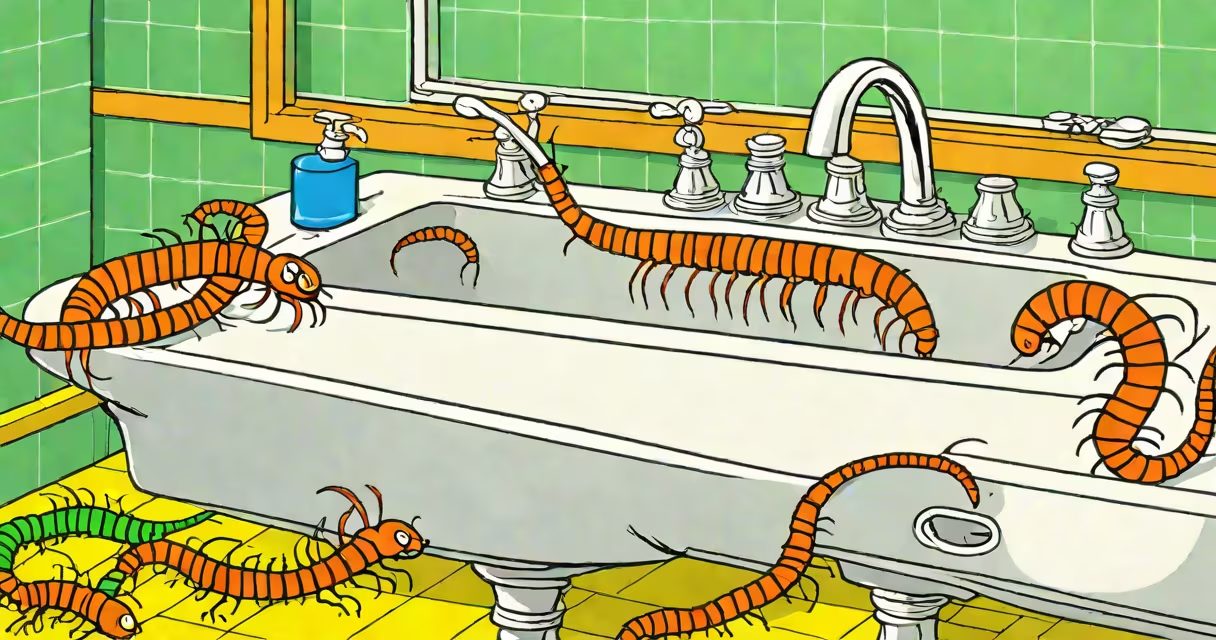
Centipedes in your bathroom are drawn to damp environments and small insects they feed on, not because of cleanliness. They enter homes through cracks, under doors, or via plumbing systems seeking moisture and prey.
These multi-legged arthropods thrive in humid spaces like bathrooms, especially around sinks, showers, and drains. They don't live in the toilet bowl but may crawl into it during dry spells. Their presence signals high humidity or hidden insect populations.
According to the University of California Agriculture and Natural Resources, centipedes are beneficial predators that eat silverfish, ants, and other pests. Finding one doesn't mean your home is infested-it's often a single individual seeking shelter or food.
Centipedes enter homes through gaps in foundations, door thresholds, window frames, or utility lines. They're attracted to moisture and warmth, making bathrooms ideal entry points and temporary habitats.
They can also travel through plumbing systems. A study by the Entomological Society of America found that some species of house centipedes (Scutigera coleoptrata) have been detected in basement pipes and drain traps, suggesting they can move through water-filled pipes.
Once inside, they stay near wet areas-under sinks, behind tiles, or in wall cavities. They avoid light and hide in dark, moist corners during the day.
Centipedes have segmented bodies with one pair of legs per segment. Adults grow between 1 and 2 inches long, though some species reach 6 inches. They have long antennae and venomous claws near their heads used to subdue prey.
Their diet consists of small insects: silverfish, ants, mites, and springtails. A single centipede can consume up to 10 small insects per week. This makes them effective natural pest controllers in homes.
Despite their intimidating appearance, centipedes do not bite humans unless provoked. Their venom causes mild pain, redness, and swelling-similar to a bee sting-but rarely requires medical treatment. The CDC notes that no human deaths have been linked to centipede bites.
Many assume centipedes indicate poor sanitation. This is false. They prefer dampness over dirt. A clean bathroom with high humidity still attracts them.
Another myth is that they multiply rapidly. Centipedes reproduce slowly-females lay eggs in soil or wood, and development takes months. An infestation of dozens is unlikely without a consistent food source and breeding conditions.
Some confuse them with millipedes. Millipedes have two leg pairs per segment and roll into tight balls when threatened. They eat decaying plant matter, not live insects. Only centipedes are predatory and capable of biting.
Three common species appear indoors:
| Species | Size | Habitat | Diet |
|---|---|---|---|
| House centipede (Scutigera coleoptrata) | 1-2 inches | Bathrooms, basements, walls | Ants, silverfish, spiders |
| Desert centipede (Scolopendra spp.) | 2-6 inches | Warm, dry areas | Small vertebrates, insects |
| Forest centipede (Lithobius forficatus) | 0.5-1 inch | Under rocks, logs | Springtails, mites |
House centipedes are most likely to appear in bathrooms. They're pale yellowish-gray with long legs and move quickly. Their presence is usually isolated, not indicative of a colony.
In 2022, a homeowner in Portland, Oregon reported finding a 1.5-inch centipede near the shower drain. The bathroom had a leaky faucet and high humidity due to daily showers. No other signs of pests were present.
A pest control professional inspected the area and found no entry points larger than 1/8 inch. The centipede was likely drawn by moisture and a small population of silverfish living behind the tile.
After fixing the leak and sealing gaps, the homeowner saw no further sightings. The issue resolved with environmental changes-not chemical treatment.
Reduce bathroom humidity below 60%. Use exhaust fans during and after showers. Fix leaks promptly. Keep towels and rugs off the floor to reduce damp hiding spots.
Seal cracks around windows, doors, and pipes with silicone caulk. Install door sweeps. Place dehumidifiers in basements or bathrooms with poor ventilation.
Eliminate their food sources. If silverfish or ants appear, address those first. Using sticky traps near drains can catch both centipedes and their prey.
Seeing one centipede occasionally is normal. Finding more than three in a month suggests a moisture problem or uncontrolled insect population.
Large centipedes (over 2 inches) may indicate outdoor nesting nearby. Species like Scolopendra can be aggressive and deliver painful bites. If you suspect such a species, contact a licensed pest control operator.
Centipedes are not disease carriers. The National Pest Management Association confirms no documented cases of centipedes transmitting pathogens to humans.
Understanding why there are centipedes in your bathroom removes fear. They're not invaders-they're indicators. Addressing moisture and insect access stops them permanently.