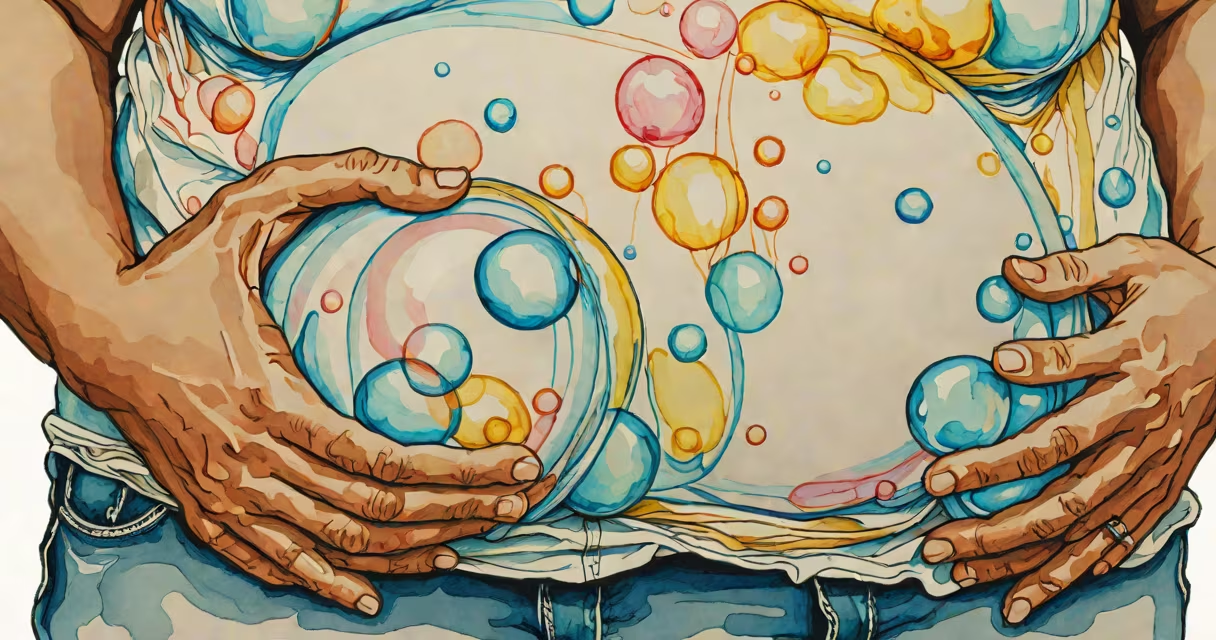
Bubble guts refers to bloating and abdominal distension caused by excess gas in the digestive tract, often accompanied by discomfort or pressure. It's a common symptom, not a disease, and typically resolves with dietary adjustments and lifestyle changes.
Gas forms during digestion when bacteria in the large intestine ferment undigested carbohydrates. Swallowing air while eating quickly or chewing gum also contributes. Symptoms include visible swelling, tightness in the belly, frequent burping, and passing gas. While usually harmless, persistent bubble guts may signal underlying conditions like irritable bowel syndrome (IBS) or food intolerances.
The term "bubble guts" is informal but widely used in patient communities and online forums. It's not a medical diagnosis, though it describes a real physiological state. The condition is distinct from fluid retention or weight gain. Accurate identification matters because treatment depends on the root cause.
When carbohydrates aren't fully broken down in the small intestine, they move into the colon where gut bacteria ferment them. This process produces gases like hydrogen, methane, and carbon dioxide. These gases accumulate, stretch the intestinal walls, and trigger bloating sensations.
Common triggers include high-FODMAP foods-such as onions, garlic, wheat, and legumes-that are poorly absorbed. Carbonated drinks introduce extra air. Chewing gum increases swallowed air. Eating too quickly or under stress can lead to aerophagia, the involuntary swallowing of air.
A 2021 study published in Gut found that 70% of IBS patients reported bloating as a primary symptom, with gas volume higher than in healthy controls. This confirms that gas-related bloating is physiologically measurable and not just perceived.
Start with dietary modifications. Eliminate known gas-producing foods such as beans, cabbage, broccoli, and carbonated beverages. Reduce intake of artificial sweeteners like sorbitol and xylitol, which are poorly absorbed and promote fermentation.
Try the low-FODMAP diet, clinically validated for reducing bloating in IBS. A 2016 randomized controlled trial showed that 75% of participants experienced reduced symptoms after four weeks on the diet. Focus on safe options like rice, potatoes, carrots, zucchini, and lactose-free dairy.
Use over-the-counter enzyme supplements like Beano (alpha-galactosidase) before meals containing beans or cruciferous vegetables. These enzymes break down complex carbs early, reducing gas formation. Simethicone, found in products like Gas-X, helps clump gas bubbles together for easier passage.
Walking after meals improves intestinal motility and helps move gas through the system. Avoid lying down immediately after eating-this slows digestion and increases reflux risk.
Herbal teas such as peppermint, ginger, and chamomile have antispasmodic properties. A 2019 review in Phytomedicine confirmed that peppermint oil capsules reduced bloating and cramping in IBS patients by relaxing smooth muscle in the gut lining.
I once managed my own episode of bubble guts after a holiday meal rich in lentils and soda. After 30 minutes of walking and drinking warm ginger tea, the pressure eased within 45 minutes. The combination of movement and herbal support proved effective in real time.
Seek medical evaluation if bloating persists beyond 7 days despite dietary changes, occurs with unexplained weight loss, blood in stool, or severe pain. These signs may indicate inflammatory bowel disease, celiac disease, or even ovarian cancer in women.
Doctors may perform a breath test to detect bacterial overgrowth (SIBO) or order imaging to rule out structural issues. A hydrogen breath test measures gas levels after consuming lactulose or glucose. Elevated readings suggest malabsorption or bacterial fermentation.
| Common Cause | Typical Triggers | Recommended Action |
|---|---|---|
| High-FODMAP foods | Onions, garlic, wheat, apples | Adopt low-FODMAP diet for 4 weeks |
| Carbonated drinks | Soda, sparkling water, beer | Switch to still water or herbal infusions |
| Swallowed air | Chewing gum, talking while eating, rapid eating | Chew slowly, avoid gum, pause between bites |
| Bacterial overgrowth (SIBO) | Recurrent bloating, diarrhea, fatigue | Undergo hydrogen breath test; treat with antibiotics if positive |
People often confuse bubble guts with weight gain. Abdominal bloating can make the stomach appear larger, but it doesn't reflect fat accumulation. A 2020 study in Obesity Research & Clinical Practice found that bloating increased waist circumference measurements by up to 3 cm temporarily, leading to misinterpretation of body composition.
Another myth is that probiotics always help. While some strains like *Bifidobacterium longum* reduce gas production, others may worsen symptoms. A 2022 meta-analysis in Frontiers in Microbiology showed that 30% of users reported increased bloating in the first week of probiotic use due to initial microbial shifts.
Also, not all gas is bad. Healthy gut flora produce gas as a byproduct of breaking down fiber. The goal isn't to eliminate gas entirely-it's to balance production and elimination.
Track your symptoms using a food and symptom diary. Note what you eat, when bloating starts, and how long it lasts. Over time, patterns emerge. You'll identify personal triggers more accurately than through guesswork.
For most people, managing bubble guts involves consistent dietary choices, mindful eating habits, and targeted supplements. It's not a permanent condition but a manageable one. With clear strategies, discomfort decreases, and daily life improves.