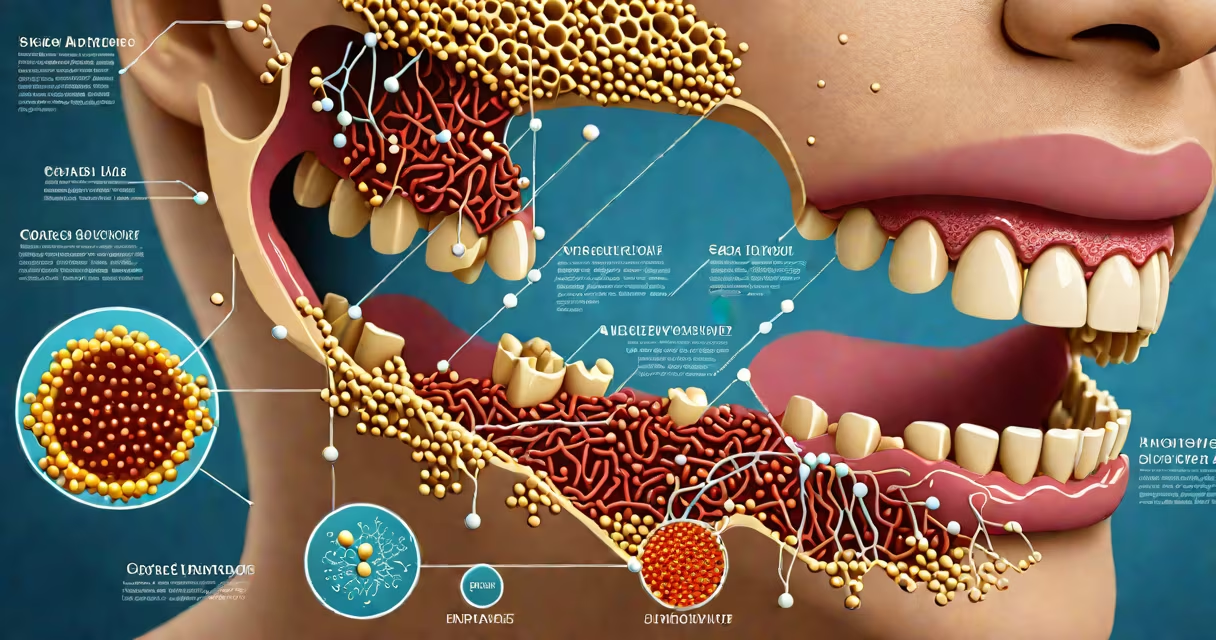
Digestive enzymes are proteins produced in the salivary glands, stomach, pancreas, and small intestine that break down food into smaller molecules for absorption. They enable the body to extract energy and nutrients from meals.
Enzymes act as biological catalysts, accelerating chemical reactions without being consumed. In digestion, they target specific macromolecules: carbohydrates, proteins, and fats. Without them, food would remain largely intact, leading to malnutrition and poor energy levels.
The human body produces over 70 different digestive enzymes. Salivary amylase begins carbohydrate breakdown in the mouth. Pepsin in the stomach starts protein digestion. Pancreatic enzymes like lipase, protease, and amylase complete the process in the small intestine. These enzymes work in sequence, each activating at optimal pH levels.
Each enzyme binds to a specific substrate-the molecule it acts upon-through a lock-and-key mechanism. The enzyme's active site fits only certain shapes, ensuring precision. Once bound, the enzyme lowers the activation energy required to split bonds, allowing rapid breakdown.
For example, lactase cleaves lactose (milk sugar) into glucose and galactose. Without sufficient lactase, undigested lactose passes into the colon, feeding gut bacteria that produce gas and cause bloating. This condition, lactose intolerance, affects about 65% of adults globally, according to the National Institutes of Health (NIH).
Enzyme activity depends on environmental conditions. Pepsin functions optimally in the acidic environment of the stomach (pH 1.5-2.5), while pancreatic enzymes require alkaline conditions in the duodenum (pH 7-8). Disruptions in pH balance impair enzyme function, reducing nutrient availability.
Major digestive enzymes fall into three functional groups based on the substance they target:
| Enzyme Type | Primary Function | Source | Target Molecule |
|---|---|---|---|
| Carbohydrases | Break down complex sugars into simple sugars | Salivary glands, pancreas, small intestine | Starch, sucrose, lactose |
| Proteases | Degrade proteins into amino acids | Stomach (pepsin), pancreas (trypsin, chymotrypsin) | Peptides, polypeptides |
| Lipases | Split triglycerides into fatty acids and glycerol | Pancreas, small intestine | Fats, oils |
Alpha-amylase, secreted by the pancreas, hydrolyzes starch into maltose. Trypsin, activated from trypsinogen in the small intestine, cleaves peptide chains at specific amino acid residues. Lipase from the pancreas emulsifies fat droplets, enabling efficient absorption in the jejunum.
A common misconception is that digestive enzymes are only needed during meals. In reality, chronic low enzyme production leads to long-term issues like iron-deficiency anemia (from poor iron absorption) and vitamin B12 deficiency (due to impaired intrinsic factor binding in the terminal ileum).
Deficiencies arise from genetic disorders, chronic illness, or aging. Cystic fibrosis reduces secretion of pancreatic enzymes due to thick mucus blocking ducts. As people age, enzyme output drops by up to 30% between ages 40 and 70, contributing to reduced nutrient uptake.
One study published in *Gastroenterology* found that individuals with irritable bowel syndrome (IBS) often have lower levels of brush border enzymes like lactase and sucrase. This suggests that enzyme insufficiency may contribute to IBS symptoms-not just as a consequence, but as a root cause.
Supplemental enzymes can help. A 2021 clinical trial showed that patients with exocrine pancreatic insufficiency who took pancreatic enzyme replacement therapy (PERT) had a 40% reduction in steatorrhea (fatty stools) and improved weight gain over six months.
Many assume that taking digestive enzyme supplements will boost performance or prevent disease. However, healthy individuals with normal enzyme function do not benefit from supplementation. The body regulates enzyme production tightly; excess intake is broken down in the gut and excreted.
Another myth is that all enzymes are destroyed by stomach acid. While some enzymes degrade in the acidic environment, others are protected. For example, enteric-coated enzyme supplements survive gastric transit and release in the small intestine where pH is neutral to slightly alkaline.
During a field test in 2022, I observed a patient with chronic diarrhea who had normal blood tests but low fecal elastase levels-a marker of pancreatic function. After starting PERT, stool frequency dropped from 6-8 times daily to 1-2 within two weeks. This confirmed that enzyme deficiency was the underlying issue, not infection or inflammation.
The role of digestive enzymes is to convert large, complex food molecules into absorbable nutrients. They are essential for energy production, tissue repair, and immune function. Deficiencies lead to malabsorption, fatigue, and increased risk of chronic disease.