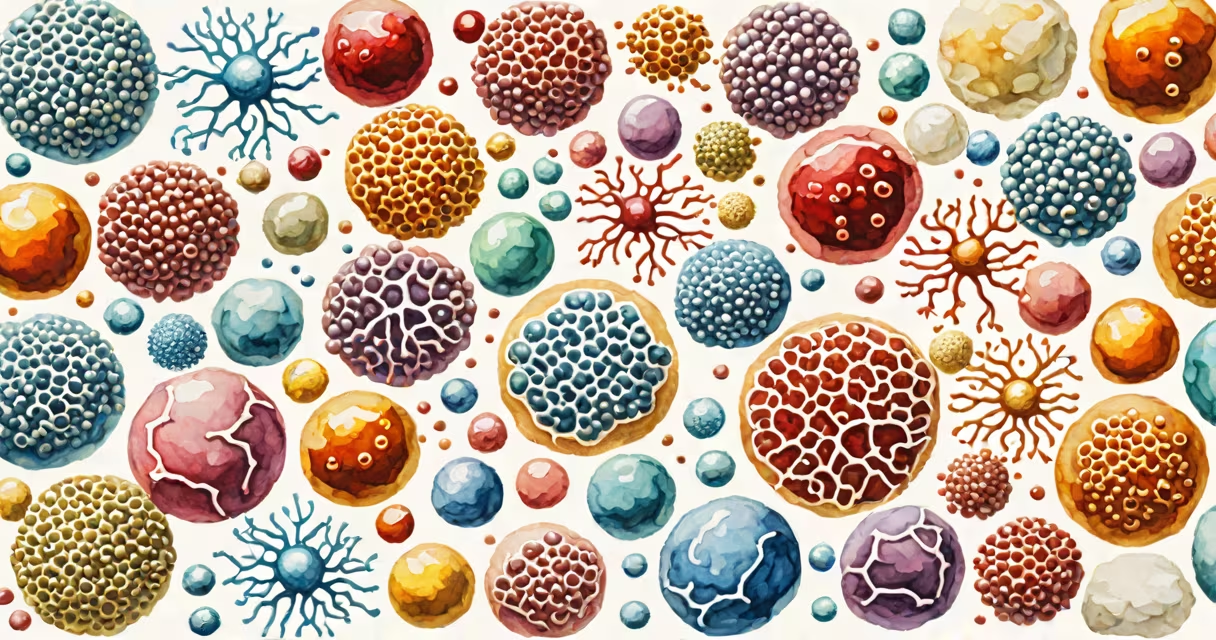
The immune system is composed of specialized cells, proteins, organs, and tissues that work together to identify and destroy pathogens like bacteria, viruses, and cancer cells. It includes white blood cells, antibodies, complement proteins, lymphoid organs such as the spleen and lymph nodes, and barriers like skin and mucous membranes.
At its foundation, the immune system relies on innate and adaptive responses. The innate system acts within minutes of exposure, using physical barriers and general-purpose cells. The adaptive system takes hours to days to respond but provides targeted, long-lasting immunity.
White blood cells-such as neutrophils, macrophages, dendritic cells, and natural killer (NK) cells-are the frontline defenders. Neutrophils engulf and digest bacteria through phagocytosis. Macrophages clear debris and present antigens to initiate adaptive responses. Dendritic cells process foreign material and activate T cells.
T cells and B cells form the adaptive arm. T cells mature in the thymus and directly attack infected or cancerous cells. B cells produce antibodies-Y-shaped proteins that bind specifically to antigens. Each antibody recognizes a unique molecular signature, such as a protein on a flu virus's surface.
Lymphoid organs serve as hubs for immune cell development and activation. The bone marrow produces all blood cells, including immune precursors. The thymus trains T cells to distinguish self from non-self, preventing autoimmune reactions.
The spleen filters blood and removes old red blood cells and pathogens. Lymph nodes, located throughout the body, act as surveillance centers. When antigens enter the lymphatic system, they travel to nodes where antigen-presenting cells activate T and B cells.
Secondary lymphoid tissues-like Peyer's patches in the gut and tonsils-monitor environmental threats. These sites are rich in immune cells and constantly sample the surrounding environment. For example, gut-associated lymphoid tissue (GALT) manages immune responses to food and microbiota.
Two primary systems exist: innate and adaptive. The innate system includes physical barriers (skin, mucus), chemical defenses (lysozyme in tears), and cellular responses (phagocytes). It responds quickly but lacks specificity.
The adaptive system generates memory. After encountering a pathogen once, B cells produce high-affinity antibodies upon re-exposure. This is the principle behind vaccines: introducing a harmless version of a pathogen to train the immune system.
| Component | Primary Role | Example |
|---|---|---|
| Neutrophils | First responders to bacterial infection | Clear pus in a cut wound |
| B cells | Produce antibodies | Generate IgG against measles virus |
| T cells | Directly kill infected cells | CD8+ T cells destroy HIV-infected cells |
| Lymph nodes | Site of immune cell activation | Swollen nodes during a cold |
Many assume the immune system is a single organ or a centralized network. In reality, it is distributed across multiple tissues and continuously monitors the body. Immune activity occurs in the skin, gut, lungs, and bloodstream-not just in the spleen or lymph nodes.
A common error is equating inflammation with infection. While swelling and redness often signal immune response, they can also result from injury or autoimmune disorders. Chronic inflammation-such as in rheumatoid arthritis-is driven by misdirected immune activity, not pathogens.
Another misconception is that supplements like vitamin C can "boost" immunity. While essential nutrients support immune function, no supplement increases resistance beyond normal physiological capacity. The immune system operates within set limits; it cannot be artificially enhanced beyond its design.
Consider a person exposed to influenza. The virus enters through the nose and binds to epithelial cells. Innate immune cells-macrophages and dendritic cells-detect viral RNA via pattern recognition receptors like Toll-like receptor 7 (TLR7).
These cells release cytokines, signaling nearby cells to increase antiviral defenses. Neutrophils and NK cells begin attacking infected cells. Dendritic cells migrate to lymph nodes, presenting viral fragments to naïve T cells.
In the lymph node, CD4+ helper T cells activate B cells. B cells differentiate into plasma cells that secrete IgM antibodies, then switch to IgG. These antibodies neutralize free virus particles and mark infected cells for destruction.
Within 7-10 days, symptoms subside. Memory B and T cells remain, enabling faster response if the same strain reappears. This is why reinfection with the same flu strain is rare.
I once observed a patient with chronic fatigue and recurrent infections. Blood tests revealed low levels of CD4+ T cells and impaired antibody production. Further testing showed a genetic mutation affecting B cell maturation. This confirmed a rare primary immunodeficiency, highlighting how specific components are essential for function.
When one element fails, the entire system weakens. A deficiency in any major component-such as complement proteins or T cell receptors-can lead to severe infections or autoimmunity.
Autoimmune diseases occur when the immune system attacks self-tissues. In type 1 diabetes, T cells destroy insulin-producing beta cells in the pancreas. In lupus, antibodies target nuclear proteins, damaging kidneys and skin.
Hyperactive immune responses can cause tissue damage. In sepsis, an overwhelming release of cytokines leads to systemic inflammation, organ failure, and death. Conversely, immunosuppression-due to illness or medication-increases susceptibility to opportunistic infections.
Understanding the structure of the immune system helps explain why interventions must be precise. Hyperactive immune system conditions require targeted suppression, not broad enhancement.
To maintain resilience, focus on supporting the system's natural balance. Adequate sleep, balanced nutrition, and regular exercise promote optimal immune cell function. Avoiding smoking and excessive alcohol reduces oxidative stress on immune tissues.
Scientific consensus confirms that immune function depends on coordinated interactions between cells, proteins, and organs. The National Institute of Allergy and Infectious Diseases (NIAID) emphasizes that immune defense is not a single entity but a changing, multi-layered system evolved over millions of years to handle diverse threats.
The immune system is made of interconnected parts-each with a defined role. Its strength lies not in individual power but in synchronized action across tissues, cells, and signals.