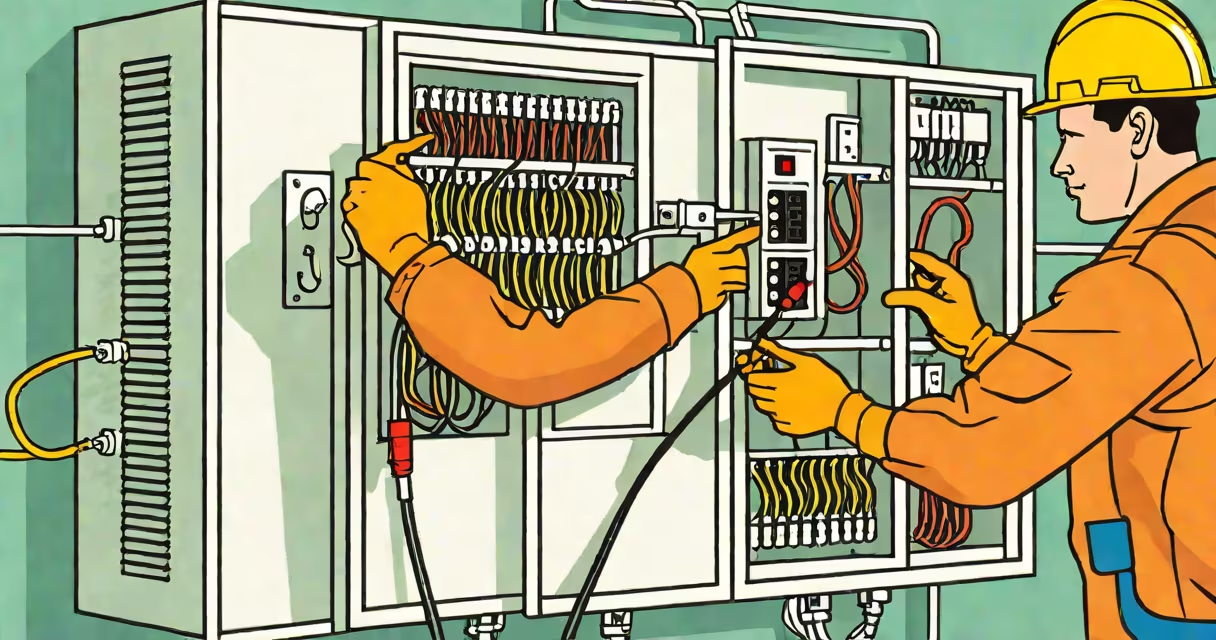
To become a licensed electrician, you must complete a registered apprenticeship program, pass a state or local licensing exam, and meet minimum hours of supervised on-the-job training and classroom instruction. This process typically takes four years and includes both technical study and practical work under a certified journeyman.
Apprenticeships are the primary route into the electrical trade. These programs combine paid on-site work with structured classroom learning. Apprentices spend 8,000 hours working under a licensed electrician while attending classes covering circuitry, safety codes, blueprint reading, and electrical theory. Programs are often sponsored by unions, trade associations, or employer coalitions.
The National Fire Protection Association (NFPA) publishes the National Electrical Code (NEC), which sets standards for safe electrical installation. Most states base their licensing exams on the NEC. Passing the exam proves you understand how to install systems safely and comply with local regulations.
Most apprenticeships last four years and require 8,000 hours of work experience. During this time, apprentices earn between 30% and 60% of a journeyman's wage, depending on the region and sponsoring organization. Classroom instruction averages 576 hours, broken into topics such as AC/DC theory, motor controls, grounding, and load calculations.
For example, the International Brotherhood of Electrical Workers (IBEW) and the National Electrical Contractors Association (NECA) jointly operate the IBEW/NECA National Joint Apprenticeship and Training Committee (NJATC). Their program requires applicants to pass a math and reading assessment, have a high school diploma or GED, and meet basic physical requirements. The selection process is competitive-only about 30% of applicants are accepted each cycle.
After completing the apprenticeship, candidates must apply for a journeyman electrician license. Requirements vary by state. California requires 8,000 hours of experience and a passing score on a written exam covering the California Electrical Code. Texas allows individuals who completed 4,000 hours of experience and 240 hours of classroom training to sit for the exam, though they must still demonstrate competency through a practical test.
| State | Required Experience | Classroom Hours | Exam Type |
|---|---|---|---|
| California | 8,000 hours | 576 hours | Written + Practical |
| Texas | 4,000 hours | 240 hours | Written + Hands-on |
| New York | 8,000 hours | 600 hours | Written only |
Each U.S. state and many local jurisdictions issue their own electrician licenses. Licenses are not federally standardized. A license from one state does not automatically transfer to another. Some states offer reciprocity agreements-New York and New Jersey allow electricians licensed in either state to work across borders with minimal additional testing.
Certification is optional but valuable. The National Institute for Certification in Engineering Technologies (NICET) offers levels of certification based on experience and performance. Level I certifies entry-level skills; Level IV certifies expertise in system design and project management. NICET credentials are recognized by federal agencies and some contractors for bidding on public projects.
A common misconception is that a college degree is required. It is not. While some electricians pursue associate degrees in electrical technology, most enter the field through apprenticeships. The U.S. Bureau of Labor Statistics reports that 95% of electricians gain entry via apprenticeship programs, not academic institutions.
Many assume that becoming an electrician means only working with wires. In reality, modern electricians install and maintain complex systems including solar panels, building automation, fire alarm networks, and energy-efficient lighting. They also troubleshoot issues using multimeters, thermal cameras, and network analyzers.
Another misunderstanding is that apprenticeships are free. While the training is paid, applicants may need to cover initial costs such as tools ($500-$1,000), uniforms, and transportation. Some programs provide tool kits, but others do not. I once observed a new apprentice struggle during his first week because he didn't have a proper voltage tester-his supervisor had to lend him one temporarily.
Electricians must also stay current with evolving codes. The NEC is updated every three years. For example, the 2023 edition introduced stricter rules for arc-fault protection in bedrooms and new requirements for photovoltaic system integration. Failure to follow updated codes can result in failed inspections, fines, or liability in case of fire or injury.
After earning a journeyman license, electricians can pursue advanced roles. Some specialize in industrial maintenance, commercial construction, or renewable energy systems. Others advance into supervisory positions, managing crews or overseeing project timelines.
For those interested in design or project oversight, becoming a master electrician is the next step. This requires five years of journeyman experience and passing a more advanced exam. Master electricians can sign off on permits, approve blueprints, and supervise installations on large-scale jobs.
Some electricians transition into teaching. Vocational schools and community colleges hire licensed professionals to train new apprentices. The average salary for an electrical instructor exceeds $70,000 annually, according to the U.S. Department of Labor.
What is required to become an electrician centers on structured apprenticeship, state licensing, and ongoing compliance with safety standards. The process demands discipline, attention to detail, and consistent learning-but leads to stable employment, competitive pay, and opportunities for specialization.