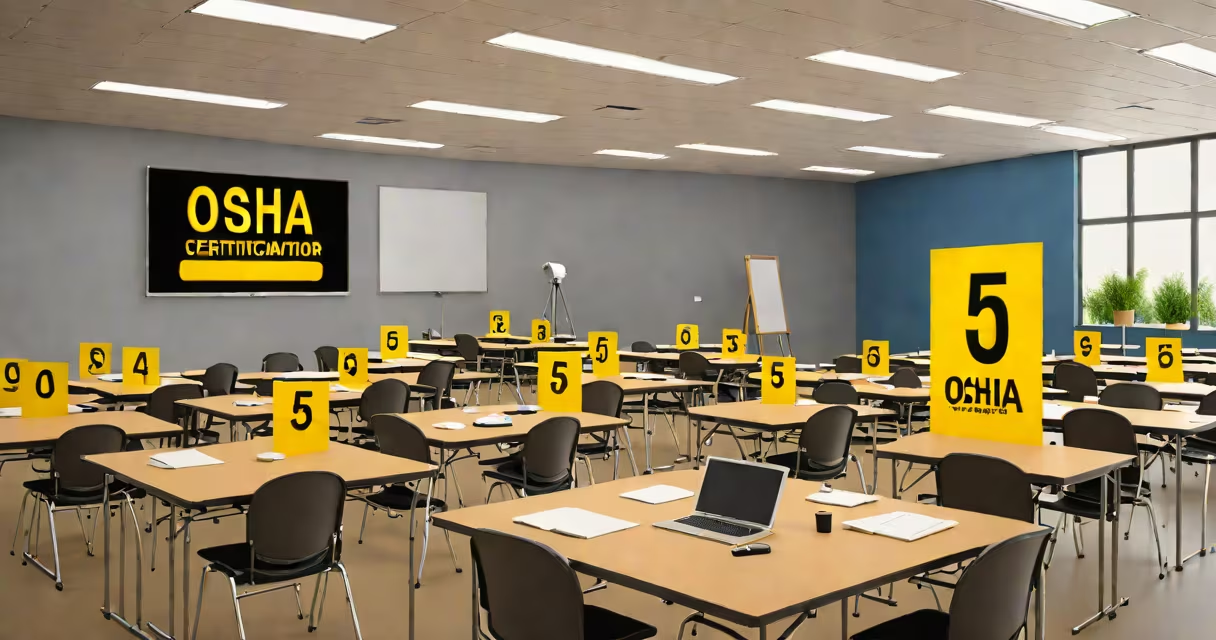
The OSHA 510 certification is a credential awarded to individuals who successfully complete the OSHA Outreach Trainer Course for Construction, qualifying them to teach OSHA 10-hour and 30-hour construction safety courses. This certification is issued by the U.S. Department of Labor's Occupational Safety and Health Administration (OSHA) and ensures trainers meet federal standards for safety education.
OSHA 510 certification is not a standalone qualification for working in construction. Instead, it enables certified individuals to deliver federally recognized safety training to workers and employers. The course emphasizes hazard identification, regulatory compliance, and effective teaching techniques specific to construction environments.
According to OSHA's official guidelines, only individuals who have completed the OSHA 510 course and passed the final exam may legally conduct OSHA outreach training. This requirement prevents unqualified instructors from delivering content that affects worker safety and compliance.
The OSHA 510 course is a 30-hour program designed for professionals with substantial experience in construction safety. Participants must demonstrate familiarity with OSHA standards, including those related to fall protection, scaffolding, electrical safety, and hazardous materials handling. The curriculum includes both theoretical instruction and practical application.
Training delivery occurs through accredited OSHA Training Institute Education Centers. These centers are authorized by OSHA to administer the course and issue the certification. The course is not available online through third-party platforms-participants must attend in person. OSHA requires this format to ensure consistent instruction quality and prevent credential fraud.
A key component of the certification process is the final exam, which tests understanding of OSHA standards, hazard recognition, and instructional methodology. Trainees must score at least 70% to pass. Those who fail can retake the exam once within 60 days. Failure to pass after two attempts requires re-enrollment in the full course.
Individuals who pursue OSHA 510 certification typically hold roles such as safety officers, site supervisors, or training coordinators in construction firms, contractors, or government agencies. The certification allows them to train employees on-site, reducing accident rates and ensuring compliance with OSHA regulations.
For example, a construction company in Texas hired a safety manager with OSHA 510 certification to lead monthly safety briefings. After six months, the company reported a 40% reduction in near-miss incidents. The manager attributed the improvement to consistent, standardized training delivered using OSHA-approved materials.
Employers often require OSHA 510 certification for roles involving safety oversight. Federal contracts, especially those under the Davis-Bacon Act, mandate that safety trainers on public works projects hold valid OSHA 510 credentials. Without it, contractors risk penalties or disqualification from bidding.
There are two distinct OSHA 510 programs: one for construction and one for general industry. While both cover core safety principles, they differ in focus and content.
| Feature | Construction OSHA 510 | General Industry OSHA 510 |
|---|---|---|
| Duration | 30 hours | 30 hours |
| Primary Focus Areas | Falls, scaffolds, excavation, cranes, electrical hazards | Machine guarding, chemical exposure, confined spaces, ergonomic risks |
| Regulatory Standards | 29 CFR 1926 (construction) | 29 CFR 1910 (general industry) |
| Typical Job Roles | Site supervisors, field safety officers | Plant safety managers, industrial hygiene staff |
Both programs require prior experience in the respective sector. OSHA mandates that applicants have at least five years of relevant work experience in construction or general industry. This helps trainers possess real-world context when teaching safety protocols.
A common misconception is that OSHA 510 certification allows the holder to inspect workplaces or enforce safety violations. That authority belongs exclusively to OSHA compliance officers. The certification only grants the ability to train others. Misunderstanding this distinction has led to legal issues in past cases where individuals falsely claimed enforcement powers.
Many people confuse OSHA 510 certification with OSHA 10-hour or 30-hour courses. The 10- and 30-hour courses are designed for workers, not instructors. Completion of these courses does not qualify someone to teach them. Only OSHA 510 certification allows individuals to serve as authorized trainers.
Another frequent error is assuming that OSHA 510 certification is permanent. The credential must be renewed every four years through a refresher course. OSHA requires this renewal to ensure trainers stay current with changes in regulations and safety practices. For example, updates to fall protection standards in 2022 required all OSHA 510 holders to complete additional training before renewing their certification.
I once attended an OSHA 510 class at the OSHA Training Institute in Chicago. The instructor, a former union safety rep with 25 years of field experience, emphasized that the most effective trainers aren't just knowledgeable-they're skilled at translating complex regulations into actionable steps. He used real examples from job sites to show how small changes in communication improved worker adherence to safety procedures.
With OSHA 510 certification, individuals can pursue roles such as safety trainer, compliance coordinator, or health and safety consultant. Many contractors and large-scale developers hire certified trainers to onboard new crews and maintain compliance during long-term projects.
For example, a transportation contractor in California used OSHA 510-certified trainers to prepare teams for a highway expansion project. Each crew member received a customized 10-hour safety orientation covering site-specific hazards. The project ran without any recordable injuries over a 14-month period-a result the company credited directly to the training program.
OSHA 510 certification remains a critical credential for anyone involved in construction safety education. It helps training meets federal standards, reduces workplace incidents, and supports compliance with labor laws. The certification is not a one-time achievement-it requires ongoing learning and renewal to remain valid.