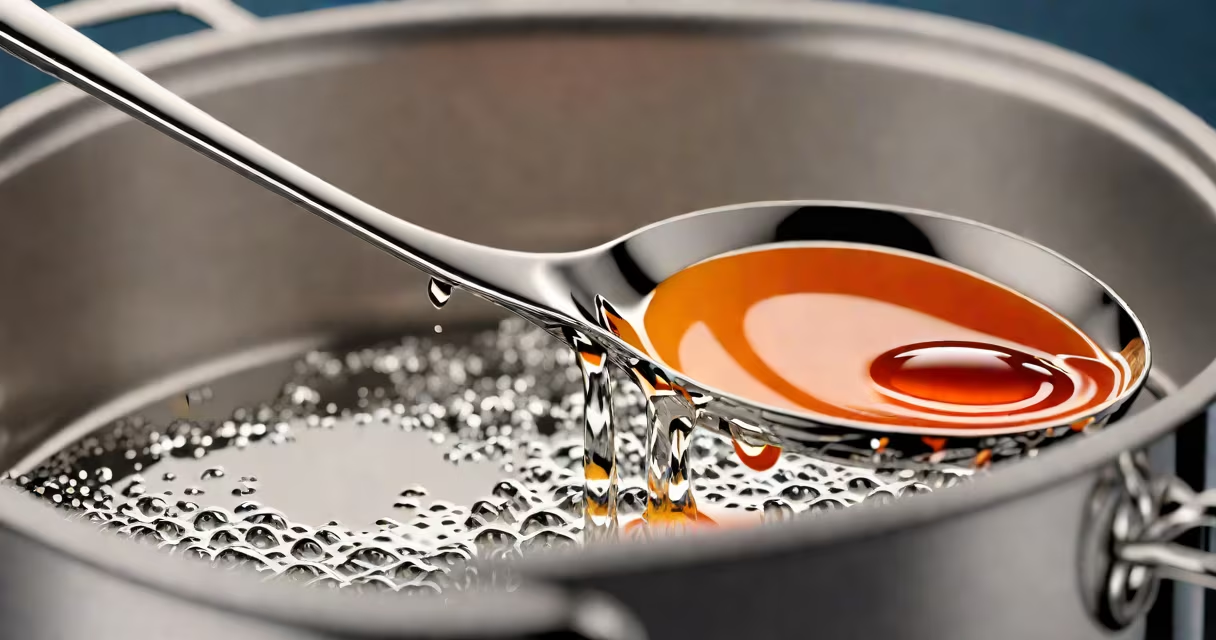
Heat is thermal energy transferred from a hotter object to a cooler one due to a temperature difference. It flows until both reach thermal equilibrium. This process occurs through conduction, convection, or radiation and is measured in joules.
Thermal energy is the total internal kinetic energy of particles in a substance. As atoms and molecules vibrate or move faster, their collective motion generates heat. The faster they move, the higher the temperature-and the greater the thermal energy. This energy is not stored in a single particle but distributed across all particles in a material.
When you touch a hot pan, the sensation of heat comes from thermal energy moving from the pan's surface into your skin. That transfer happens because the metal atoms vibrate rapidly and collide with nearby atoms, passing energy along. This is conduction-the direct transfer of heat through physical contact.
Heat moves in three distinct ways. Conduction occurs when heat travels through a solid, like a metal rod heated at one end. The atoms at the hot end vibrate more intensely and bump into neighboring atoms, transferring energy down the rod. Metals conduct heat well because their electrons move freely and carry energy quickly.
Convection transfers heat through fluids-liquids or gases. When water boils in a pot, the heated water at the bottom rises, cools at the surface, and sinks back down. This creates circular currents that distribute heat throughout the liquid. Convection drives weather patterns, ocean currents, and even the cooling of car engines.
Radiation sends heat through electromagnetic waves, requiring no medium. The sun warms Earth across 150 million kilometers of vacuum. All objects above absolute zero emit infrared radiation. A campfire radiates warmth even without touching it. Unlike conduction and convection, radiation doesn't rely on particle collisions.
| Method | Medium Required? | Example |
|---|---|---|
| Conduction | Yes (solid) | Spreading heat through a frying pan handle |
| Convection | Yes (fluid) | Warm air rising from a heater |
| Radiation | No | Sunlight warming your face |
Heat is measured in joules (J), the SI unit for energy. One joule equals the energy needed to lift a small apple one meter against gravity. Thermal energy is often expressed in kilojoules (kJ) or megajoules (MJ) for larger systems.
Temperature measures average kinetic energy per particle. A cup of boiling water (100°C) has a higher temperature than a bathtub of warm water (30°C), but the tub contains more total thermal energy because it holds more mass. Temperature tells you how hot something feels; thermal energy tells you how much heat it holds.
For example, a 1-kilogram iron bar at 100°C stores about 450,000 J of thermal energy. A 10-kilogram iron bar at 50°C stores roughly 225,000 J. Even though the first bar is hotter, the second has more total thermal energy due to greater mass. This shows that temperature and thermal energy are not the same.
Heat is not the same as temperature. People often say "it's hot today" to describe temperature, but heat refers to energy transfer. You can have high temperature with low heat-like a tiny flame on a candle. Conversely, a large body of cool water may hold massive amounts of thermal energy.
Another error: thinking heat can be destroyed. According to the law of conservation of energy, energy cannot be created or destroyed-only transformed. When a hot object cools, its thermal energy doesn't vanish. It transfers to surrounding air, walls, or the ground. The energy is still present, just redistributed.
A non-obvious fact: heat transfer depends on surface area and material properties. A thin copper wire conducts heat faster than a thick steel rod, even if both are the same length. Copper's thermal conductivity is 400 W/m·K; steel is around 50 W/m·K. This means copper spreads heat 8 times faster per unit area.
I once watched a solar oven cook a potato using only sunlight. The black interior absorbed infrared radiation, converting it to thermal energy. The glass lid trapped heat via the greenhouse effect, raising the internal temperature to 120°C. After 90 minutes, the potato was soft. The system relied entirely on radiant heat transfer-no fuel, no electricity.
Heating systems in homes use convection. Radiators heat air near them. Warm air rises, creating circulation. Modern HVAC systems use fans to speed this process. Insulation reduces conduction-fiberglass traps air pockets, slowing heat loss through walls.
Even living organisms depend on heat transfer. Humans regulate body temperature through sweating (evaporative cooling) and shivering (muscle-generated heat). When core temperature drops below 35°C, hypothermia sets in. The body loses heat faster than it produces it, disrupting cellular function.
Understanding heat thermal energy explains everyday phenomena-from why ice melts in a drink to how satellites avoid overheating in space. It underpins climate science, engineering design, and medical treatments like hyperthermia therapy.
Energy transformations follow strict rules. When you rub your hands together, mechanical energy becomes thermal energy. The total energy remains constant. For more on this principle, see how energy is conserved across changes.