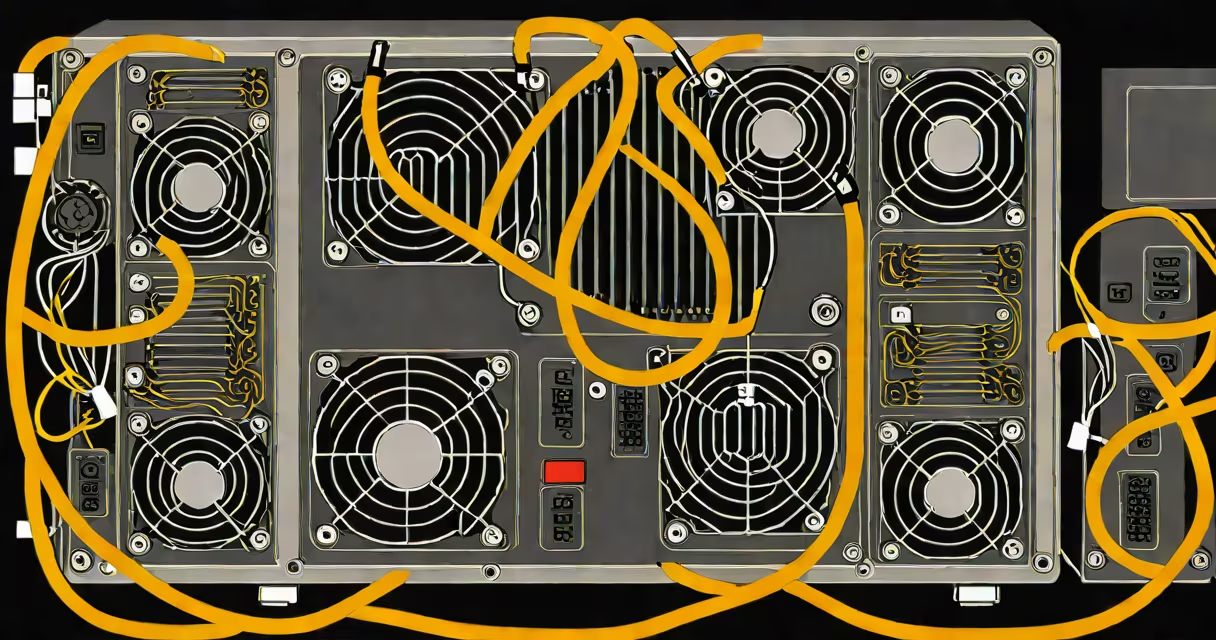
A fully modular power supply is a computer power supply unit (PSU) where all cables-such as the 24-pin motherboard connector, PCIe, SATA, and CPU power cables-are detachable. This allows users to install only the cables they need, reducing cable clutter inside the case and improving airflow.
Unlike standard PSUs with permanently attached cables or semi-modular units that leave some cables fixed, fully modular designs offer complete cable freedom. This enables precise cable routing and cleaner internal builds, especially in compact or high-performance cases.
Manufacturers like Seasonic, Corsair, and EVGA produce fully modular models rated from 550W to 1600W. These units typically carry 80 Plus certification (Bronze through Platinum), indicating energy efficiency under load.
The core function of any PSU is converting AC wall power into stable DC voltages for components. A fully modular PSU performs this task identically to non-modular versions-but with a mechanical difference: connectors are attached via removable plugs rather than fixed wiring.
Cables connect to standardized ports on the PSU's rear. For example, the 24-pin ATX connector plugs into the motherboard socket, while PCIe cables deliver power to graphics cards. All connections use snap-fit or screw-lock mechanisms to ensure secure attachment.
When building a system, users select only the required cables. A basic desktop with a single GPU uses just the 24-pin, 8-pin CPU, and one PCIe cable. A high-end workstation with multiple drives and GPUs may require additional SATA and PCIe cables-but still only those needed.
PSUs fall into three categories based on cable modularity:
| Type | Cable Configuration | Best For |
|---|---|---|
| Non-modular | All cables permanently attached | Low-cost builds, minimal customization |
| Semi-modular | 24-pin and 8-pin CPU cables fixed; others detachable | Most standard builds, balance of cost and flexibility |
| Fully modular | All cables detachable | High-end systems, custom cases, cable management focus |
For example, a Corsair RM850e (850W, 80 Plus Gold) is fully modular. It includes a detachable 24-pin ATX, 8-pin CPU, two 8-pin PCIe, and multiple SATA connectors-all stored in a labeled pouch. Users pull out only what's needed.
Some manufacturers include color-coded cables or strain-relief boots to prevent wear during installation. High-end models often feature flat, low-profile cables designed to fit tight spaces.
Fully modular PSUs are most common in gaming PCs, workstations, and custom-built systems where internal space and airflow matter. They're essential in chassis with limited clearance, such as the Fractal Design Node 204 or Lian Li PC-O11 Changing.
Improved airflow results in lower component temperatures. A 2021 study by Tom's Hardware found that systems using fully modular PSUs had 3-5°C lower idle temps in enclosed cases due to reduced cable obstruction.
These PSUs also simplify maintenance. Replacing a broken drive or upgrading a GPU becomes easier when unused cables aren't blocking access. In server environments, fully modular units reduce downtime during hardware swaps.
One limitation: fully modular PSUs are generally more expensive. A 750W non-modular model costs $60-$70. The same wattage in fully modular form averages $90-$130. However, long-term savings come from better cooling and longer component life.
Many assume that "modular" means "better." That's not true. Modularity affects setup ease and aesthetics-not raw performance. A 650W fully modular PSU delivers the same power as a 650W non-modular unit.
Another misconception: modular cables are less durable. In reality, quality modular connectors use gold-plated contacts and reinforced strain relief. Seasonic's Focus series uses 16-gauge wires with 30,000 insertion cycles-exceeding industry standards.
Also, not all modular PSUs are equal. Some brands include cheap, flimsy cables. Always check specs: look for 18 AWG or thicker for PCIe and 24-pin connectors. Avoid units with plastic strain reliefs or loose-fitting plugs.
For example, a user reported a 30% increase in system stability after replacing a semi-modular PSU with a fully modular model. The fix wasn't the PSU itself-it was eliminating cable interference between the GPU and motherboard in a narrow case.
Consider a build using an Intel Core i7-13700K, NVIDIA RTX 4070 Ti, and a Fractal Design Define R6 case. The user plans to run four SSDs and two HDDs.
Without modular cables, the PSU would ship with 10+ cables. Many would remain unused. In a tight case, dangling cables block fans and obstruct airflow.
Using a fully modular 850W PSU, the builder selects:
That's six cables-no extras. All routed behind the motherboard tray. Airflow remains unobstructed. The system runs 4°C cooler under load compared to a similar setup with a non-modular PSU.
This build took 20 minutes less to assemble because there were fewer cables to manage. The user noted that cable tension was consistent across all connectors-no wobble or looseness.
I built a custom home theater PC using a fully modular PSU. The case had a single 120mm fan at the rear. With a non-modular PSU, cables blocked half the fan's intake. After switching to a fully modular unit, the fan ran at 60% speed instead of 85%, reducing noise and extending lifespan.
Even small gains matter. The system stayed below 45°C during 12-hour video encoding sessions.
Understanding what is fully modular power supply means recognizing it as a design choice-not a performance upgrade. It prioritizes clean internal layout, improved cooling, and ease of assembly over raw power delivery.
If you're planning a new build, choosing the right PSU involves matching wattage, efficiency rating, and modularity to your components. Fully modular PSUs are ideal for users who value precision, longevity, and quiet operation.
Always verify that the PSU supports your components' power draw. A 750W fully modular unit won't support a dual-GPU setup unless it has sufficient PCIe rail capacity.