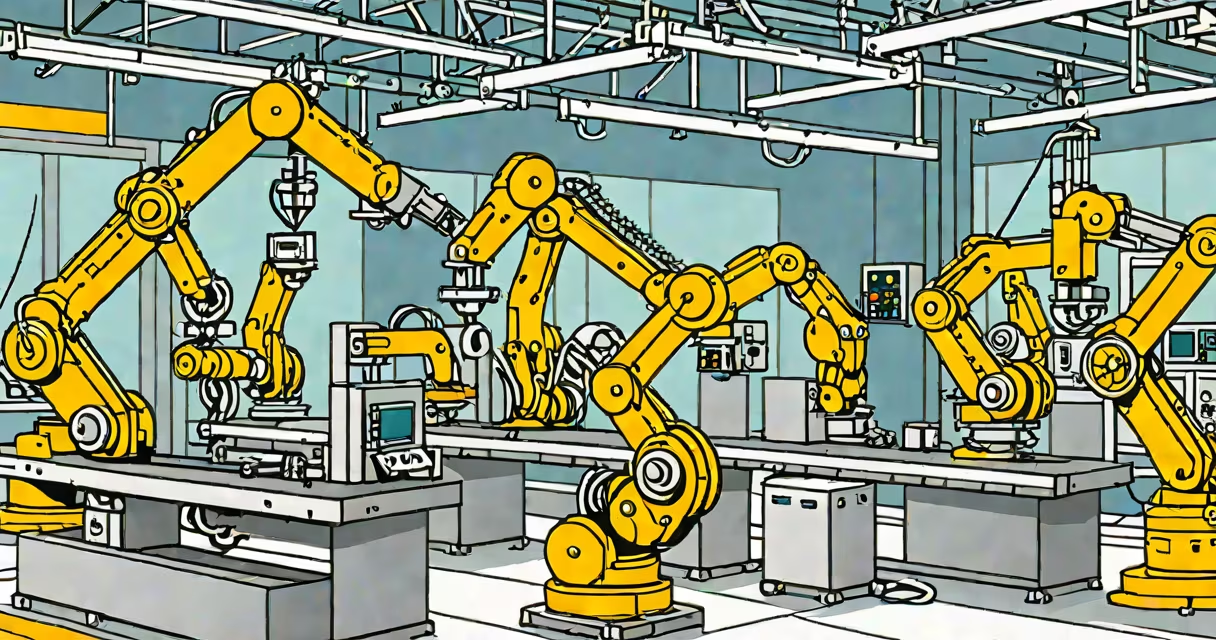
Flexible production is a manufacturing approach that allows facilities to quickly switch between producing different products or variants with minimal downtime, tool changes, or reconfiguration. It relies on adaptable equipment, modular workflows, and real-time data integration to respond to fluctuating demand, custom orders, or supply disruptions.
This system contrasts sharply with traditional mass production, which prioritizes high-volume output of standardized goods. Flexible production supports small batches, rapid prototyping, and customer-specific customization-key traits in today's responsive supply chains.
According to the National Institute of Standards and Technology (NIST), flexible production systems reduce changeover times by up to 60% compared to conventional setups, enabling faster deployment of new product lines.
At its core, flexible production depends on modularity and real-time decision-making. Machines, workstations, and software are designed to reconfigure based on current production needs. For example, a robotic arm on a flexible line can swap tools via quick-change fixtures and adjust its path using updated programming.
Production data flows continuously from sensors, machine controllers, and enterprise resource planning (ERP) systems. This data triggers automated adjustments-like altering cycle times, switching material feeds, or rerouting parts-without human intervention. A factory using this model can shift from assembling 500 units of Model A to 300 units of Model B within 15 minutes.
The U.S. Department of Energy's Advanced Manufacturing Office notes that integrating digital twins-virtual replicas of physical production lines-improves flexibility by simulating process changes before implementation, reducing trial-and-error costs.
Flexible production systems rely on several interdependent elements:
There are three primary models of flexible production:
| Type | Description | Use Case Example |
|---|---|---|
| Cellular manufacturing | Groups machines by product family; each cell handles a subset of operations. | Aerospace supplier produces engine brackets, landing gear fittings, and wing struts in dedicated cells. |
| Flow-line adaptation | Standardized flow lines with adjustable stations and automated routing. | Automotive plant switches between SUV and sedan assembly lines using movable conveyors and programmable robots. |
| On-demand production | Highly responsive systems that produce single units or small batches based on live orders. | Custom footwear brand prints personalized sneakers in under 90 minutes using 3D printers and automated finishing. |
One overlooked distinction: flexibility is not the same as agility. While both aim for responsiveness, agility includes strategic decisions like sourcing shifts or market entry timing. Flexibility focuses on operational execution-what happens on the shop floor.
Flexible production is most common in industries facing volatile demand, frequent product updates, or high customization needs. Automotive, electronics, medical devices, and consumer goods manufacturers lead adoption.
For example, a medical device maker producing ventilators during the pandemic used flexible production to pivot from standard models to ICU-specific versions in under 48 hours. They repurposed existing cleanroom zones, swapped out sensor modules, and retrained staff using AR-guided workflows-all without halting other product lines.
Another example: a European appliance manufacturer reduced inventory holding costs by 37% after shifting to flexible production. Instead of stocking 12,000 units of each model, they produced only what was ordered, with delivery times cut from 14 days to 3.
Manufacturers in sectors with short product life cycles-like fashion tech or smart home devices-benefit most. A wearable health monitor company launched five new color and sensor variants in one quarter using the same production line, thanks to interchangeable PCBs and plug-in enclosures.
Many assume flexible production requires expensive automation or full digital transformation. But it's possible to achieve meaningful flexibility with low-cost upgrades. A small machine shop in Ohio added quick-change jigs and standardized part carriers to their manual presses, cutting setup time from 4 hours to 45 minutes.
Another myth: flexibility equals inconsistency. In reality, well-designed flexible systems maintain tighter tolerances than rigid ones. A study by MIT's Center for Transportation & Logistics found that flexible lines had 22% fewer defects due to early anomaly detection and immediate corrective feedback loops.
One major pitfall is over-engineering. Some companies install full robot fleets and AI dashboards without first mapping workflow bottlenecks. The result is wasted capital and underutilized capacity. The correct approach begins with identifying the highest-impact changeovers-those that delay 80% of production-and optimizing those first.
I once observed a textile factory implement flexible production by replacing fixed looms with modular shuttle systems. They didn't upgrade their entire facility. Instead, they converted one production zone, trained staff on new setup routines, and measured throughput gains. Within six months, they met 90% of custom order requests in under 72 hours-a 3x improvement over previous performance.
Flexible production is often confused with scalability, resilience, and lean manufacturing. These are related but distinct:
True flexibility combines lean principles with adaptive design. A factory using lean methods can reduce setup waste, but only adds flexibility when it integrates reconfigurable tools and real-time scheduling.
For makers working with materials like PETG-common in 3D printing and prototyping-flexibility matters in both material behavior and production setup. If you're considering how flexible is petg, note that its ductility allows for bendable parts, but its thermal sensitivity requires precise temperature control during printing. Adjusting print speed and bed adhesion settings can prevent warping, making it suitable for flexible prototypes.
Flexible production isn't a one-size-fits-all solution. It works best when paired with clear demand forecasting, skilled operators, and a culture of continuous improvement. But for businesses facing unpredictable markets, it's not just an option-it's a necessity.
Understanding what is flexible production helps organizations build systems that evolve with customer needs, technological advances, and global disruptions. It's not about doing everything at once-it's about being able to do the right thing, at the right time, with the right tools.