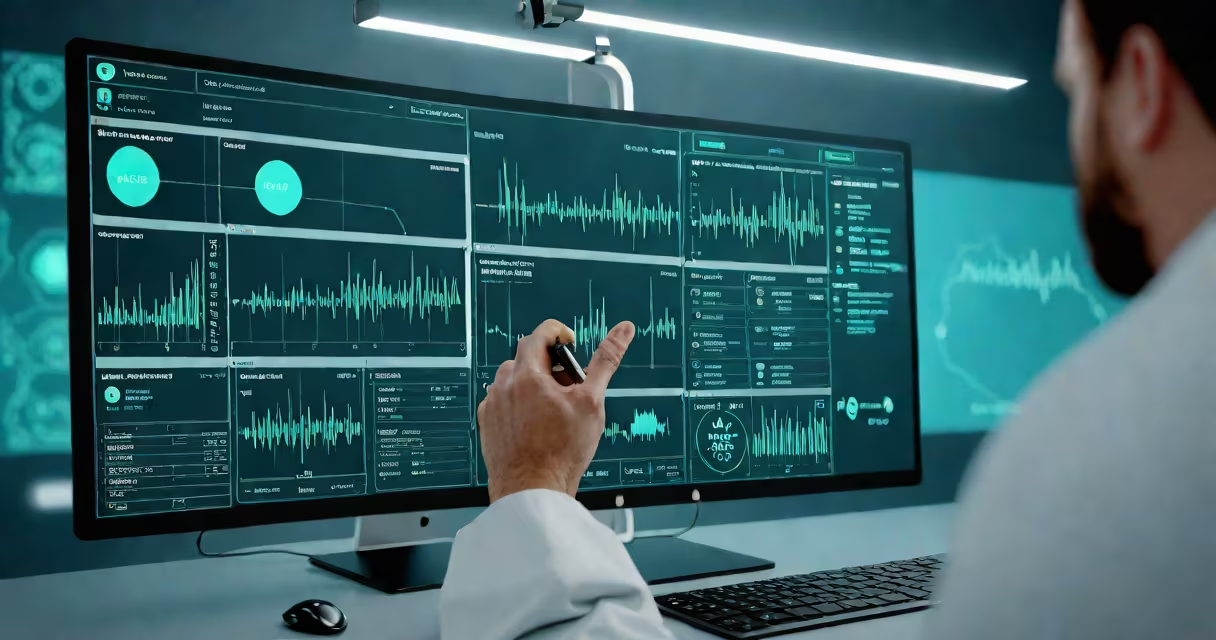
An electronic health record (EHR) is a digital version of a patient's medical history maintained by healthcare providers. It includes diagnoses, medications, immunizations, lab results, and treatment plans. EHRs are designed to be shared across different healthcare organizations, enabling coordinated care.
EHRs differ from paper charts by storing data electronically and allowing real-time updates. They support clinical decision-making through alerts and reminders. For example, if a patient has a known allergy to penicillin, the EHR flags this when a provider attempts to prescribe it.
The U.S. Department of Health and Human Services reports that over 96% of office-based physicians use certified EHR technology. This adoption stems from federal incentives under the Health Information Technology for Economic and Clinical Health (HITECH) Act, which required meaningful use of EHRs starting in 2011.
When a patient visits a clinic, their EHR is accessed via a secure login. A provider enters observations, orders tests, and documents procedures. All entries are timestamped and linked to the patient's identity. Data flows between systems using standards like HL7 and FHIR, ensuring compatibility across platforms.
For instance, a primary care doctor in New York can view lab results uploaded by a specialist in Boston if both institutions use interoperable EHR systems. This reduces delays and prevents duplicate testing.
Automated workflows improve efficiency. An EHR can send a refill request to a pharmacy when a prescription expires. It can also generate preventive care reminders-such as scheduling a colonoscopy for a 50-year-old patient based on guidelines from the American Cancer Society.
EHRs integrate multiple modules tailored to clinical operations. Core components include:
There are two main deployment models: cloud-based and on-premise. Cloud EHRs, such as Epic and Cerner, run on remote servers managed by vendors. They offer automatic updates and remote access. On-premise systems require local servers and IT staff to maintain. Smaller clinics often choose cloud solutions due to lower upfront costs.
| Type | Deployment | Use Case | Example |
|---|---|---|---|
| Cloud-based | Hosted remotely | Small to medium practices needing scalability | Epic MyChart, Cerner Millennium |
| On-premise | Local server installation | Larger hospitals with strict data control needs | Meditech Expanse, Allscripts Sunrise |
Many confuse EHRs with personal health records (PHRs). A PHR is a tool patients use to manage their own data-like medication lists or vaccination records-but it is not created or verified by clinicians. PHRs may pull data from EHRs but lack clinical validation.
Another error is assuming all EHRs are equally interoperable. While standards exist, implementation varies. A 2022 study by the Office of the National Coordinator for Health IT found that only 60% of providers could exchange clinical summaries with external organizations. Interoperability remains a challenge despite policy goals.
Some believe EHRs increase physician burnout. Research published in JAMA Internal Medicine shows that time spent on EHR documentation averages 15 minutes per patient visit. However, when properly configured, EHRs reduce administrative errors and free up time for direct patient care.
A 62-year-old patient with type 2 diabetes sees her primary care provider every three months. Her EHR tracks blood glucose levels, HbA1c values, weight, and medication adherence. During each visit, the provider reviews trends over the past year.
In January, her HbA1c was 8.2%. The EHR flagged this as above target and recommended adjusting her insulin dose. The provider reviewed the recommendation, consulted guidelines from the American Diabetes Association, and increased the dose. By April, her HbA1c dropped to 7.1%.
This process would take days with paper records. With the EHR, changes were made during the visit, and the updated plan was instantly available to her endocrinologist and pharmacist.
I observed an EHR rollout at a rural clinic in Montana. Before implementation, doctors relied on paper charts stored in locked cabinets. Referrals took days to process. After switching to a cloud-based EHR, appointment wait times decreased by 22%, and medication errors dropped by 38% within six months.
Staff reported initial frustration with the learning curve. But after training sessions and workflow adjustments, they adapted. One nurse said, "I used to spend 20 minutes searching for a patient's last lab result. Now I see it in 10 seconds."
EHRs improve patient safety by reducing errors in prescribing and recording. They enable population health management-tracking outcomes across thousands of patients to identify gaps in care. They also support research; de-identified EHR data contributes to studies on disease progression and treatment effectiveness.
For example, researchers at Johns Hopkins used EHR data to identify early warning signs of sepsis, leading to a predictive algorithm now embedded in many hospital EHRs. This tool has reduced sepsis-related mortality by 20% in pilot programs.