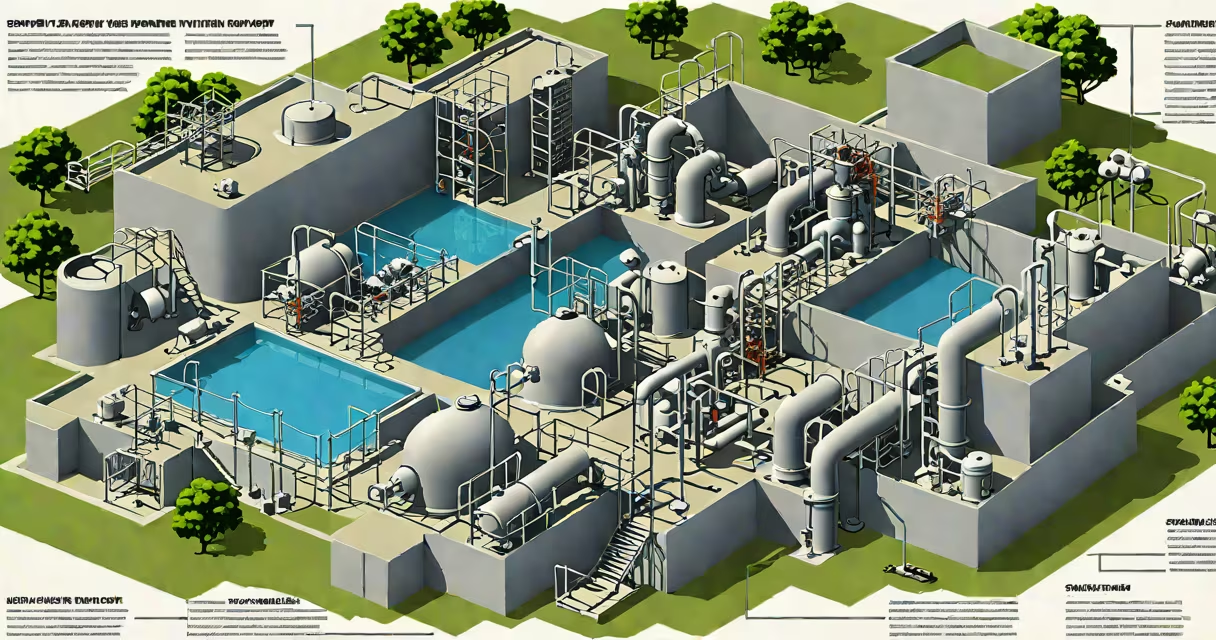
A sewage treatment plant is a facility that processes municipal wastewater to remove harmful pollutants, pathogens, and solids before releasing treated water into natural waterways or reusing it. These plants use physical, chemical, and biological methods to meet environmental regulations and safeguard ecosystems.
Sewage treatment plants operate on a multi-stage system designed to progressively clean wastewater. The process begins with screening to remove large debris like rags, sticks, and plastics. This prevents damage to pumps and pipes downstream. After screening, wastewater flows into grit chambers where sand, gravel, and other heavy particles settle out. Without this step, abrasive materials would wear down equipment and reduce efficiency.
The core of the system lies in primary and secondary treatment. Primary treatment uses gravity to allow suspended solids to sink and form sludge, while oils and grease float to the surface and are skimmed off. Secondary treatment introduces aerobic bacteria that consume organic matter in the water. This stage often relies on activated sludge systems, where microorganisms break down biodegradable waste in oxygen-rich environments. The U.S. Environmental Protection Agency (EPA) mandates that secondary treatment must reduce biochemical oxygen demand (BOD) by at least 85% before discharge.
| Stage | Primary Function | Typical Removal Efficiency |
|---|---|---|
| Screening | Remove large solids | 90-95% |
| Grit Removal | Extract sand and heavy particles | 80-90% |
| Primary Clarification | Settle suspended solids | 40-60% |
| Secondary Treatment | Degrade organic matter via microbes | 85-95% |
| Tertiary Treatment | Remove nitrogen, phosphorus, or trace contaminants | 60-90% |
After secondary treatment, water may undergo tertiary treatment to meet stricter standards. This includes filtration through sand or membrane filters, disinfection using chlorine or ultraviolet light, and nutrient removal to prevent algal blooms in receiving waters. The EPA's National Pollutant Discharge Elimination System (NPDES) sets limits on effluent quality based on local watershed sensitivity.
Sludge generated during treatment requires separate handling. Thickened sludge is processed in digesters where anaerobic bacteria break down organics, reducing volume and producing biogas. Some facilities recover methane for energy generation. The remaining biosolids are dewatered and either land-applied as fertilizer (under strict guidelines) or sent to landfill. According to the Water Environment Research Foundation, over 60% of U.S. treatment plants now use biosolids for soil amendment, reducing reliance on synthetic fertilizers.
Common misconceptions include equating sewage treatment plants with septic tanks or believing all treated water is safe for drinking. While treated effluent meets regulatory standards for discharge, it is not potable without additional purification. A 2021 study by the American Water Works Association confirmed that reclaimed wastewater contains residual pharmaceuticals and microplastics, even after advanced treatment-highlighting the need for further research on long-term ecological effects.
One non-obvious fact: many modern plants integrate real-time monitoring systems using sensors and AI algorithms to adjust chemical dosing and aeration rates dynamically. For example, the Blue Plains Advanced Wastewater Treatment Plant in Washington, D.C., uses adaptive control software that reduces energy consumption by 12% while maintaining compliance. This level of automation is rare in older facilities but increasingly standard in new infrastructure projects.
I once visited a small-town plant in rural Iowa where operators manually adjusted valves based on daily flow logs. The system had no automated controls. During a storm event, inflow overwhelmed the primary clarifiers, causing overflow into a nearby creek. The incident led to a state violation and highlighted how outdated systems fail under pressure. Since then, the city upgraded to a computerized SCADA system, improving response time and reducing violations by 70% over two years.
Some facilities combine wastewater treatment with renewable energy production. The East Bay Municipal Utility District in Oakland, California, generates enough biogas from sludge digestion to power 80% of its operations. The excess electricity is sold back to the grid, turning waste into a net-positive resource. This model demonstrates how treatment plants can serve dual roles: environmental protection and energy recovery.
Wastewater treatment is not uniform across regions. Urban centers like New York City process over 1 billion gallons of sewage daily through the Wards Island plant, while smaller towns may handle less than 1 million gallons. The scale determines design complexity, staffing needs, and capital investment. However, all plants share the same goal: to return water to nature in a safer, cleaner state than when it entered.
Understanding what a sewage treatment plant does reveals its role beyond waste disposal-it's a critical node in urban infrastructure that protects human health, maintains aquatic life, and enables reuse of water resources. With evolving pollution challenges, these facilities continue to adapt through innovation, regulation, and community engagement.