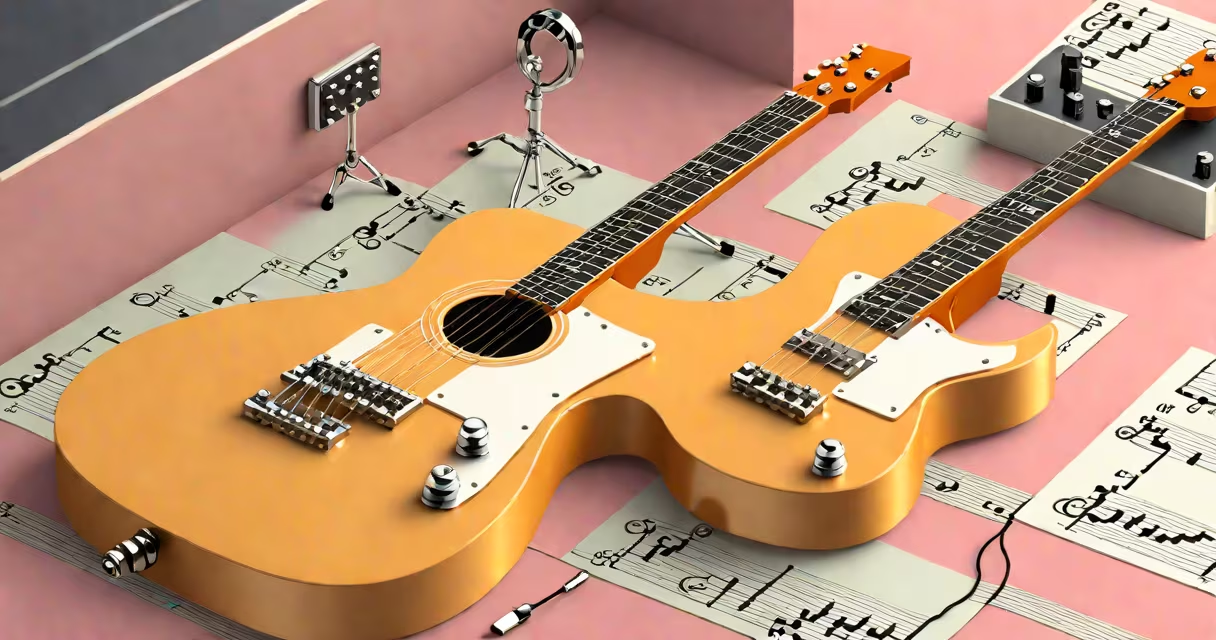
A chromatic tuner is an electronic device or app that identifies the precise pitch of a musical note, regardless of the instrument or tuning system. It displays whether the note is sharp, flat, or in tune, and supports all 12 notes in the chromatic scale. This capability makes it indispensable for tuning guitars, violins, basses, and even wind instruments.
Unlike basic tuners that only recognize standard tuning intervals (like EADGBE for a guitar), a chromatic tuner responds to any note-from C to B, including sharps and flats. It works by analyzing sound input through a microphone or direct cable connection, then processing the frequency to determine the exact pitch.
For example, when a guitarist plays an A note, the tuner measures the frequency (440 Hz for concert A) and shows whether the string is tuned correctly. If the string vibrates at 442 Hz, the tuner indicates it's slightly sharp. This precision allows musicians to tune accurately across different keys and alternate tunings.
Chromatic tuners use digital signal processing to analyze audio input. They sample the incoming sound wave, calculate its fundamental frequency, and compare it to the reference frequencies of the 12 semitones in Western music. The process happens in milliseconds.
Most models use a pitch detection algorithm based on Fast Fourier Change (FFT) or autocorrelation. FFT breaks down the sound into frequency components, isolating the dominant pitch. Autocorrelation measures how similar a waveform is to a delayed version of itself-effective for periodic tones like strings or vocal notes.
Once the frequency is identified, the tuner maps it to the nearest note in the chromatic scale. For instance, a measured frequency of 261.63 Hz corresponds to middle C (C4). The display then shows the deviation from the correct pitch using a needle, LED bars, or a digital readout.
Chromatic tuners come in several forms, each suited to different needs:
| Type | Best For | Key Features |
|---|---|---|
| Clip-on tuner | Guitarists, live performers | Attaches to the headstock; ignores ambient noise; battery-powered |
| Stompbox tuner | Electric guitarists, pedalboard users | Foot-controlled; integrates into effects chain; silent operation |
| App-based tuner | Beginners, mobile users | Uses phone mic; free or low-cost; portable; limited accuracy in noisy environments |
| Desktop tuner | Studio recording, orchestral players | High-precision sensors; large display; calibration options; often used with microphones |
Some advanced tuners include features like octave detection, which helps identify whether a note is an octave above or below the expected pitch. Others offer visual feedback modes such as "needle" (analog-style), "bar graph," or "digital display."
According to the Audio Engineering Society, accurate pitch detection requires a minimum of 10 milliseconds of stable audio input to avoid false readings-this is why professional tuners often have a delay buffer to stabilize results before showing the final pitch.
Many users assume that a chromatic tuner is only for electric guitars or modern instruments. That's incorrect. It's equally useful for acoustic guitars, ukuleles, mandolins, and even non-Western instruments like the sitar or koto, which use microtonal scales.
Another misconception is that chromatic tuners are unnecessary if you can hear pitch differences. While trained ears can detect small discrepancies, they're unreliable under stage lighting, loud venues, or when tuning multiple instruments simultaneously. A tuner removes human error and ensures consistency.
There's also confusion between chromatic tuners and interval tuners. An interval tuner focuses on tuning intervals (e.g., perfect fifths) rather than individual pitches. Chromatic tuners don't assess harmonic relationships-they only measure absolute pitch. Using the wrong tool leads to tuning errors, especially in complex chord progressions.
At a recent indie rock show in Austin, Texas, the band's lead guitarist used a Korg Pitchblack Clip-on tuner during a sound check. He played a D note (293.66 Hz) on his open string. The tuner showed the note was 3 cents flat (about 0.03 Hz below standard).
He adjusted the tuning peg slowly while watching the needle center. After two seconds, the tuner displayed "IN TUNE." The band then checked their tuning with a metronome and confirmed all instruments were aligned to concert pitch (A4 = 440 Hz).
This process took less than 30 seconds per instrument. Without the tuner, the guitarist would have relied on ear training and a reference pitch from a keyboard. Even experienced players make tuning mistakes under pressure. The tuner ensured accuracy and saved time.
I've used a Boss TU-3 Chromatic Tuner during multiple outdoor festivals. Its durability and resistance to humidity kept it functional in rainy conditions. The red LED display remains visible even in dim light, allowing quick checks between songs.
Chromatic tuners are essential because they eliminate guesswork in tuning. performing live, consistent pitch improves intonation, enhances ensemble cohesion, and prevents listener fatigue caused by out-of-tune instruments.
For beginners, using a chromatic tuner builds pitch awareness faster than relying solely on auditory cues. Studies from the Journal of Research in Music Education show that students who used electronic tuners during practice sessions improved their pitch accuracy by 41% over six weeks compared to those who didn't.
When choosing a chromatic tuner, prioritize models with a wide frequency range (typically 27.5 Hz to 2093 Hz), low latency, and clear visual indicators. Avoid cheap models with poor sensitivity-they may miss subtle pitch shifts or misread harmonics as the fundamental pitch.
A chromatic tuner is not just a convenience-it's a precision tool that ensures your instrument sounds as intended. It's the standard in professional settings and a critical asset for anyone serious about musical performance.