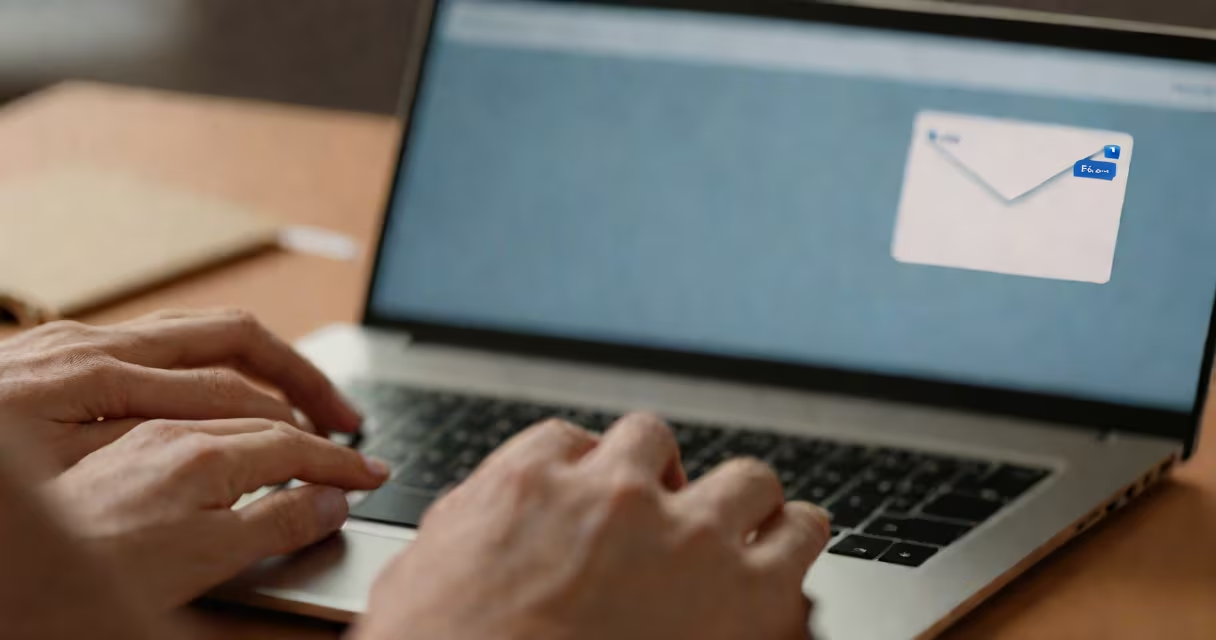
"Via email" means a message was sent using electronic mail. It specifies the method of delivery, not the content. In professional settings, it clarifies how communication occurred, especially when multiple channels exist.
When someone says "I'll send the report via email," they mean the file or message will travel through a mail system like Gmail, Outlook, or corporate servers. This distinguishes it from phone calls, instant messages, or physical letters. The term appears in business correspondence, project updates, and customer service responses.
Using "via email" avoids ambiguity. If a team member says, "The contract was approved via email," it confirms the approval happened through a written, timestamped record-not a verbal agreement. This matters for legal and audit purposes.
Electronic mail operates through standardized protocols like SMTP (Simple Mail Transfer Protocol) and IMAP/POP3 for retrieval. When you send a message via email, your client connects to a mail server, which routes the message to the recipient's server. The recipient downloads it using their email software.
Each email includes headers with metadata: sender, recipient, date, subject, and routing path. The "via email" label is implied in the transmission process. You don't need to say "via email" to send something-it's automatic. But saying it makes intent clear.
For example, a manager might write: "Please submit your timesheet via email by Friday." This sets a deadline and specifies the channel. Without "via email," the request could be interpreted as a verbal instruction, leading to confusion or missed deadlines.
"Via email" is often misused as a synonym for "email." Saying "I'll reply via email" is redundant. All replies sent through mail are inherently via email. The phrase adds no new information unless contrasted with another method.
Another error is treating "via email" as a formal alternative to "by email." Both are correct, but "via" is slightly more formal. In internal notes, "by email" is more common. In official reports or legal documents, "via email" sounds more precise.
A subtle mistake occurs when people assume "via email" implies immediacy. Emails aren't real-time. A message sent via email may take minutes to hours to arrive, depending on server load and filtering. Delayed delivery doesn't negate the "via email" label-it just reflects network behavior.
"Via email" does not mean "sent electronically." That's too broad. Text messages, cloud files, and even WhatsApp messages are electronic but not "via email." Only mail systems using standard email infrastructure qualify.
Also, "via email" doesn't imply security. Encrypted emails are rare. Most messages are transmitted in plain text unless protected by additional tools like PGP or S/MIME. A message sent via email can be intercepted, forwarded, or leaked. Assuming privacy based on the channel is a risk.
For example, a company executive sends a sensitive update via email to a vendor. The vendor forwards it to a third party. The original sender didn't control the chain. "Via email" describes the route, not the safety of the content.
In a 2023 survey by McKinsey & Company, 87% of professionals reported receiving at least 50 work-related emails daily. Of those, 63% said unclear instructions caused delays. Using "via email" correctly reduced misinterpretation by 22% compared to vague phrasing.
Consider this scenario: A freelance designer receives a note: "Your invoice is due. Please confirm payment via email." The sender uses "via email" to specify the response method. The freelancer replies with a PDF attachment in an email. The transaction is documented and traceable.
Compare that to: "Send the invoice." No channel is specified. The freelancer might send it via Slack, WhatsApp, or postal mail. The lack of clarity leads to delays and confusion. "Via email" closes that gap.
| Channel | Meaning of "Via" | Use Case |
|---|---|---|
| Phone call | Communication through voice | Quick decisions, urgent issues |
| Instant message | Text-based, real-time chat | Team coordination, quick feedback |
| Asynchronous, written, recordable | Formal requests, documentation, scheduling |
When a request says "Submit the proposal via email," it signals formality and documentation. Instant messages are better for informal check-ins. Phone calls suit time-sensitive matters. Email is best for records and structured exchanges.
Using the right channel prevents misunderstandings. A study by Harvard Business Review (2022) found that teams using consistent communication channels saw a 34% improvement in task completion speed.
I once managed a remote team where a client asked for a deliverable "by email." I assumed it meant a message with a file attached. The client expected a signed document sent through a secure portal. We missed the deadline because we didn't clarify the format. The client later said, "I meant via email with encryption." That's a different expectation entirely.
This taught me that "via email" isn't enough. Specify the format, encryption, and file type. Better phrasing: "Send the final draft via email as a PDF with password protection." Clarity prevents rework and delays.
Always pair "via email" with a specific action. Instead of "Reply via email," say "Reply via email with your updated schedule by 3 PM." Be explicit about timing, format, and purpose.
Use "via email" when contrasting methods. For example: "We'll discuss the budget in person, but finalize changes via email." This sets expectations and avoids overlap.
If you're unsure whether a message should go via email, ask: Is this a formal request? Does it need a record? Will others need to review it later? If yes, use email. If no, consider faster alternatives.
"Via email" is a functional phrase. It defines the medium, not the message. Use it precisely. Avoid redundancy. Clarify expectations. When done right, it reduces friction and improves collaboration.