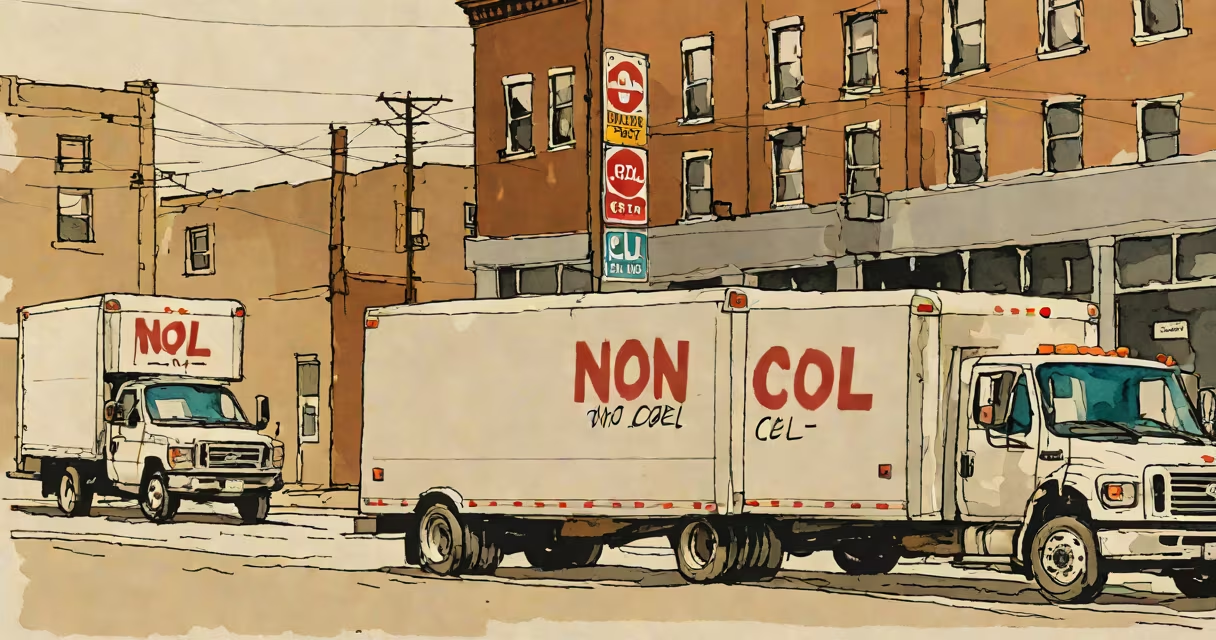
Non CDL means a vehicle does not require a Commercial Driver's License to operate under federal regulations. This applies to vehicles that fall below specific weight, passenger, or hazardous material thresholds set by the Federal Motor Carrier Safety Administration (FMCSA).
The term "non CDL" identifies vehicles and operations exempt from the stringent training, testing, and medical requirements of a CDL. These vehicles are typically smaller, carry fewer passengers, or transport non-hazardous materials. The FMCSA defines the boundaries between CDL and non CDL vehicles based on gross vehicle weight rating (GVWR), number of passengers, and cargo type.
For example, a 16,000-pound cargo van used to deliver groceries to local stores is non CDL. A 26,000-pound tractor-trailer hauling freight across state lines requires a CDL. The difference lies in weight, purpose, and regulatory classification-not just appearance.
Under FMCSA rules, a vehicle requires a CDL if it meets any of these conditions:
Vehicles below these thresholds are non CDL. This includes most delivery vans, small buses, and utility trucks. A 14,500-pound box truck used for moving furniture qualifies as non CDL because it weighs less than 26,001 pounds and carries no hazardous materials.
Even if a vehicle is driven professionally, such as a courier delivering packages, it remains non CDL if it stays under the weight limit. The U.S. Department of Transportation clarifies that employment status doesn't override vehicle classification-only the vehicle's physical and operational parameters do.
Non CDL vehicles cover many everyday transportation. They include:
| Type | Weight Limit | Passenger Capacity | Examples |
|---|---|---|---|
| Delivery Van | < 26,001 lbs | < 16 | FedEx, UPS, local grocery delivery |
| Small Bus | < 26,001 lbs | < 16 | School shuttle, tour van |
| Utility Truck | < 26,001 lbs | < 16 | Plumber's van, electrician's service truck |
These vehicles are often operated by drivers with a standard Class C or even Class B license, depending on state rules. For instance, a city bus carrying 12 passengers uses a non CDL route and doesn't require a CDL, even though it transports people.
A common misconception is that any vehicle used for work needs a CDL. That's false. A landscaping company using a 16,000-pound truck to haul mulch and tools operates under non CDL rules. The driver holds a regular state-issued license and passes a standard driving test.
Non CDL designation affects licensing, insurance, and compliance. Drivers operating non CDL vehicles don't need to complete the CDL skills test, take the written exam for Class A/B/C, or undergo annual medical exams required for CDL holders.
However, state laws may impose additional restrictions. California, for example, requires a special endorsement for certain non CDL vehicles used in public transit, even if they're under the federal weight threshold. Always verify state-specific rules when operating non CDL vehicles.
One non-obvious fact: Some vehicles that appear large still qualify as non CDL. A 25,000-pound refrigerated delivery truck used by a regional food distributor is non CDL. But if the same truck exceeds 26,001 pounds due to added equipment or load, it becomes CDL-regulated-even if nothing changed about the driver's job.
People often confuse "non CDL" with "not regulated." That's incorrect. All vehicles are subject to federal and state safety standards. Non CDL vehicles still must follow traffic laws, pass inspections, and maintain proper documentation.
Another mistake is assuming that non CDL means "easy to drive." While the licensing barrier is lower, operating any vehicle safely requires skill and attention. A non CDL delivery driver handling a 16,000-pound van in winter weather faces risks similar to those of a CDL driver-but with different certification requirements.
I once observed a delivery driver in Seattle using a 24,000-pound van to transport medical supplies. The driver had a standard Class B license, not a CDL. The vehicle was non CDL by federal definition. Yet during a snowstorm, the driver lost control on a curve. The crash wasn't due to lack of training-it was due to poor judgment in adverse conditions. That incident reinforced that non CDL doesn't mean low risk.
Changes in vehicle use or configuration can trigger a CDL requirement. For example, a construction company using a 25,000-pound truck to haul building materials is non CDL. But if the same truck begins transporting hazardous chemicals that require placarding, it becomes CDL-regulated-even if the weight hasn't changed.
Similarly, if a business expands its fleet and adds a 27,000-pound vehicle, that new truck requires a CDL. The rule applies to each individual vehicle, not the entire company. A single vehicle crossing the 26,001-pound threshold triggers CDL requirements.
Understanding this distinction prevents costly violations. A contractor in Texas was fined $15,000 after being caught operating a 26,500-pound dump truck without a CDL. The vehicle exceeded the federal weight limit-regardless of the driver's experience or the job's nature.