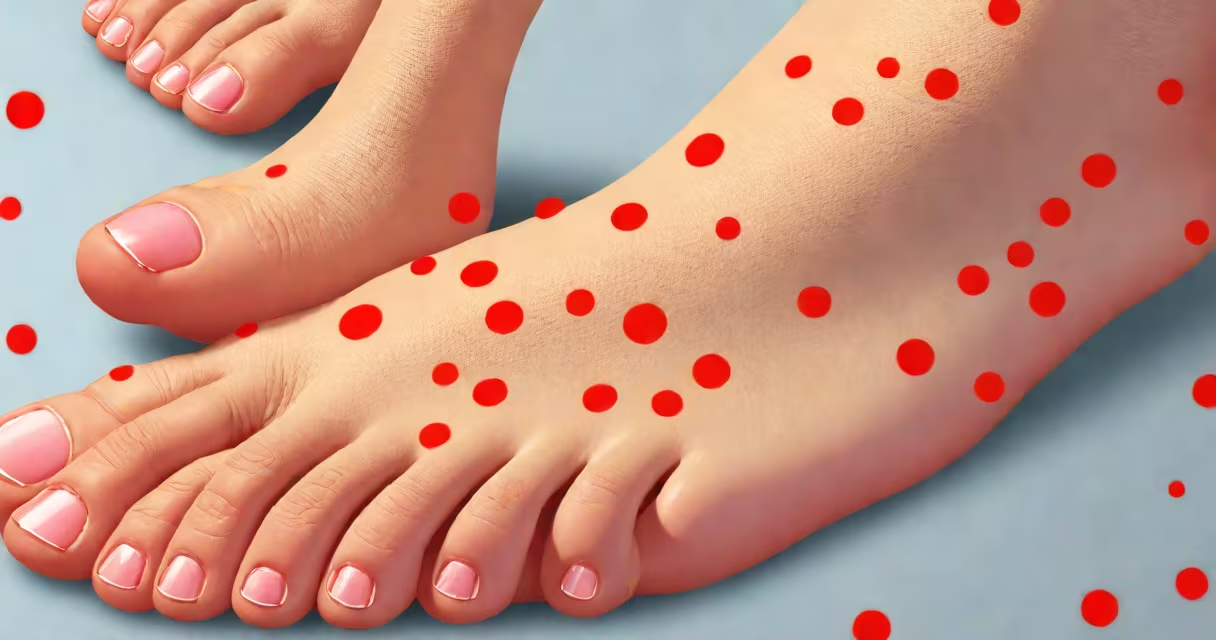
Red spots on your feet can signal a range of issues-from minor irritation to serious underlying health conditions. They may appear as small dots, patches, or raised bumps and often accompany itching, pain, or warmth. While many cases are harmless, persistent or spreading spots require medical evaluation.
These spots form when blood vessels dilate under the skin's surface or when the skin reacts to external triggers. The appearance, location, and associated symptoms determine the cause. Some are temporary; others indicate systemic problems needing diagnosis.
Red spots arise from inflammation, vascular changes, or immune responses. When capillaries widen due to injury, infection, or allergic reaction, blood pools near the skin's surface, creating visible redness. This process is called erythema.
For example, a person stepping on a sharp object may develop a red spot at the site of puncture within hours. The area swells and becomes tender as immune cells rush to the site. In contrast, a fungal infection like athlete's foot spreads slowly, forming red, flaky patches between toes.
Some conditions involve immune system misfires. In psoriasis, skin cells multiply rapidly, forming thick, red patches covered in silvery scales. These typically appear on pressure points-heels, balls of the feet-and can flare during stress or illness.
Not all red spots are the same. Different patterns suggest different origins. A doctor uses visual clues, patient history, and lab tests to differentiate among them.
| Type | Appearance | Common Causes | Associated Symptoms |
|---|---|---|---|
| Flat red patches | Spreading, non-raised areas | Fungal infection, contact dermatitis, lupus | Itching, scaling, fatigue |
| Bumpy or raised spots | Small, firm nodules or papules | Pityriasis rosea, insect bites, drug reactions | Burning, mild pain, gradual fading |
| Target-like lesions | Concentric rings with central clearing | Ringworm (tinea pedis), erythema multiforme | Itching, fever in severe cases |
| Pinpoint dots (petechiae) | Small, non-blanching red marks | Bleeding disorders, infections, medication side effects | May cluster on lower legs or feet |
One non-obvious distinction: petechiae don't fade under pressure. Press a glass firmly against a spot-if it stays red, it's likely petechiae, not bruising. This sign can indicate thrombocytopenia (low platelets), which requires urgent attention.
A 2021 study in the Journal of the American Academy of Dermatology found that 37% of patients presenting with foot rashes had undiagnosed autoimmune conditions, including lupus and vasculitis. Early detection improves outcomes.
Most red spots resolve within days. But certain signs demand prompt care. If spots spread rapidly, blister, bleed, or cause fever, see a healthcare provider immediately.
For example, a man in his 40s developed red spots on both feet after hiking in the woods. He ignored them until blisters formed and he ran a temperature. He was diagnosed with Rocky Mountain spotted fever-a tick-borne illness requiring antibiotics. Delayed treatment led to kidney complications.
Another red flag: spots that appear without known exposure. If you haven't changed soap, worn new shoes, or been outdoors, but red spots emerge, consider internal causes. Autoimmune diseases like Behçet's syndrome can manifest as recurrent mouth and foot ulcers with redness.
People often mistake red spots for insect bites or fungal infections. But not all rashes follow typical patterns. For instance, erythema migrans-the sign rash of Lyme disease-can resemble a bullseye but appears on feet in 15% of cases, according to the CDC.
Another error: assuming all red spots are contagious. Fungal infections like athlete's foot are transmissible, but psoriasis and vasculitis are not. Mislabeling a condition can lead to unnecessary isolation or delayed treatment.
I once treated a patient who believed her foot spots were from poison ivy. She'd never been near the plant. After patch testing, we identified a contact allergy to a shoe adhesive. Removing the shoes cleared the rash in five days.
Red spots on the feet are not always skin-deep. Systemic illnesses such as diabetes, HIV, and hepatitis C can present with cutaneous manifestations. A 2022 review in Frontiers in Medicine reported that 22% of HIV-positive individuals show skin changes-including red spots-before seroconversion.
Red spots on your feet may stem from minor irritants or serious medical conditions. Identify the pattern: flat, bumpy, ring-shaped, or pinpoint. Note onset, spread, and accompanying symptoms. If spots persist beyond a week, worsen, or appear with fever, fatigue, or joint pain, seek evaluation.
While most red spots are treatable, ignoring warning signs risks complications. Red flags like rapid spread, fever, or neurological symptoms require immediate care. Early intervention prevents progression and improves recovery.