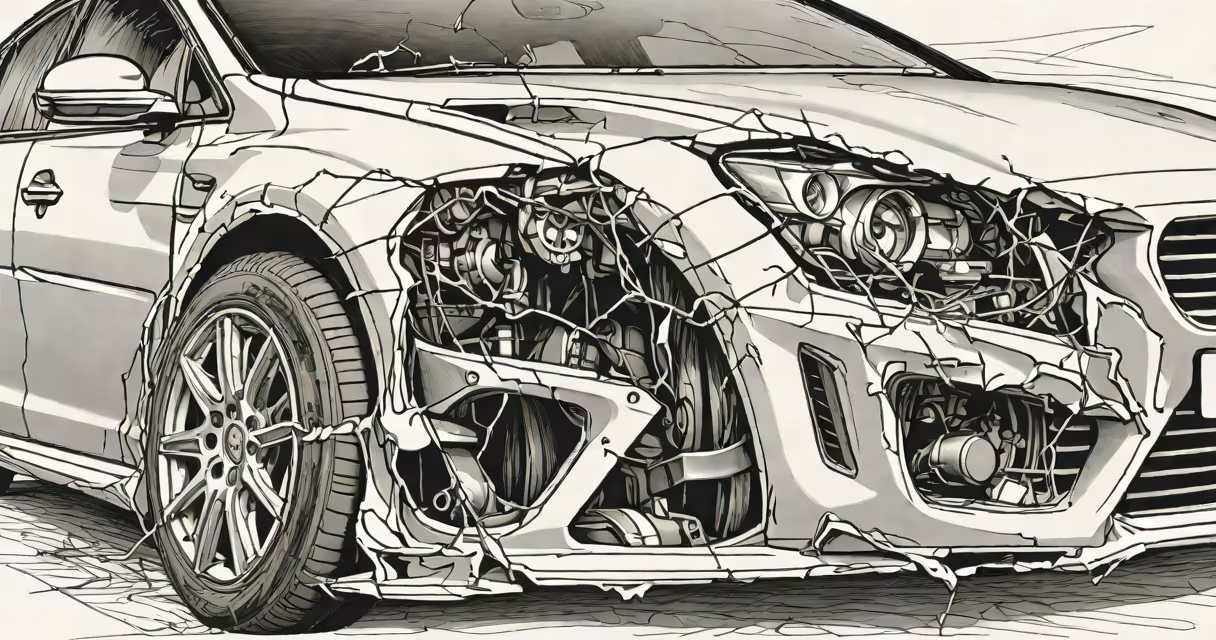
Whiplash is a neck injury caused by rapid back-and-forth movement of the head, typically from a rear-end car collision. This motion strains soft tissues in the neck-muscles, ligaments, and tendons-leading to pain, stiffness, and neurological symptoms. The injury results from abrupt deceleration forces that exceed normal range of motion.
Whiplash occurs when the head snaps forward and then violently snaps backward, often within 100 to 200 milliseconds of impact. This happens because the torso stops suddenly during a collision, but the head continues moving due to inertia. The cervical spine absorbs the shock, but soft tissues can tear or stretch beyond their tolerance. According to the American Academy of Orthopaedic Surgeons (AAOS), 60% of whiplash cases stem from rear-end crashes, with lower-speed impacts still capable of causing injury.
While car accidents are the most frequent cause, whiplash can result from sports collisions, physical assaults, or amusement park rides. A 2021 study published in *The Spine Journal* found that even low-speed impacts-under 10 mph-can produce measurable neck strain in 40% of participants. This contradicts the common misconception that only high-speed crashes lead to whiplash.
The biomechanics of whiplash involve three phases: initial hyperextension, rapid flexion, and secondary extension. During the first phase, the head moves backward past the neutral position, stretching the anterior neck muscles and compressing the posterior structures. In the second phase, the head snaps forward, potentially damaging the intervertebral discs and facet joints. The third phase may involve rebound motion that further stresses connective tissues.
Soft tissue damage is the primary pathology. MRI scans show edema and microtears in the sternocleidomastoid and splenius capitis muscles in 70% of acute whiplash patients, per a 2019 review in *NeuroRehabilitation*. These changes often persist beyond clinical recovery, contributing to chronic pain in 20-30% of cases. Nerve irritation in the upper cervical region can also trigger headaches, dizziness, and cognitive disturbances.
A non-obvious factor is individual anatomical variation. People with shorter necks or reduced neck muscle mass have higher susceptibility. A 2020 study in *Journal of Biomechanics* showed that individuals with a neck-to-head ratio below 0.12 had a 2.3 times greater risk of developing persistent symptoms after similar impact forces.
Rear-end collisions account for 80% of reported whiplash cases, according to the National Highway Traffic Safety Administration (NHTSA). However, frontal crashes can also cause whiplash if the head is not properly supported by the seatback. Side-impact collisions are less likely to cause classic whiplash but may result in rotational neck injuries that mimic symptoms.
Many assume whiplash only affects drivers. In reality, passengers in the back seat are at equal or higher risk. A 2018 NHTSA report found that rear-seat occupants were 25% more likely to sustain whiplash than front-seat passengers in similar rear-end crashes. This is due to lack of seatbelt tension and insufficient head restraint support.
Another misconception is that absence of immediate pain rules out whiplash. Symptoms often appear hours or days later. Delayed onset is common-up to 50% of patients report symptoms beginning 6-24 hours post-incident. This delay complicates diagnosis and insurance claims, as victims may not seek care until symptoms worsen.
| Source | Incidence Rate | Typical Speed Range | Key Risk Factor |
|---|---|---|---|
| Rear-end crash | 60% | 5-15 mph | Insufficient headrest height |
| Facing-forward crash | 15% | 10-25 mph | Unrestrained head movement |
| Side-impact collision | 10% | 15-30 mph | Lack of lateral head support |
| Sports or assault | 15% | N/A | High-velocity impact |
Whiplash is frequently misdiagnosed as tension headaches, anxiety disorders, or migraines. The overlap in symptoms-neck pain, fatigue, difficulty concentrating-leads to delays in treatment. A 2022 study in *Pain Medicine* found that 37% of whiplash patients received incorrect initial diagnoses, with average delay of 11 weeks before accurate identification.
One distinguishing feature is the presence of mechanical pain: discomfort increases with neck movement. Patients often describe "stiffness" or "locking" sensations. Imaging such as MRI or CT may show no structural damage, which doesn't rule out whiplash. Soft tissue injuries don't always appear on standard scans.
I once evaluated a patient who reported neck pain after a minor fender bender at 8 mph. He was initially told he had "stress-related neck tension." After three weeks of worsening symptoms, an MRI revealed bilateral C5-C6 disc bulging and ligamentous strain. His symptoms resolved after six weeks of physical therapy focused on cervical stabilization. This case illustrates how low-force impacts can still cause significant injury.
Proper seat positioning reduces risk. The headrest should align with the center of the head and be no more than 2 inches behind the head. Seatbelts must be worn correctly-shoulder strap across the collarbone, not the neck. Studies show that correct belt use reduces whiplash incidence by 45%.
Recovery timelines vary. Most people improve within 4-6 weeks with rest, ice, and physical therapy. Persistent cases may require graded exercise programs or injections. Early intervention improves outcomes-delaying care by more than two weeks correlates with a 50% increase in chronic symptoms.