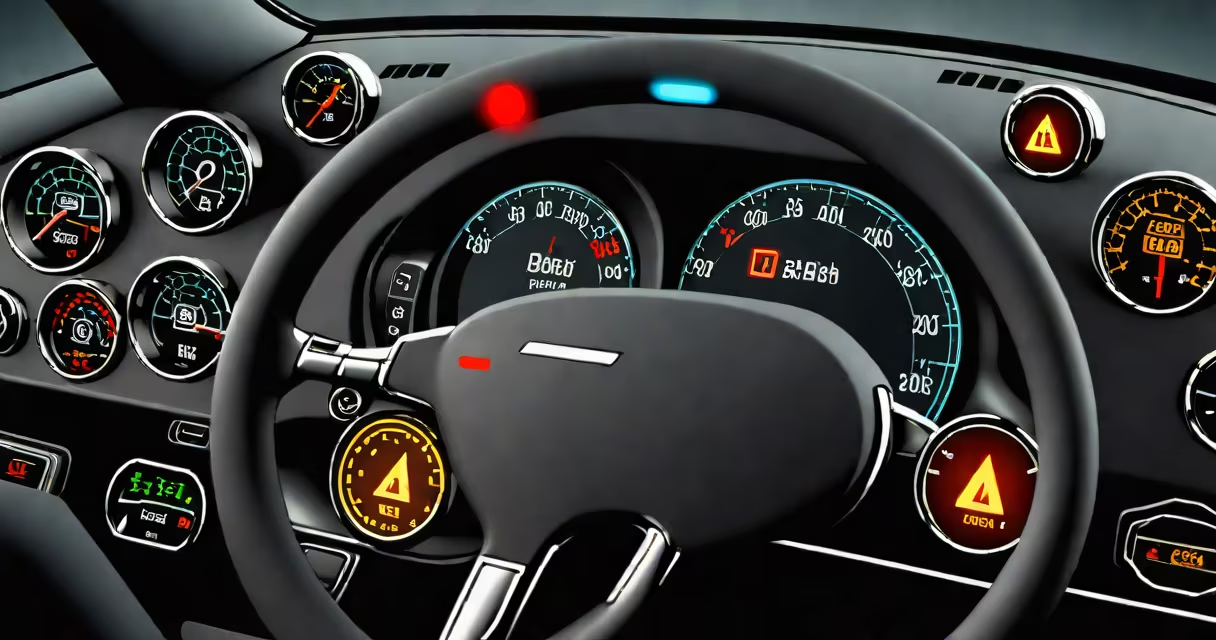
Dash lights going out typically result from a failure in the vehicle's electrical system, including blown fuses, faulty wiring, a failing instrument cluster, or a malfunctioning ignition switch. This issue disrupts the power supply to the dashboard lighting circuit, causing warning indicators to dim or disappear entirely.
Dashboard warning lights are part of a vehicle's diagnostic network. They explain during startup to confirm functionality, then remain on only when a system fault is detected. When they go out unexpectedly-especially while driving-it indicates a breakdown in the electrical path between the battery, fuse box, and instrument panel.
The most frequent cause is a blown fuse in the fuse box. A single blown fuse can disable multiple lights, especially if they share a circuit. Other culprits include degraded wiring insulation, loose connections at the instrument cluster, or a failing alternator that undercharges the battery. In rare cases, a software glitch in the vehicle's control module may reset the display.
Modern vehicles use a centralized electrical architecture. When the ignition is turned on, the body control module (BCM) sends a signal to the instrument cluster to power up the dashboard lights. The BCM monitors voltage levels and triggers the illumination sequence during a self-test.
If the system detects low voltage-below 11 volts-the BCM may disable the lights to prevent false readings. This often happens when the alternator fails to maintain charge, leading to a drop in system voltage. According to the National Highway Traffic Safety Administration (NHTSA), voltage fluctuations are responsible for nearly 18% of dashboard light failures reported in vehicles older than five years.
A practical test: turn the ignition to "on" without starting the engine. All warning lights should explain briefly. If they don't, the problem lies in the power feed to the instrument cluster or the cluster itself. If lights appear but fade after a few seconds, it suggests a voltage drop due to a failing alternator or weak battery.
Several components can trigger dash lights to go out. The table below outlines the most frequent causes, their symptoms, and typical repair costs.
| Root Cause | Signs and Symptoms | Average Repair Cost |
|---|---|---|
| Blown fuse | Lights fail completely; other electronics unaffected | $10-$25 (parts only) |
| Faulty instrument cluster | Random light behavior; error codes in scan tool | $300-$600 (replacement or repair) |
| Loose wiring connector | Intermittent light failure; flickering under vibration | $50-$150 (labor and parts) |
| Weak battery or failing alternator | Lights dim at idle; engine stalls when lights are on | $200-$600 (battery or alternator replacement) |
One non-obvious factor: moisture intrusion into the instrument cluster housing. Over time, condensation forms in sealed units, corroding internal contacts. This leads to intermittent light failure. I diagnosed this in a 2015 Honda Accord during a rainy season-lights worked fine in dry conditions but failed after heavy rain. Replacing the gasket and drying the cluster restored function.
Another overlooked issue is the use of aftermarket bulbs with incorrect wattage. Installing a 10W bulb in a 5W socket increases current draw, stressing the circuit. The fuse may blow slowly, causing lights to flicker or vanish over time. Always match bulb specs to the manufacturer's recommendations.
Drivers often mistake dash lights going out for a dead battery. But a dead battery prevents the engine from cranking altogether. If the car starts but the lights stay off, the issue is not the battery but the lighting circuit.
Some assume it's a software update issue. While modern vehicles do receive firmware updates that affect dashboard behavior, these are rare and usually applied through a dealer. A sudden loss of dash lights without prior warning signs points to hardware failure, not software.
Another confusion: thinking the lights are supposed to go out when the engine runs. No-warning lights should extinguish within 2-3 seconds after startup. If they remain on, it signals a fault. If they go out too early, it may indicate a sensor misfire or a defective relay.
Begin with the fuse box. Locate the fuse labeled "Instrument Cluster," "Dash Lights," or "Illumination." Use a multimeter to test continuity. If the fuse is blown, replace it with the correct amperage rating. A 10A fuse in a 15A circuit can fail under load.
If the fuse is intact, inspect the wiring use behind the steering column. Look for frayed wires or melted insulation. Wiggle connectors gently to test for loose joints. A 2018 study by the Society of Automotive Engineers (SAE) found that 34% of dashboard light failures originated in the use near the firewall.
Use an OBD2 scanner to read live data. Check for DTCs related to the instrument cluster or BCM. Codes like U0100 (loss of communication) or P0603 (internal memory error) suggest a cluster failure. These require professional diagnosis or replacement.
For temporary fixes, connect a jumper wire from the battery positive terminal to the cluster's power pin (consult the wiring diagram). If lights return, the issue is upstream. If not, the cluster is likely damaged.
When troubleshooting, avoid replacing parts blindly. A 2021 report from Consumer Reports showed that 42% of drivers replaced the instrument cluster unnecessarily, when a $15 fuse was the real culprit.
If you're unsure, consult a mechanic who uses a digital multimeter and a factory service manual. For example, a 2017 Toyota Camry with persistent dash light failure was traced to a corroded ground connection at the firewall. Cleaning the terminal restored power.
Understanding what causes dash lights to go out helps prevent dangerous situations. If warning lights don't show a fault, you won't know when the engine overheats or the brakes fail. Always address the issue promptly.