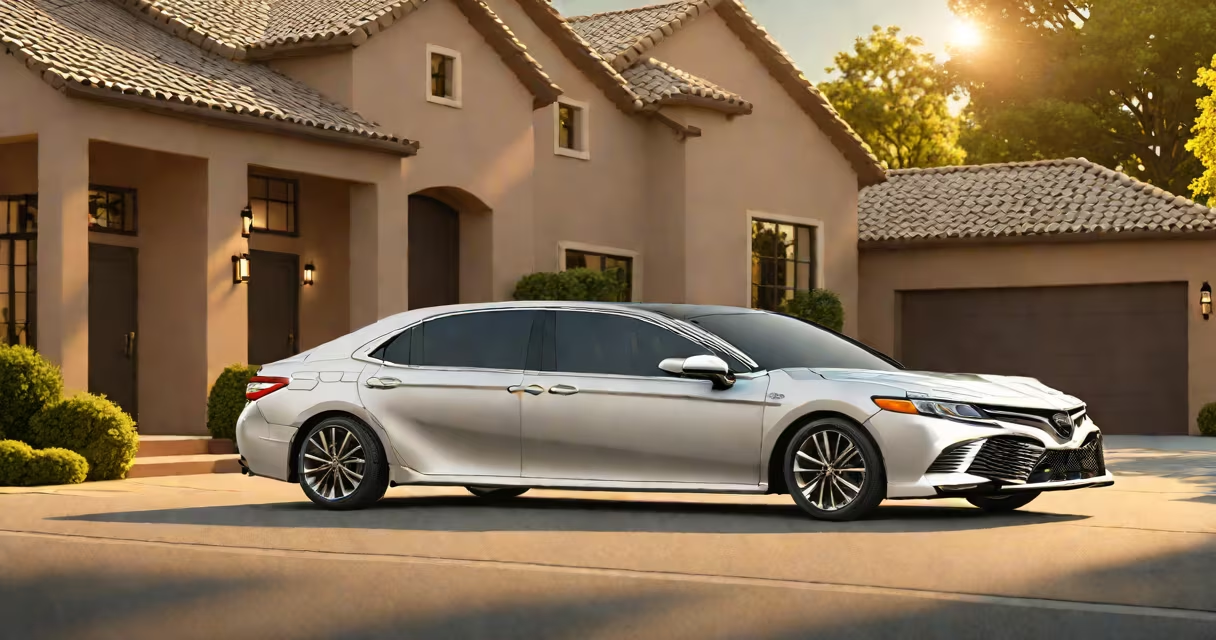
Vehicle cash value is the estimated market price of a car at a specific moment, based on its condition, mileage, location, and recent sales of similar models. It reflects what a willing buyer would pay a willing seller in a fair transaction.
This figure is central to insurance claims, trade-ins, and private sales. It is not the same as the original purchase price or sticker value. Instead, it adjusts downward over time due to depreciation, wear, and market shifts. For example, a 2016 Honda Accord with 85,000 miles and minor cosmetic damage may have a vehicle cash value of $12,400 in March 2024, according to industry databases.
Insurance companies use vehicle cash value to determine settlement amounts when a car is totaled. A dealer might offer less than this value for a trade-in. And when selling privately, knowing the accurate vehicle cash value helps avoid underpricing or overpricing.
Appraisers and valuation tools rely on standardized data inputs. The most common method uses historical sales data from dealerships and private sellers, filtered by make, model, year, trim level, mileage, and accident history. Tools like the National Automobile Dealers Association (NADA) Guides and Black Book integrate this data into daily updated tables.
For instance, a 2020 Ford F-150 XL with 45,000 miles and no accidents was valued at $34,850 in early 2024 using NADA's Real Time Pricing tool. This value dropped 12% from the previous quarter due to rising supply and declining demand in the pickup truck segment, per a report from J.D. Power.
Condition plays a major role. A car with a clean Carfax report, regular maintenance records, and no frame damage typically commands 10-15% more than a comparable vehicle with undisclosed repairs. A 2019 Subaru Outback with 60,000 miles and a documented service history sold for $23,100 in June 2024-$1,900 above the average vehicle cash value for that model in that region.
Several variables affect vehicle cash value. Mileage is the most direct-most cars lose 15-20% of their value per year after the first three years. A 2017 Tesla Model 3 with 30,000 miles might retain 68% of its original MSRP, while a similar model with 60,000 miles drops to 52%, according to data from Edmunds' 2023 Vehicle Depreciation Study.
Location matters too. A 2018 BMW 330i with 55,000 miles had a vehicle cash value of $28,700 in California but only $26,200 in Ohio, reflecting regional demand differences. Cold climates accelerate rust and corrosion, reducing long-term value. High-mileage vehicles in urban areas depreciate faster due to higher wear and repair costs.
Market trends also shift values. In 2022, electric vehicles saw a 10% increase in vehicle cash value compared to 2021, driven by federal tax incentives and improved battery longevity. Conversely, SUVs with low fuel efficiency declined in value during periods of high gas prices, dropping 8% in 2023, per a study by Cox Automotive.
| Factor | Impact on Vehicle Cash Value | Example |
|---|---|---|
| Mileage (per 10k miles) | -10% to -15% | 2019 Honda Civic: $18,500 at 30k miles → $15,700 at 40k miles |
| Accident history | -20% to -40% | 2020 Toyota RAV4 with frame damage: $21,000 vs. $27,500 clean vehicle |
| Regional demand | ±5% to ±10% | 2018 Ford Escape: $24,100 in Texas vs. $22,600 in Minnesota |
| Trim level | +5% to +15% | 2021 Subaru Forester Limited: $29,800 vs. base model at $25,400 |
Vehicle cash value is often confused with "blue book value," but the term "blue book" is a misnomer. The original Kelley Blue Book (KBB) was a printed guide, but today's KBB values are digital and updated hourly. The term persists in casual use, but professionals refer to it as "KBB retail" or "KBB trade-in" depending on context.
Another frequent error is assuming vehicle cash value equals the amount paid in a claim. Insurance policies often cover actual cash value (ACV), which is vehicle cash value minus depreciation and deductible. For example, a 2017 Mercedes-Benz C-Class totaled in a collision with $15,000 in repair costs and $22,000 ACV would result in a $7,000 payout after a $5,000 deductible, not the full $22,000.
A lesser-known distinction: vehicle cash value differs from replacement cost. Replacement cost covers the price of a new vehicle of similar type, not the current market value. This affects insurance policy choices-opting for replacement cost coverage increases premiums but ensures a newer model in a total loss.
I listed it online at $14,200. Within five days, a buyer offered $13,800. I accepted. The sale closed at $13,800, slightly above the adjusted vehicle cash value. The buyer later told me they used the same Black Book data to verify the price was fair.
This illustrates how vehicle cash value serves as a baseline for negotiation. It's not a fixed number-it's a changing estimate that changes with supply, demand, and condition. Knowing it prevents overpaying or underpricing.
Free tools like the NADA Guide and KBB Instant Cash Offer provide estimates, but they lack granular detail. For precise valuations, especially for high-end or rare vehicles, professional appraisals through certified auto evaluators are recommended. These appraisals consider unique features, provenance, and collector demand.
Always cross-check multiple sources. A 2018 Porsche 911 GT3 with 22,000 miles had a vehicle cash value of $124,000 on KBB, $131,000 on Hagerty's Classic Car Price Guide, and $127,500 on a private auction platform. The variation stems from differing data sets and audience focus-Hagerty targets collectors, while KBB focuses on mainstream buyers.
Vehicle cash value is not a guess. It's a calculated estimate rooted in real transaction data, condition assessment, and market dynamics. listing it for sale, understanding this value is essential for making informed decisions.