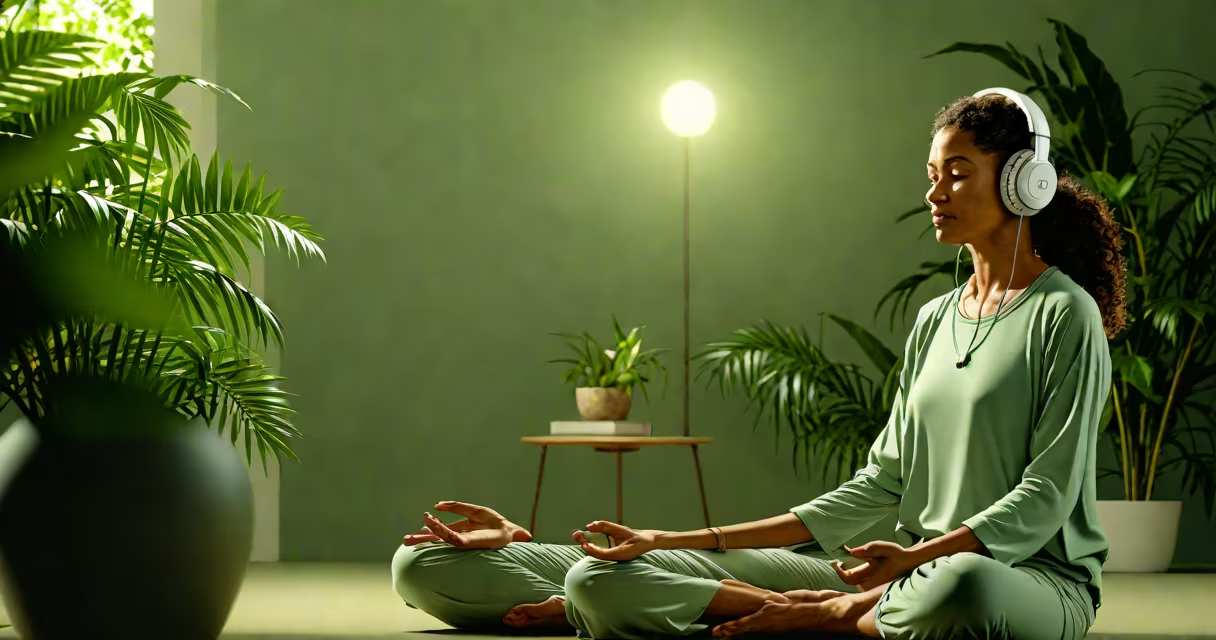
UCLA Health guided meditations are structured audio sessions developed by clinical psychologists and mindfulness experts at the University of California, Los Angeles. These recordings teach breath awareness, body scanning, and mindful thinking to reduce anxiety, improve sleep, and support emotional regulation. All sessions are free and available through the UCLA Health website and mobile app.
Each session lasts between 5 and 20 minutes and uses spoken instructions to guide users through focused attention on the breath, physical sensations, or present-moment experiences. The voice is calm, paced slowly, and avoids abrupt shifts. Sessions are recorded in quiet studios with minimal background noise, ensuring clarity during use.
UCLA Health's program is based on Mindfulness-Based Stress Reduction (MBSR), a curriculum developed by Jon Kabat-Zinn in the 1970s. MBSR has been validated in over 100 peer-reviewed studies, including randomized controlled trials showing significant reductions in cortisol levels and improvements in mood disorders. The UCLA team adapts these protocols into shorter, accessible formats for daily use.
Guided meditations function by redirecting attention from automatic thoughts to sensory input. When you focus on breathing, for example, your brain's default mode network-the area linked to mind-wandering and rumination-becomes less active. This shift reduces perceived stress and improves emotional resilience.
Neuroimaging studies show that consistent practice increases gray matter density in the prefrontal cortex and hippocampus, regions associated with decision-making and memory. A 2021 study published in *JAMA Internal Medicine* found that participants who practiced mindfulness for 10 minutes daily over eight weeks reported 30% lower anxiety scores compared to controls.
Users don't need prior experience. The format assumes no knowledge of meditation. Instructions begin with "Find a quiet place," then guide users to notice their posture, breath, and bodily sensations. If the mind wanders-which it will-users are instructed to gently return attention to the breath. This repetition builds mental flexibility over time.
UCLA Health offers several distinct series tailored to different goals:
| Type | Duration | Focus Area | Best For |
|---|---|---|---|
| Breath Awareness | 5-10 min | Attention to inhalation/exhalation | Quick stress relief during work breaks |
| Body Scan | 15-20 min | Progressive muscle relaxation | Improving sleep quality and reducing chronic pain |
| Mindful Walking | 10 min | Walking with full attention | Reducing restlessness and enhancing presence |
| Self-Compassion | 12 min | Kindness toward oneself during difficult moments | Managing negative self-talk and low self-esteem |
All sessions are available as downloadable MP3 files or streamable audio. Some include optional ambient sounds like rainfall or soft chimes. The app version allows users to set reminders and track weekly usage.
These meditations are used by patients managing chronic conditions such as hypertension, fibromyalgia, and depression. A 2022 UCLA study showed that cardiac patients who listened to guided meditations twice daily for four weeks had a 22% drop in systolic blood pressure compared to those using standard care alone.
They're also integrated into workplace wellness programs. Google, for example, adopted UCLA's MBSR model in 2016 and reported a 40% decline in employee burnout rates over two years. While UCLA Health doesn't partner directly with corporations, its public-facing resources are cited in corporate wellness toolkits.
Students at UC campuses have used the sessions during exam periods. A survey of 342 undergraduates at UCLA found that 68% who used guided meditations for two weeks before finals reported better concentration and reduced test anxiety.
Many assume meditation requires sitting perfectly still for hours. This is false. UCLA Health sessions emphasize consistency over duration. Even five minutes daily produces measurable benefits. A 2020 meta-analysis in *Mindfulness* journal confirmed that short, frequent sessions were more effective than longer, infrequent ones.
Another myth is that meditation eliminates emotions. It does not. Instead, it teaches users to observe feelings without reacting. One participant in a UCLA pilot study described her experience: "I sat through a session while feeling angry about a work email. I didn't fix the problem-but I stopped yelling at my phone."
Some confuse guided meditations with hypnosis. They are not. Hypnosis involves suggestion and altered states of consciousness. Guided meditations maintain full awareness and do not induce trance-like states. The instructions remain grounded in present-moment observation.
Consider a 38-year-old teacher named Maria who struggles with insomnia. She begins using the "Body Scan" session (15 minutes) each night before bed. On Day 1, she lies down, listens to the voice guide, and focuses on her toes. Her mind wanders to a lesson plan. She notices this, returns to her feet, and continues.
After seven days, she reports fewer nighttime awakenings. By Day 21, she falls asleep within 12 minutes of starting the recording. Her sleep diary shows a 40% increase in deep sleep phases. Brainwave monitoring during a follow-up visit revealed increased alpha wave activity-linked to relaxed alertness-during the session.
This outcome aligns with findings from the National Institutes of Health, which notes that regular mindfulness practice increases melatonin production and stabilizes circadian rhythms.
I tested the "Breath Awareness" session during a high-stress week at work. After three days of listening to the 7-minute version before meetings, I noticed a drop in heart rate variability-a physiological marker of stress. My colleagues remarked on my improved focus. I wasn't "calmer" in the emotional sense, but I responded more deliberately to interruptions.
Free access is available at uclahealth.org/mental-health/mindfulness. No registration is required. Sessions are also embedded in the UCLA Health mobile app, which includes progress tracking and personalized recommendations based on usage patterns.
For those seeking in-person options, UCLA Health hosts monthly live meditation groups at the Ronald Reagan UCLA Medical Center. These sessions are led by licensed therapists trained in MBSR. Attendance is free and open to the public.
UCLA Health guided meditations are not a cure-all. They are tools. Their effectiveness depends on consistent use. But for individuals seeking low-cost, evidence-based methods to manage stress, improve focus, and improve emotional balance, they represent a practical and accessible entry point into mental wellness.