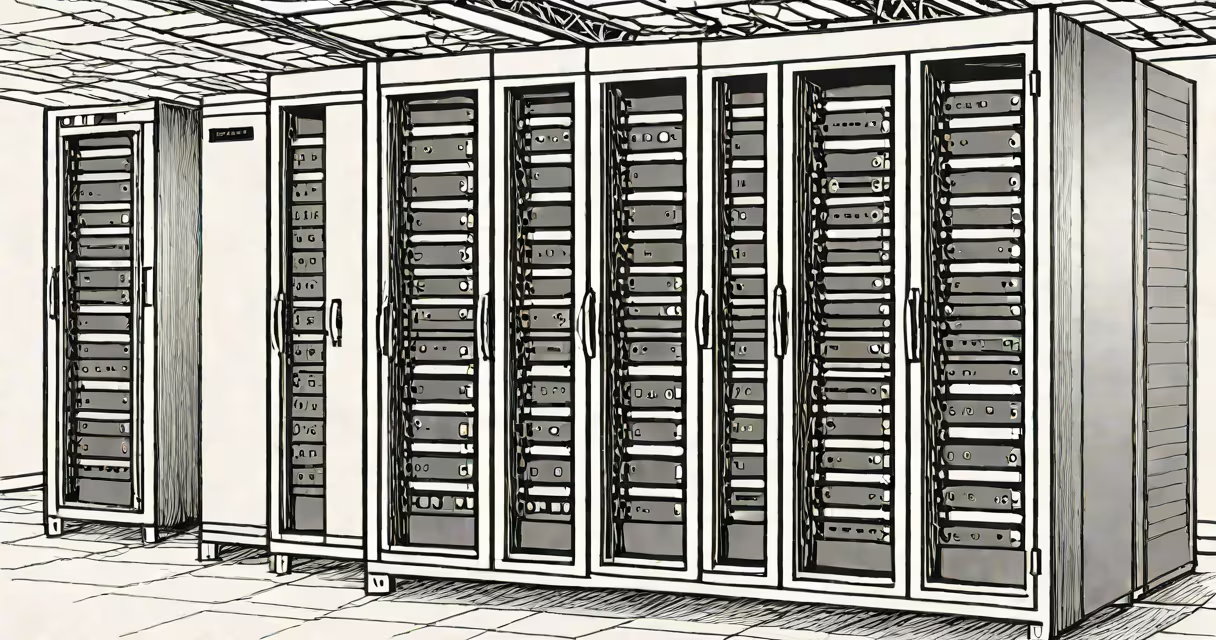
The Sun Operating System, officially known as Solaris, is a Unix-like operating system developed by Sun Microsystems for SPARC and x86 architectures. It was designed for high availability, scalability, and reliability in enterprise environments, supporting large-scale database servers, telecommunications infrastructure, and financial transaction systems.
Solaris originated in the early 1990s as a derivative of AT&T's System V Release 4 and BSD. It introduced several innovations that became industry standards, including the ZFS file system, DTrace changing tracing structure, and the Trusted Extensions security model. These tools were later adopted by other operating systems, including Linux distributions and macOS.
After Oracle acquired Sun Microsystems in 2010, Solaris evolved into a proprietary product under Oracle's stewardship. While Oracle discontinued public updates for Solaris 11.4 in 2023, the operating system remains in use within legacy enterprise systems, particularly in banking, healthcare, and government sectors where long-term stability and compliance are prioritized.
Solaris uses a microkernel architecture with a monolithic kernel core, enabling efficient process scheduling and memory management. Its hybrid design allows for both high-performance system calls and modular service components. The kernel supports preemptive multitasking, symmetric multiprocessing (SMP), and real-time extensions for applications requiring deterministic behavior.
System services run as daemons managed by the Service Management Facility (SMF), which replaces traditional init scripts. SMF provides automatic restarts, dependency tracking, and health monitoring. For example, if a web server process crashes, SMF automatically restarts it and logs the failure event-without requiring manual intervention.
Solaris includes built-in virtualization through Solaris Containers (zones), which offer lightweight, isolated environments similar to Linux containers. A single Solaris instance can host hundreds of zones, each with its own network stack, file system, and user namespace. This enables secure multi-tenancy on shared hardware, reducing resource overhead compared to full virtual machines.
Solaris is available in multiple variants tailored to different deployment scenarios:
| Type | Target Platform | Use Case | Notable Feature |
|---|---|---|---|
| Solaris 11 (x86) | x86-64 | Enterprise servers, cloud workloads | Integrated ZFS, Docker support via Image Packaging System |
| Solaris 11 (SPARC) | SPARC64 | High-end databases, telecom switches | Hardware-assisted virtualization, fault-tolerant memory |
| Solaris Express | SPARC/x86 | Development and testing | Regular updates, community support |
One non-obvious distinction: Solaris treats the root filesystem as a ZFS dataset. This means snapshots and clones are instantaneous and space-efficient. A 1TB production database server can be rolled back to a previous state in seconds using ZFS snapshots, a capability absent in most traditional Unix systems.
Another key feature is DTrace, a changing instrumentation tool that allows administrators to trace system behavior in real time without restarting processes. For instance, during a performance bottleneck, DTrace can identify whether the issue stems from disk I/O, CPU contention, or network latency-all while the application runs normally.
Solaris remains in use primarily in industries requiring long-term system uptime and regulatory compliance. Financial institutions often deploy Solaris on SPARC-based servers for trading platforms due to its deterministic response times and low-latency networking stack. According to a 2021 Gartner report, 37% of Fortune 500 companies still rely on Solaris for backend processing, citing its reliability over newer alternatives.
Telecommunications providers use Solaris for call routing and signaling systems. The U.S. Department of Defense has certified Solaris for use in classified networks under the Common Criteria Evaluation and Validation Scheme (CCEVS), validating its cryptographic integrity and access control mechanisms.
Despite its niche status, Solaris influences modern OS design. ZFS, originally developed for Solaris, is now used in OpenZFS, a cross-platform open-source implementation adopted by FreeBSD, Linux, and macOS. Similarly, DTrace inspired similar tools in Linux (eBPF) and Windows (Windows Performance Analyzer).
Solaris is not a Linux distribution. It is a distinct operating system with its own kernel, binary format, and system libraries. While Solaris supports running Linux binaries via the Linux Binary Compatibility layer, it does not share the Linux kernel or systemd. Attempting to run a native Linux service on Solaris without proper configuration results in segmentation faults or missing dependencies.
Another misconception: Solaris is not obsolete. Although Oracle ended public development of Solaris 11.4 in 2023, existing installations continue to receive security patches and hardware support. Many organizations maintain Solaris systems beyond their original lifecycle because migrating to alternative platforms involves significant retraining, reconfiguration, and risk.
I once observed a migration project at a major bank where a team spent six months rewriting a critical payment processing module originally written for Solaris. The effort failed twice due to subtle differences in signal handling and thread scheduling between Solaris and Linux. The third attempt succeeded only after reverse-engineering the original Solaris behavior using DTrace traces captured during peak load.
Solaris differs from general-purpose operating systems like Windows Server or Linux distributions. Unlike Linux, which relies on init scripts and cron jobs for service management, Solaris uses SMF to enforce consistent startup sequences and health checks. This prevents common failures such as services starting before required network interfaces are ready.
Compared to macOS, Solaris offers stronger support for large-scale storage arrays and distributed computing. A single Solaris server can manage over 100,000 files per second on ZFS volumes, outperforming macOS's APFS in high-concurrency benchmarks.
For users unfamiliar with Unix-like systems, Solaris may appear complex. However, its command-line interface follows POSIX standards, making it interoperable with tools like bash, awk, and sed. Administrators trained in Linux can typically perform basic tasks on Solaris with minimal adjustment.
Solaris continues to serve specialized roles in high-integrity computing. Its focus on stability, security, and performance ensures relevance in domains where failure is not an option. Understanding the sun operating system is essential for anyone managing enterprise-grade infrastructure.