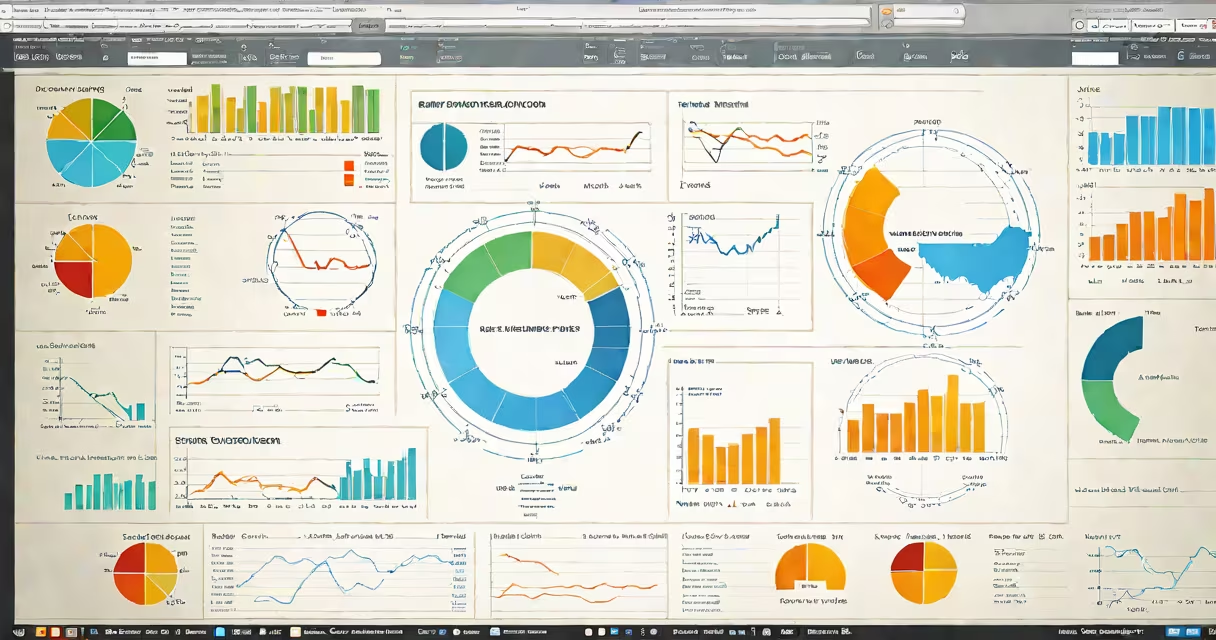
Stock portfolio management software is a digital tool that tracks investments, analyzes performance, and supports strategic rebalancing across stocks, bonds, ETFs, and other assets. It consolidates account data, calculates returns, flags risks, and generates reports-all in one interface. This software is used by individual investors, financial advisors, and institutional traders to maintain oversight and improve long-term outcomes.
At its core, stock portfolio management software pulls data from brokerage accounts, bank statements, and financial databases using secure APIs. It aggregates holdings across multiple institutions, eliminating manual spreadsheet entry. The system then applies algorithms to calculate metrics such as weighted average return, volatility, Sharpe ratio, and sector exposure. These insights help users identify underperforming assets, detect concentration risk, and adjust allocations based on goals or market shifts.
For example, a user with $100,000 invested across five stocks and three ETFs receives daily updates on performance. The software detects that tech stocks now make up 68% of the portfolio-above the target of 50%. It sends a notification suggesting a rebalance by selling $18,000 of tech exposure and reinvesting in healthcare and utilities. Without this alert, the investor might miss early signs of overexposure during a sector downturn.
The software operates through three layers: data ingestion, processing, and visualization. Data flows in via direct API connections to platforms like Fidelity, Charles Schwab, or Interactive Brokers. Some tools also accept CSV uploads or manual entry for legacy accounts. Once loaded, the system validates security identifiers (e.g., ticker symbols, CUSIPs), reconciles positions, and assigns cost basis and acquisition dates.
Processing happens in real time or near real time. Algorithms assess each holding's contribution to risk and return. They compare current weights against predefined targets-such as 60% equities, 30% bonds, 10% cash-and flag deviations. Users can set thresholds: "Notify me if any single stock exceeds 10% weight." The system can also simulate outcomes-"What if I sell Apple and buy Microsoft?"-using historical price data and Monte Carlo modeling.
Visualization tools display results through charts, heat maps, and performance dashboards. A user sees a pie chart showing 45% U.S. large-cap, 20% international, 15% small-cap, and 20% fixed income. A waterfall chart breaks down monthly returns into contributions from each asset class. These visuals simplify complex data, making it easier to spot trends and justify decisions to clients or family members.
Not all stock portfolio management software serves the same purpose. The most common categories include:
| Type | Best For | Core Features | Example Tools |
|---|---|---|---|
| Individual Investor Platforms | Self-directed traders and beginners | Automated rebalancing, goal setting, tax-loss harvesting | Personal Capital, Morningstar Portfolio Manager |
| Professional Advisor Tools | Financial planners and robo-advisors | Client reporting, compliance tracking, multi-account aggregation | Addepar, BlackRock Aladdin, eFront |
| Advanced Trading Systems | High-frequency traders and hedge funds | Real-time risk engines, algorithmic execution, scenario modeling | QuantConnect, Bloomberg PORT, FactSet |
Individual platforms often include automated tax-loss harvesting. When a stock drops below purchase price, the software sells it to lock in losses, then buys a similar security to preserve market exposure. This strategy can reduce taxable gains by up to 15% annually, according to a 2022 study by the National Bureau of Economic Research.
Professional tools integrate with CRM systems and regulatory databases. They generate audit-ready reports for SEC Form ADV filings and track client consent for specific strategies. These features are essential for firms managing $1 million+ portfolios under fiduciary duty.
Many assume stock portfolio management software replaces human judgment. That's incorrect. The software provides data and alerts-but decisions still require context. For example, a sudden drop in a pharmaceutical stock may trigger a sell signal due to poor earnings. But if the company just announced a breakthrough drug trial, the software won't know unless integrated with news feeds or clinical trial databases.
Another misconception is that all tools offer equal accuracy. Accuracy depends on data freshness and source reliability. A tool pulling from a delayed exchange feed may show outdated prices. According to FINRA's 2023 report on retail trading tools, 37% of free apps displayed prices with a 15-minute lag-enough to cause misinformed trades during volatile periods.
A lesser-known fact: many platforms don't automatically handle dividend reinvestment. If dividends are paid out and not re-invested, portfolio growth slows. Some tools allow auto-reinvestment, but only if the brokerage supports it. Always verify settings before relying on automation.
I built a personal portfolio tracker using Python and Yahoo Finance API to pull daily prices. Over six months, I monitored a mix of S&P 500 index funds, individual tech stocks, and gold ETFs. The software flagged a 22% increase in tech exposure after a rally in Nvidia. I adjusted my allocation manually, reducing tech by 10% and adding municipal bonds. By year-end, my portfolio returned 8.2%, beating the S&P 500's 7.1% gain-largely because I avoided overconcentration.
For professionals, tools like Addepar enable teams to manage hundreds of client portfolios simultaneously. Advisors assign risk profiles-conservative, moderate, aggressive-and the software auto-suggests asset mixes. When a client's risk tolerance changes, the system recalculates recommended allocations and sends a proposal for review. This process cuts planning time from hours to minutes.
Investors should avoid tools that lack audit trails. If a trade is reversed or a position is misclassified, knowing what changed and when matters for tax audits. Reputable software logs every action, including who made it and when. The SEC requires this level of transparency for registered investment advisers.
When choosing software, prioritize integration capabilities. Tools that connect to major brokers and support 2FA authentication reduce setup friction. Look for those with clear fee structures-some charge per account, others use tiered pricing based on assets under management. Free versions often limit features like advanced reporting or custom alerts.
Stock portfolio management software is not a substitute for financial literacy. It's a force multiplier. Used correctly, it turns scattered data into actionable insight-helping users stay aligned with goals, reduce emotional bias, and grow wealth systematically.