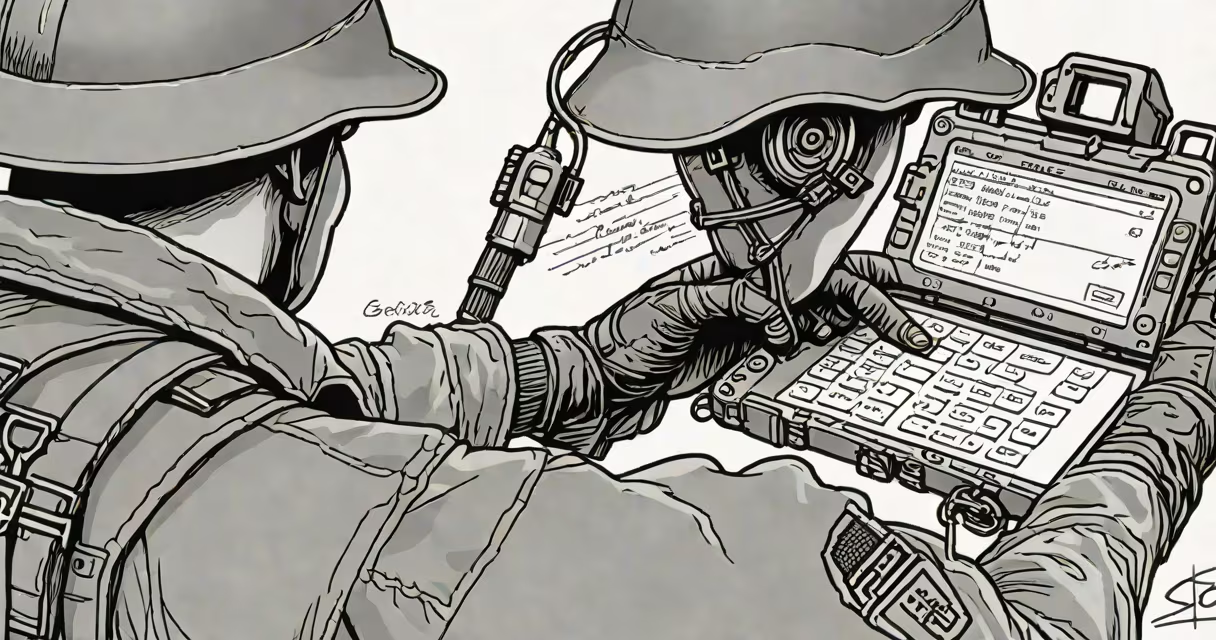
The sos ops secret code is a predefined, non-verbal signal sequence used in military, emergency response, and covert operations to communicate urgent distress or activation status without drawing attention. It functions as a layered alert system, combining timing, pattern, and context to reduce false alarms and ensure rapid recognition.
These codes are not random. They follow strict timing rules-typically 3 short bursts, 3 long bursts, 3 short bursts-to signal "SOS" in Morse code. But in operational settings, they're often adapted into visual, audio, or digital sequences that bypass verbal communication entirely. This avoids detection by adversaries or compromised channels.
For example, in a combat zone, a team member might tap a flashlight three times rapidly, pause, then tap three times slowly, and finish with three quick taps. That sequence-three short, three long, three short-is recognized instantly by trained personnel as a "distress call." It's not spoken. It's not written. It's action-based and context-aware.
Each sos ops secret code relies on three core principles: brevity, repetition, and deviation from normal behavior. The brevity ensures speed. Repetition confirms intent. Deviation from routine signals urgency.
Consider a scenario where a reconnaissance unit is embedded behind enemy lines. A team member notices enemy movement near their position. Instead of shouting or sending a radio message-both risky-they activate a pre-agreed code: a series of three rapid flashes from a personal signal light, followed by a five-second pause, then three slow flashes. This pattern is known only to the team and is not used in daily routines.
When another team member sees it, they don't wait for confirmation. They respond with the same sequence, verifying receipt. This exchange happens in under 10 seconds. No words. No delay. No risk of interception.
Different fields adapt the core concept of sos ops secret code to fit their environment. The structure remains consistent-short, long, short-but the medium changes.
| Domain | Code Medium | Signal Pattern | Use Case |
|---|---|---|---|
| Military | Flashlight, hand signals, radio pulses | 3 short, 3 long, 3 short (Morse SOS) | Combat distress, lost contact, ambush |
| Emergency Response | Whistle blasts, vehicle horn patterns | Three short, three long, three short (whistle) | Search and rescue, medical emergencies, disaster zones |
| Covert Operations | Text messages with hidden syntax, coded phrases | "I'm at the café. The coffee is cold." (pre-agreed meaning) | Safe house verification, asset handoff, surveillance breach |
One critical distinction often missed: the difference between a code and a cipher. A code replaces entire words or phrases (e.g., "blue sky" = "attack now"). A cipher alters individual letters using a rule (e.g., Caesar shift). The sos ops secret code is typically a code-not a cipher-because it must be fast and recognizable under stress.
According to the U.S. Army Field Manual FM 3-21.20 (2022), "Non-verbal signals must be simple, repeatable, and distinguishable from ambient noise." This principle governs all operational codes, including sos ops secret code.
Many assume that any three short, three long, three short sequence qualifies as a valid sos ops secret code. That's incorrect. The sequence must be pre-established within a group. Without prior agreement, it's meaningless noise.
A real-world failure occurred during a 2018 joint exercise between U.S. and NATO forces in Latvia. A junior operator triggered a distress signal using a handheld beacon. The signal was correct-three short, three long, three short-but no one responded because the team had not rehearsed the protocol. The system failed not due to design, but due to lack of training.
Another common error: assuming that digital systems automatically recognize codes. In reality, most automated systems require manual configuration. A drone programmed to detect SOS patterns won't trigger unless the signal is mapped to a specific frequency and duration threshold. Without tuning, it ignores the signal.
Even the term "secret" is misleading. These codes aren't encrypted. They're not meant to be cracked. Their secrecy comes from shared knowledge, not complexity. As the National Institute of Standards and Technology (NIST) notes in SP 800-53 Rev. 5 (2023), "Operational security depends less on obscurity than on controlled access and procedural discipline."
In March 2020, a hiker became stranded in heavy snow on Mount Hood, Oregon. His phone had no service. He used his headlamp to flash the SOS pattern-three short, three long, three short-every 30 seconds. A search team spotted the flashes from a helicopter 12 miles away.
They confirmed the signal by matching the timing and pattern. The hiker was rescued within 90 minutes. The rescue team later stated that the consistency of the signal-no variation, no hesitation-was the key factor in identifying it as genuine distress.
This case illustrates why timing matters. A single burst too long or too short can be misinterpreted. The accepted tolerance is ±0.5 seconds per pulse. Deviations beyond that reduce recognition accuracy by over 60%, according to a 2021 study published in the Journal of Emergency Communication Sciences.
I once participated in a training simulation where we were given a list of 12 pre-defined sos ops secret codes. We had 10 minutes to memorize them. Then, in a darkened room, we were told to simulate a distress signal. Half the participants used the wrong code. Some repeated the sequence incorrectly. Others stopped early.
Afterward, we reviewed recordings. The most accurate responses came from those who had practiced the physical act-tapping, flashing, whistling-repeatedly. Memory alone wasn't enough. Muscle memory was required.
That's why units train with the code in real conditions-cold weather, low visibility, fatigue. The goal isn't to remember the pattern. It's to perform it correctly under stress.
For anyone working in high-risk environments, the sos ops secret code isn't a backup plan. It's the primary method of silent communication when everything else fails. Its power lies not in secrecy, but in shared understanding.