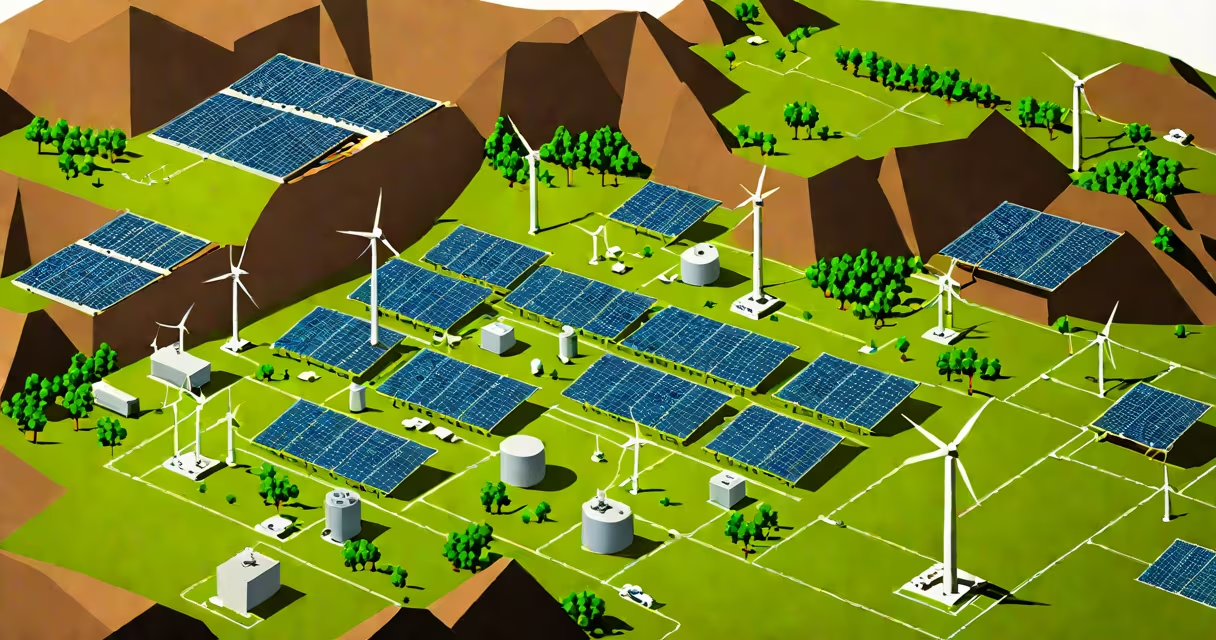
Renewable energy types are sources of power derived from natural processes that replenish continuously, such as sunlight, wind, water flow, and organic matter. These sources generate electricity or heat without depleting finite resources or emitting significant greenhouse gases during operation.
Unlike fossil fuels, which take millions of years to form and release carbon dioxide when burned, renewable energy types rely on ongoing natural cycles. They are central to reducing dependence on coal, oil, and gas while addressing climate change. The International Energy Agency (IEA) reports that renewables accounted for 30% of global electricity generation in 2023, with solar and wind leading growth.
Each renewable energy type converts a natural resource into usable energy through distinct physical or biological processes. Solar power uses photovoltaic cells to turn sunlight directly into electricity. Wind energy relies on turbines that spin when air moves past their blades, driving generators. Hydroelectric systems capture the kinetic energy of flowing or falling water to rotate turbines.
Geothermal energy taps heat stored beneath Earth's surface. Wells drill into underground reservoirs to bring hot water or steam to the surface, which drives turbines. Biomass energy burns organic materials-like wood, crop residues, or waste-to produce heat or electricity. Anaerobic digestion can also convert wet biomass into biogas, which powers engines or fuel cells.
These systems differ in scale and deployment. Solar panels can be installed on rooftops or in vast solar farms. Wind turbines operate on land or offshore. Hydroelectric dams require large rivers and specific terrain. Geothermal plants need access to tectonically active zones. Biomass facilities often sit near agricultural or urban waste streams.
The five primary renewable energy types are solar, wind, hydroelectric, geothermal, and biomass. Each serves different geographic and infrastructural contexts.
| Type | Energy Source | Typical Output Range | Global Capacity (2023) | Key Limitation |
|---|---|---|---|---|
| Solar | Direct sunlight | 100-400 W/m² (panel efficiency) | 1,400 GW | Intermittent; requires storage or backup |
| Wind | Wind speed | 3-6 MW per turbine (onshore) | 900 GW | Location-dependent; noise and visual impact |
| Hydroelectric | Flowing water | 10-1,000 MW per plant | 1,350 GW | Environmental disruption to ecosystems |
| Geothermal | Subsurface heat | 5-50 MW per facility | 16 GW | Limited to tectonic zones |
| Biomass | Organic material | 1-20 MW per plant | 130 GW | Emissions if not managed properly |
For example, the Ivanpah Solar Electric Generating System in California uses 170,000 heliostats to focus sunlight on boilers atop towers, producing 392 megawatts of power. This facility supplies electricity to over 140,000 homes annually. Similarly, the Gansu Wind Farm in China spans over 10,000 square kilometers and hosts more than 7,000 turbines, generating 20 gigawatts of capacity-the largest wind installation in the world.
A lesser-known fact: tidal energy, though not among the five main types, is technically renewable and being piloted in places like the UK's MeyGen project. It uses underwater turbines to capture ocean current movement, offering predictable output compared to variable wind or sun.
Some assume all renewable energy types are equally viable everywhere. That's false. A desert region may have abundant solar potential but little wind or hydro. Conversely, coastal areas with strong tides may favor tidal or offshore wind. Geothermal energy is only practical where underground heat is accessible-typically near fault lines or volcanic regions.
Another misconception is that renewable energy is always clean. While emissions are low during operation, manufacturing solar panels and wind turbines involves mining rare earth metals and releasing CO₂. The IEA estimates that lifecycle emissions for utility-scale solar are around 40 grams of CO₂ equivalent per kWh-far below coal's 820 g/kWh-but still measurable.
Also, biomass is not inherently sustainable. Burning old-growth forests for energy can increase net carbon emissions. The European Environment Agency warns that some biomass projects violate sustainability criteria when they harvest whole trees instead of using residues.
In 2021, I visited a community microgrid in rural Kenya powered entirely by solar and battery storage. The system served 300 households and a health clinic. Before the grid, families relied on kerosene lamps and diesel generators. After installation, nighttime lighting improved education outcomes and reduced indoor air pollution. This demonstrated how solar energy types can deliver reliable power in off-grid settings.
Germany's Energiewende policy illustrates national-scale integration. By 2023, renewables supplied 52% of Germany's electricity, led by wind and solar. The country shut down its last nuclear plant in 2023 and continues expanding offshore wind farms in the North Sea.
Understanding renewable energy types enables informed choices in policy, investment, and personal action. Each source has unique advantages and constraints shaped by geography, technology, and environmental impact.