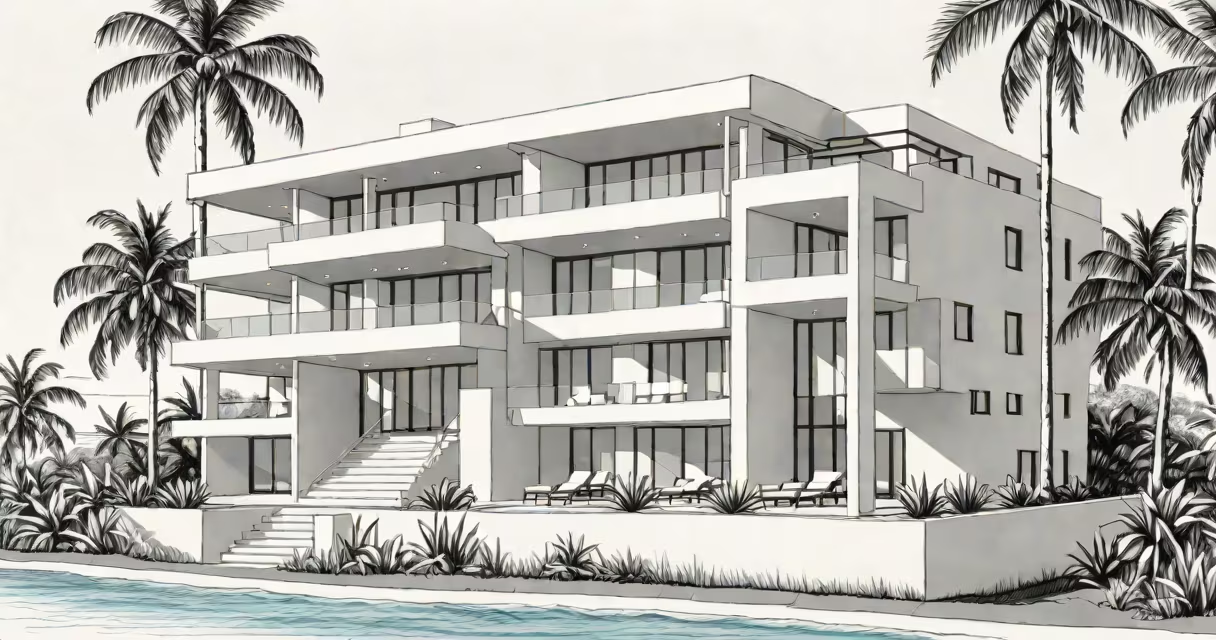
Real estate Puerto Rico refers to land, buildings, and property located on the island territory of Puerto Rico, which is part of the United States. U.S. citizens can buy, rent, and finance property there using U.S. dollars, with access to federal tax benefits under specific programs.
Puerto Rico's real estate market operates under U.S. federal law but with local regulations. Property ownership is governed by Spanish-derived civil law, not common law, which affects how titles are transferred and recorded. Buyers must conduct due diligence through the island's Registry of Property (Registro de la Propiedad) to verify title status and liens.
The island's real estate sector includes residential homes, commercial spaces, vacation rentals, and undeveloped land. Prices vary widely-urban properties in San Juan start around $200,000, while beachfront lots in Vieques may exceed $500,000. Rental yields average 5-7% annually, higher than many U.S. markets.
Property transactions in Puerto Rico follow a formal process involving a notary public, attorney, and government registry. All sales require a public deed (escritura pública) signed before a notary and registered with the Registry of Property. This ensures legal transfer and public record of ownership.
Financing is available through local banks and U.S.-based lenders. U.S. citizens can secure mortgages using U.S. credit scores and documentation. Interest rates are typically 3-5 percentage points higher than on the U.S. mainland due to perceived risk and lower liquidity in the local banking system.
Property taxes are assessed annually based on the assessed value set by the Department of Treasury. Rates range from 0.5% to 1.5% depending on municipality and property classification. Homeowners may qualify for exemptions if they occupy the property as their primary residence.
The island's real estate market divides into distinct segments based on location, use, and buyer profile:
| Type | Price Range (USD) | Best For | Key Features |
|---|---|---|---|
| Urban condos (San Juan) | $200,000-$600,000 | Rentals, retirees, remote workers | High walkability, proximity to beaches, tourist demand |
| Beachfront homes (Vieques, Culebra) | $400,000-$1.2M+ | Investors, second homes | Low population density, scenic views, limited infrastructure |
| Undeveloped land (Western Coast) | $20,000-$150,000/acre | Developers, long-term investors | High potential return, requires zoning approval |
| Commercial space (Ponce, Mayagüez) | $150,000-$800,000 | Business owners, leasing | Lower vacancy rates than U.S. cities, growing tourism |
Residential developments often include gated communities with security and amenities. Many newer projects are marketed toward U.S. expatriates seeking tax advantages under the Act 22 and Act 20 programs, which offer income tax exemptions for qualified residents.
U.S. citizens can purchase property in Puerto Rico without needing a visa or special permit. The island uses U.S. dollars as its official currency, so transactions, financing, and rental payments are in USD. This eliminates exchange rate risk and simplifies financial planning for mainland buyers.
Under Act 22 (2012), individuals who move to Puerto Rico and establish residency can claim a 0% tax rate on dividends, interest, and capital gains from foreign sources. Act 20 provides similar benefits for business income earned from qualifying activities. These laws have attracted over 12,000 new residents since 2012, according to the Puerto Rico Department of Economic Development.
A non-obvious factor: Puerto Rico's building codes are aligned with international standards but enforced inconsistently. A 2023 report by the National Institute of Standards and Technology (NIST) found that 38% of inspected structures in coastal zones failed basic wind-resistance tests. Buyers must verify construction quality and compliance with current codes before purchase.
Many assume Puerto Rico is a country or that it has its own currency. It is a U.S. territory, and U.S. dollars are legal tender. Currency in Puerto Rico is identical to U.S. cash and coins-there is no separate Puerto Rican currency.
Another misconception is that all properties are inexpensive. While median home prices are below the U.S. national average ($320,000), luxury homes in exclusive areas like Condado or Dorado exceed $2 million. Prices in high-demand neighborhoods can rival those in Miami or Los Angeles.
I once toured a 1950s-era apartment in Santurce with a client who assumed the building was structurally sound. After a structural engineer's inspection, we discovered foundation cracks and outdated electrical wiring. The repair cost exceeded $75,000. This reinforced the need to hire a licensed inspector before closing-a step often skipped by out-of-state buyers.
Foreign nationals can own property in Puerto Rico, but they must apply for a resident alien card (green card equivalent) if they plan to live there. Non-residents face higher capital gains taxes on sales, especially if profits exceed $100,000.
Due diligence includes verifying zoning classifications, checking for environmental restrictions (especially near wetlands or protected coastlines), and reviewing past tax records. The Puerto Rico Department of Housing maintains a searchable database of approved developments and violations.
When evaluating opportunities, consider both immediate returns and long-term factors like climate resilience, infrastructure development, and political stability. The island's economy remains fragile-its GDP per capita is $16,000, below the U.S. average-but targeted investments in tourism and renewable energy are creating new demand.
Real estate Puerto Rico combines Caribbean lifestyle with U.S. legal and financial frameworks. It offers tangible assets, potential tax savings, and access to a growing tourism economy. Success depends on understanding local laws, conducting thorough inspections, and aligning purchases with personal goals.