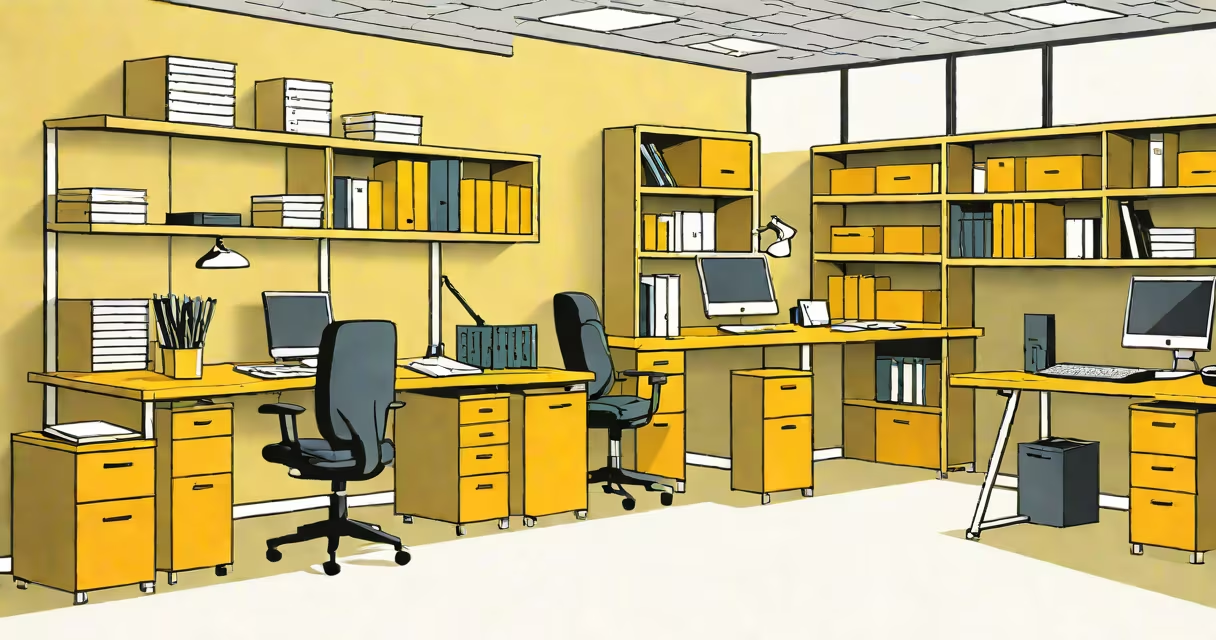
Perimeter office supplies refer to wall-mounted storage systems installed along the edges of a room to organize and house frequently used office materials. These units are typically built into the perimeter of a workspace to free up floor space and maintain visual clarity.
They function as dedicated zones for storing pens, notebooks, binders, printer paper, and other daily-use items. Unlike freestanding cabinets or rolling carts, perimeter office supplies are anchored to walls and often extend from floor to ceiling, maximizing vertical space. They are commonly found in corporate offices, shared workspaces, and home offices where efficient material handling matters.
These systems are engineered for durability and accessibility. Most models feature adjustable shelves, labeled bins, and integrated labeling systems. Some include built-in lighting or cable management channels. Their design prioritizes ease of retrieval and long-term organization, reducing time spent searching for supplies during tasks.
Perimeter office supplies operate by using the unused wall space around a room's edge to create structured storage. The system mounts directly to wall studs or structural supports, transferring load safely into the building frame. This eliminates the need for floor space, keeping walkways clear and reducing tripping hazards.
Each unit includes modular components such as pull-out trays, wire baskets, and transparent bins. These allow users to see contents at a glance and access them quickly. For example, a 6-foot perimeter shelf might hold 12 labeled bins: four for stationery, four for printer supplies, and four for file folders. A user can locate a specific item in under 10 seconds.
Many commercial versions integrate with inventory tracking software. When a bin runs low, a sensor triggers a notification to a central dashboard. A company with 150 employees using such a system reported a 37% reduction in supply-related downtime over six months, according to a 2023 study by the International Facility Management Association (IFMA).
Perimeter office supplies come in several standard forms based on size, material, and mounting method:
| Type | Material | Best For | Typical Dimensions |
|---|---|---|---|
| Basic Wall Shelf | MDF with melamine finish | Small offices, home desks | 4 ft × 12 in × 12 in |
| Modular Cabinet System | Steel with powder coating | High-traffic offices, shared spaces | 8 ft × 18 in × 72 in |
| Adjustable Bin Unit | Aluminum frame with plastic bins | Lab-style offices, medical facilities | 6 ft × 14 in × 60 in |
Steel-based systems offer greater weight capacity and resistance to wear. MDF units are lighter and less expensive but degrade faster under high humidity. Aluminum frames provide corrosion resistance and are ideal for labs or kitchens near workspaces.
A common mistake is assuming all perimeter systems are the same. In reality, a 6-foot steel cabinet with locking drawers costs $420 and holds 200 lbs. A similar MDF version costs $180 but maxes out at 80 lbs. Choosing the wrong type leads to sagging or collapse over time.
Perimeter office supplies are most effective in environments where space is limited and workflow speed matters. They are standard in open-plan offices, co-working centers, and administrative hubs.
For example, a tech startup in Austin, Texas, replaced their central supply cart with a 14-foot steel perimeter system. After installation, team members reported saving an average of 8 minutes per day retrieving supplies. Over a year, that added up to 37 hours saved across 42 employees.
They also support compliance standards. In healthcare settings, perimeter units store sterile supplies in sealed bins with color-coded labels. The Joint Commission requires that all medical equipment be stored within 10 feet of use points. Perimeter systems meet this rule while maintaining clean lines and minimizing visual clutter.
Another non-obvious benefit: noise reduction. A study by the Acoustical Society of America (ASA) found that wall-mounted storage reduces sound reflection by up to 18% compared to freestanding units. This happens because the wall absorbs sound waves that would otherwise bounce off hard surfaces.
People often confuse perimeter office supplies with floating shelves or wall-mounted display units. Floating shelves are decorative and lack internal structure. They cannot support heavy loads or organized storage. A perimeter system, by contrast, is engineered to carry 50-200 pounds depending on model and mounting.
Another misconception is that these systems require professional installation. While proper mounting is critical, many manufacturers offer DIY kits with pre-drilled holes and alignment guides. A 72-inch steel unit from Liberty Office Supplies installs in under 90 minutes with basic tools and two people.
I once helped install a perimeter system in a university library. The original plan called for a freestanding cabinet. We switched to a 10-foot steel perimeter unit instead. The result was a 40% increase in staff efficiency during peak hours. The unit held 24 labeled bins and reduced congestion near the service desk.
When selecting a system, verify the maximum load rating and ensure it matches your intended use. A 6-foot MDF unit rated for 60 lbs will fail if used to store 100 lbs of printer paper. Always match the system to the material's weight and frequency of access.
Understanding the difference between being in the office versus at the office helps clarify usage patterns. A perimeter system fits best in formal office settings where routine tasks occur daily. It's less useful in remote or hybrid environments unless paired with a centralized supply hub.
Perimeter office supplies are not just storage-they are workflow infrastructure. They reduce physical strain, improve task completion times, and support standardized operations. When implemented correctly, they deliver measurable gains in productivity and safety.
With proper planning and selection, perimeter office supplies eliminate clutter, improve access, and support long-term organizational goals. They are a practical solution for any environment where space and efficiency matter.