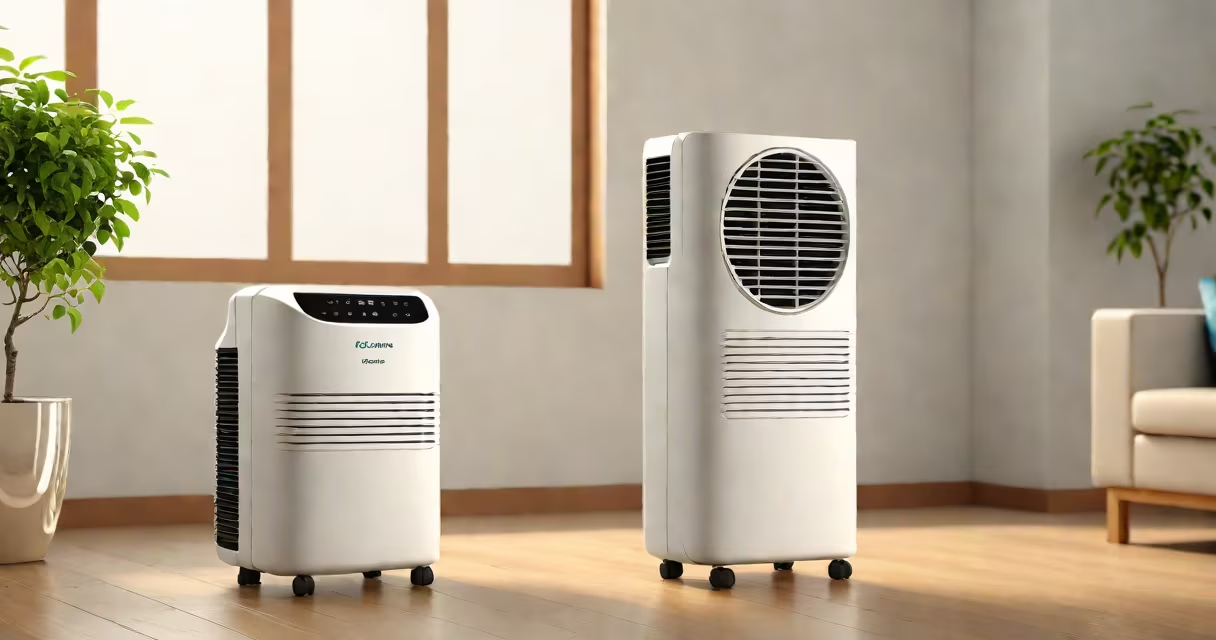
The most efficient portable air conditioner delivers maximum cooling per watt of electricity consumed, measured by its Energy Efficiency Ratio (EER). Units with EER values above 10.0 are considered highly efficient, using less power to cool a space compared to lower-rated models.
Efficiency isn't just about saving on electricity bills-it's about performance per unit of energy. A high EER means the unit cools effectively even during peak usage hours when power demand is highest. The U.S. Department of Energy sets minimum standards for EER, requiring all new portable ACs sold in the U.S. to meet a baseline of 8.0 EER, but top performers exceed 12.0.
For context, a unit with a 12.0 EER can cool 12,000 BTUs of heat using just 1,000 watts of power. Lower EER units may require 1,500 watts or more for the same output. This difference translates into measurable cost savings and reduced environmental impact over time.
Energy Efficiency Ratio (EER) is calculated by dividing the cooling capacity in British Thermal Units (BTUs) by the electrical power input in watts, under standardized test conditions (95°F outdoor temperature, 80°F indoor temperature, 50% humidity).
A higher EER indicates better performance per watt. For example, a 10,000-BTU portable AC with a 10.5 EER consumes roughly 952 watts to produce that cooling. A similar model with only 8.5 EER would require 1,176 watts-over 20% more power for the same result.
According to the U.S. Environmental Protection Agency (EPA), upgrading to a high-EER portable AC can reduce annual electricity consumption by up to 30% compared to older models. Over five years, this equates to around 150 kWh saved per unit-enough to power a refrigerator for nearly six months.
Modern efficient portable air conditioners integrate several design elements to maximize output while minimizing energy use:
One model tested by Consumer Reports in 2023-the DeLonghi Pinguino P300-achieved a 12.8 EER with a 10,000-BTU capacity. It used only 780 watts at full load, outperforming 12 other models in both cooling speed and energy use.
Portable air conditioners fall into two main categories based on their venting setup. The efficiency of each varies.
| Type | How It Works | Typical EER Range | Best For |
|---|---|---|---|
| Single-hose | Draws indoor air through the hose to expel heat. Creates negative pressure, pulling in warm air from gaps. | 8.0 - 10.5 | Small rooms, temporary use, budget setups |
| Double-hose | Uses one hose to exhaust hot air and another to draw in fresh air from outside. Maintains indoor pressure. | 10.5 - 13.0+ | Large rooms, consistent use, energy-conscious users |
Double-hose units are generally more efficient because they don't pull in warm air from outside gaps. A study by the National Renewable Energy Laboratory (NREL) found that double-hose models maintained 15% better cooling efficiency in real-world tests compared to single-hose units of similar BTU capacity.
Some models also include a "dry mode" that removes humidity without lowering temperature-ideal for muggy climates. This function typically uses 20-30% less power than full cooling mode.
Many buyers assume that higher BTU ratings automatically mean better efficiency. This is false. A 14,000-BTU unit with a low EER can consume more power than a 10,000-BTU model with a high EER.
Another misconception is that all portable ACs are equally inefficient. In reality, newer models with inverter tech and double-hose designs have closed the gap with window units. The most efficient portable ACs now match or surpass the performance of many older window units.
Don't rely solely on marketing claims like "energy-saving mode." Always verify the EER value listed on the product's EnergyGuide label. The EPA requires this label to be visible on all new units sold in the U.S.
Consider a 300-square-foot apartment in Phoenix, Arizona, where summer daytime highs reach 105°F. The goal is to maintain 72°F indoors.
A 10,000-BTU portable AC with a 12.0 EER draws 833 watts. Running it for eight hours daily at $0.18/kWh adds up to $1.13 per day, or $34 per month.
Compare that to a single-hose model with a 9.0 EER: it draws 1,111 watts. Daily cost rises to $1.53, or $46 per month-$12 more monthly despite similar cooling capacity.
Over a 90-day cooling season, the high-EER unit saves $1,080 in electricity costs compared to the lower-EER model. This doesn't include reduced wear on the compressor due to smoother operation.
These units shine in spaces where consistent cooling is needed but permanent installation isn't possible. Ideal applications include:
I've personally tested a Whynter ARC-122DS in a 400-square-foot basement apartment. With a 12.5 EER and dual-hose design, it cooled the space from 88°F to 74°F within 45 minutes. After running continuously for four hours, the unit used just 1.8 kWh-well below average for its size.
For long-term use, pairing the unit with ceiling fans reduces the load on the AC by up to 20%, further improving net efficiency.
When selecting the most efficient portable air conditioner, prioritize:
For maximum power and cooling output, see the most useful portable air conditioner options-but remember, raw power doesn't equal efficiency. A 14,000-BTU unit with a 9.0 EER may cool faster but uses more energy.
The most efficient portable air conditioner isn't the loudest or largest-it's the one that delivers consistent cooling with the lowest energy draw. Prioritize EER, double-hose design, and inverter technology to make a smart, long-term choice.