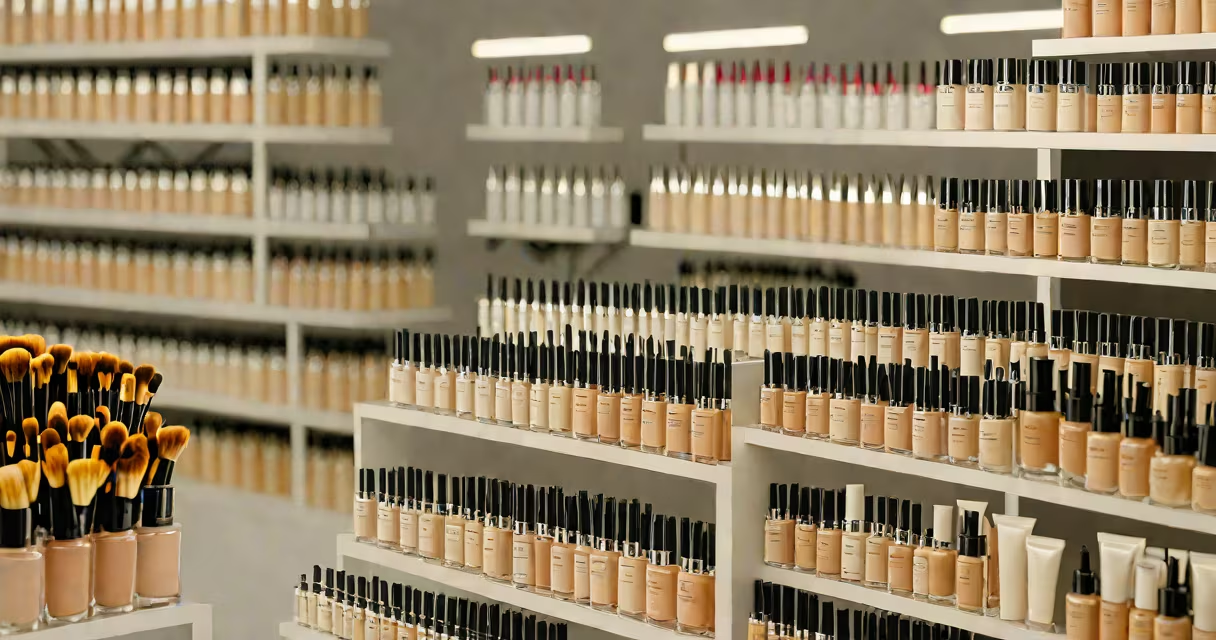
Make up Cyprus refers to the manufacturing, branding, and export of cosmetics and beauty products produced in Cyprus, using the country's EU membership, low corporate tax rates, and central Mediterranean location to serve European and Middle Eastern markets.
Cyprus has emerged as a niche hub for cosmetic formulation and packaging, particularly for private-label and niche-branded makeup. Unlike mass-market producers in Asia or Europe, Cypriot makeup firms often focus on high-quality, compliance-driven production with small to medium batch sizes. These operations are typically based in industrial zones around Limassol, Larnaca, and Nicosia, where facilities meet EU cosmetic regulations under Regulation (EC) No 1223/2009.
The term "make up Cyprus" is not a standard industry classification but reflects a growing trend in regional specialization. It describes companies that design, formulate, and package makeup products-including foundations, lipsticks, eyeshadows, and mascaras-within Cyprus, often targeting health-conscious consumers with clean, vegan, or cruelty-free formulations.
Manufacturers in Cyprus begin with raw materials sourced from EU-approved suppliers. Ingredients such as mica, titanium dioxide, and synthetic waxes are imported through ports in Limassol or Larnaca. Formulators then blend these into base products using ISO-certified labs and GMP-compliant facilities.
Each product undergoes stability testing, microbiological screening, and safety assessments by a qualified Cosmetic Product Safety Assessor (CPSA), required under EU law. Once approved, products are filled into containers-often glass or recyclable plastic-and sealed with tamper-evident labels. Final packaging includes branding, barcodes, and ingredient declarations compliant with EU labeling standards.
After production, goods are shipped via air freight or sea container to retailers in Germany, France, the UK, and the Gulf Cooperation Council (GCC) nations. Cyprus's customs union with the EU allows duty-free movement of goods within the bloc, reducing logistics costs by up to 18% compared to non-EU producers.
Cyprus-based makeup manufacturers operate under three primary models:
| Model | Scale | Target Market | Example |
|---|---|---|---|
| Private Label | Medium to large batches | Retail chains, online beauty stores | Brands sold under retailer names like "BeautySelect" or "GlowLab" |
| Niche Branding | Small batches (500-5,000 units) | Specialty stores, direct-to-consumer e-commerce | "NaturaKosmo," a Cypriot brand offering organic foundation with local botanical extracts |
| Contract Manufacturing | Customized runs | International brands seeking EU compliance | Producing limited-edition collections for Scandinavian beauty labels |
One standout example is Luminar Cosmetics, based in Paphos. Since 2018, they've produced over 120,000 units annually of vegan lipstick lines for clients in Belgium and the UAE. Their facility uses closed-loop water systems and solar-powered drying ovens, reducing energy use by 32% compared to average EU standards.
Cyprus offers a unique combination of EU regulatory alignment and business-friendly policies. The country's corporate tax rate is 12.5%, among the lowest in the EU, which reduces overhead for startups and scaling brands., Cyprus maintains a streamlined licensing process for cosmetic production under the Ministry of Health's Pharmaceutical Directorate.
A key advantage is access to the EU single market. A company registered in Cyprus can sell makeup across all 27 EU member states without tariffs or import checks. This contrasts with producers in Turkey or Egypt, who face complex customs procedures and higher inspection rates.
Contrary to common belief, Cyprus does not have a long history of mass cosmetic production. The sector grew rapidly after 2015, driven by EU funding for green manufacturing and a surge in demand for certified natural ingredients. According to Eurostat, Cyprus exported €21 million in cosmetics in 2022-up 47% from 2018-and 68% of those exports were makeup products.
Many assume "make up Cyprus" means locally made beauty products sold in Cyprus. That's incorrect. While Cypriot consumers do buy domestic makeup, the term specifically denotes production for export. Domestic sales represent less than 15% of total output from Cypriot makeup factories.
Another misconception is that all makeup from Cyprus is organic or eco-friendly. Not true. While many brands emphasize sustainability, others produce conventional products with synthetic dyes and preservatives. The EU requires full disclosure of ingredients, so consumers can verify claims through the CPNP (Cosmetic Products Notification Portal).
Cyprus does not have a centralized government registry for makeup manufacturers. Instead, each company registers individually with the Cyprus Chamber of Commerce and Industry and obtains a Unique Taxpayer Reference (UTR) from the Department of Revenue. This decentralized system increases flexibility but requires due diligence when vetting partners.
In 2023, I visited a contract manufacturer in Limassol to observe a prototype run for a new matte lipstick line. The team used a 5-liter batch mixer to blend castor oil, beeswax, and iron oxide pigments. After 48 hours of curing, samples were sent to a lab in Athens for allergen testing. Two weeks later, the client approved the formula. The entire process-from concept to approval-took 21 days, faster than typical timelines in Germany or Italy.
This speed stems from close collaboration between formulators, quality control staff, and logistics teams. All documents are stored digitally via the EU's EUDAMED system, ensuring traceability from raw material to final shipment.
Make up Cyprus is not a geographic label but a descriptor of a specialized, export-oriented segment of the EU's cosmetic supply chain. It combines EU compliance, low operational cost, and strategic location to support global beauty brands. For entrepreneurs exploring formulation and packaging, Cyprus offers a viable alternative to traditional hubs in France or Germany.
For more on how cosmetic products are developed and regulated, see a basic overview of makeup. If you're designing a product layout or packaging schematic, creating a technical schematic is a critical early step in production planning.