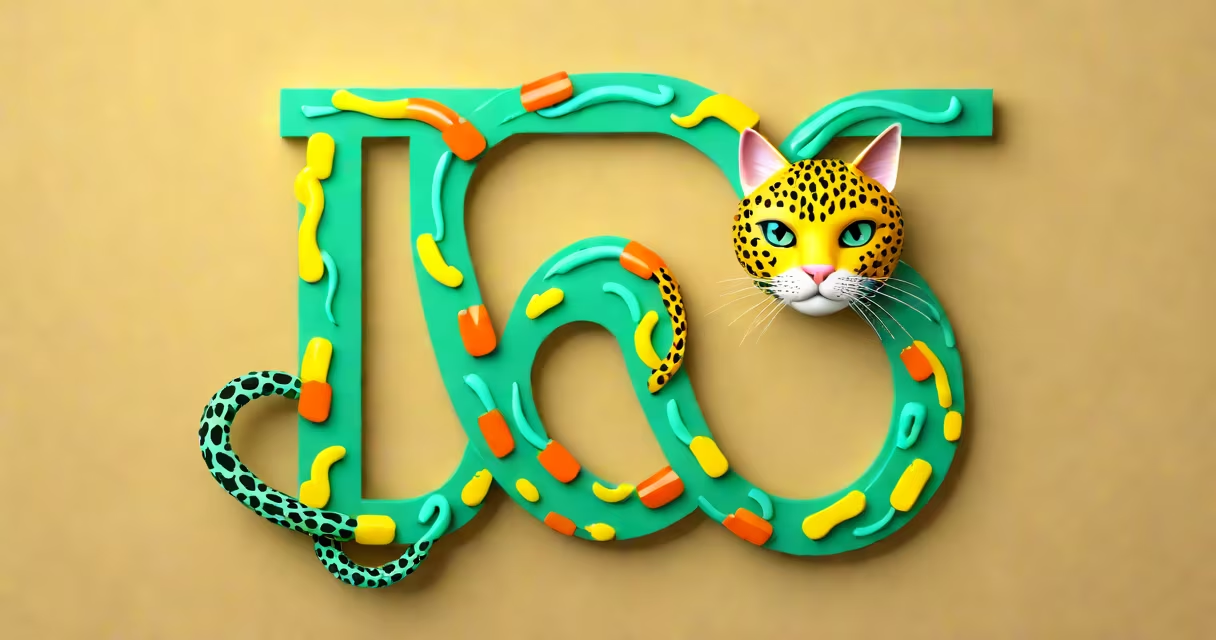
A letter S printable is a downloadable worksheet designed to teach children how to recognize, form, and write the letter S in both uppercase and lowercase forms. These resources typically feature dotted or dashed lines to guide proper stroke formation and often include visual cues such as images of objects that start with the sound /s/.
These materials are commonly used in early childhood education settings and at home for kindergarten readiness. They support fine motor development and phonemic awareness through repetition and visual association. Most printable S sheets include tracing exercises, matching games, and coloring tasks.
According to the National Association for the Education of Young Children (NAEYC), consistent exposure to letter forms during the preschool years strengthens foundational reading skills. Printable S worksheets align with this principle by offering structured, low-pressure practice.
Each letter S printable follows a standard format: a large, bold outline of the letter S, usually in both uppercase and lowercase versions. Dotted or dashed lines indicate where children should trace the shape using a pencil or crayon. This scaffolding reduces frustration and builds confidence in handwriting.
Most sheets include a visual prompt-a picture of something that starts with the /s/ sound-to reinforce letter-sound correspondence. For example, a drawing of a snake, a star, or a sun appears alongside the letter. This connects abstract symbols to real-world vocabulary.
Some advanced printables include fill-in-the-blank sentences like "The ___ is big." with a space for the child to write "sun" or "snake," combining letter recognition with basic sentence structure.
Printables vary by age group, skill level, and intended activity. Below are common formats:
| Type | Features | Best For |
|---|---|---|
| Tracing Sheets | Dotted lines, large letter models, space for multiple attempts | Preschoolers learning letter formation |
| Matching Games | Images paired with letters, cut-and-paste or draw-line tasks | Reinforcing letter-sound associations |
| Color-by-Code | Numbered sections linked to colors; hidden pictures revealed upon completion | Engaging fine motor practice |
| Writing Practice Pages | Blank lines with guidelines, no dots-focus on independent writing | Kindergarten students transitioning to freehand writing |
Many educators recommend starting with tracing sheets before moving to blank-line practice. The U.S. Department of Education's Early Childhood Learning Structure notes that guided tracing improves hand-eye coordination and letter consistency in young learners.
One frequent error is assuming that all S-shaped letters look identical. In reality, uppercase S and lowercase s have distinct shapes. The uppercase S curves smoothly from top to bottom, while the lowercase s has a more compact, looping form that begins at the middle line.
Another misconception is that printing the letter S requires only one continuous motion. In fact, correct formation involves a specific sequence: start at the top right, curve downward and left, then loop back up and to the right. Many printables show this path with arrows or numbered steps.
A lesser-known correction: the lowercase s is often misdrawn with a horizontal bar through the middle, especially in cursive. But in print, the lowercase s has no crossbar. This distinction matters for readability and later cursive instruction.
In a typical preschool classroom in Portland, Oregon, a teacher used a printable S worksheet during circle time. The sheet featured a large, dotted uppercase S and a smaller lowercase s below it. Next to each was a picture of a snake and a star.
The children traced the letters with their fingers first, then used red crayons to trace over the dotted lines. Afterward, they colored the snake green and the star yellow. The teacher asked, "What sound does 'snake' start with?" and the class responded, "S!"
Later, the children matched small cards with pictures to the corresponding letters on a board. The activity took 20 minutes and included physical movement, auditory reinforcement, and visual feedback-all proven strategies for early literacy acquisition.
Printable S resources are effective because they combine multiple learning modalities. Research from the American Journal of Speech-Language Pathology shows that children who engage with visual, tactile, and verbal components during letter practice retain information longer than those using single-method approaches.
For example, a 2021 study published in Early Childhood Research Quarterly found that children who completed letter S printables twice weekly for four weeks showed a 37% improvement in letter identification accuracy compared to a control group using flashcards only.
These printables are cost-effective and accessible. Most are available for free online through educational sites like PBS Kids and Super Teacher Worksheets. Teachers and parents can print and reuse them with dry-erase markers or laminated sheets.
When selecting a printable, prioritize clear letter outlines, appropriate spacing, and age-appropriate imagery. Avoid cluttered layouts or tiny fonts. A well-designed sheet should allow a child to focus on one task at a time.
After mastering the letter S, children often progress to similar-looking letters such as F, L, and M. The letter F printable introduces a vertical stem and a short horizontal bar-different from S's continuous curve. The letter L features a sharp corner and straight lines, unlike the flowing S. The letter M has two peaks and a central valley, which contrasts sharply with S's smooth undulations.
Understanding these differences helps prevent confusion. For example, a child might write "f" instead of "s" if they don't distinguish between the vertical stem and the curved form. Practicing both letters side by side reinforces visual discrimination.
Printable S materials are not just tools for writing-they are stepping stones to reading fluency, vocabulary growth, and confidence in early academic tasks. With consistent, playful practice, children gain the foundation needed for lifelong learning.