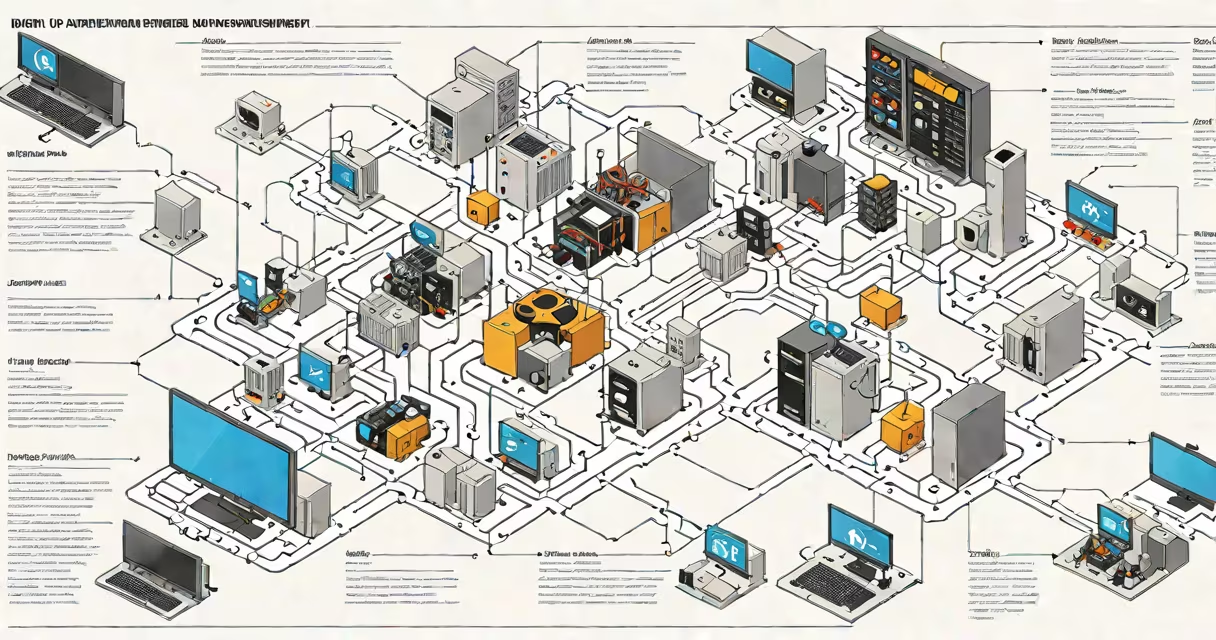
IoT device management tools are centralized platforms that monitor, configure, secure, and update Internet of Things devices at scale, ensuring consistent performance and compliance across distributed hardware.
These tools act as a command center for organizations deploying hundreds or thousands of sensors, cameras, industrial controllers, and smart appliances. They provide visibility into device health, enforce security policies, deliver firmware updates remotely, and collect telemetry data for analysis. Without them, managing diverse hardware across locations becomes error-prone and slow.
For example, a manufacturing plant using 500 temperature sensors across five production lines relies on an IoT device management tool to detect failed units within minutes, push updated calibration settings automatically, and alert engineers when readings exceed thresholds. Manual checks would take days and miss early warning signs.
At their core, these tools use agent-based or agentless communication protocols to interact with devices. Agents are lightweight software components installed on each device, enabling bidirectional communication. Agentless models rely on standard network protocols like MQTT, CoAP, or HTTP to poll device status or send commands.
When a new device joins the network, the management platform authenticates it using credentials such as digital certificates or API keys. Once onboarded, the system applies predefined policies-such as firewall rules, encryption standards, or access controls-based on device type, location, or role.
Updates are pushed through secure channels. For instance, a fleet of smart meters in a utility company receives a patch for a known vulnerability via encrypted over-the-air (OTA) delivery. The tool tracks rollout progress and flags failures for immediate attention.
Effective IoT device management systems include several integrated functions:
There are two primary deployment models: cloud-native and on-premises. Cloud platforms offer faster setup and global accessibility, while on-prem solutions give tighter control over data residency and compliance-especially critical in healthcare or defense sectors.
| Type | Best For | Example Use Case |
|---|---|---|
| Cloud-Based | Startups, remote teams, multi-site operations | A retail chain uses a cloud tool to manage 2,000 in-store kiosks across 100 locations, updating menus and checking display status daily. |
| On-Premises | Regulated industries, high-security environments | A hospital deploys an on-prem solution to manage 150 patient monitors, keeping all data within its internal network to meet HIPAA requirements. |
| Hybrid | Enterprises balancing flexibility and control | An energy provider runs core asset monitoring locally but uses cloud analytics for predictive maintenance insights. |
Many assume that any cloud service with device tracking qualifies as a full IoT management tool. This is incorrect. Basic monitoring tools may show device status but lack policy enforcement, automated updates, or lifecycle management features.
Another frequent mistake is treating all IoT devices the same. A smart thermostat requires different security profiles than a medical infusion pump. Effective tools allow granular segmentation-grouping devices by function, location, or risk level-and applying tailored policies.
A non-obvious issue is certificate rotation. Devices relying on TLS certificates can fail silently if certificates expire. Top-tier tools automate renewal processes and integrate with PKI systems to prevent outages. According to Gartner, 60% of IoT breaches stem from expired or misconfigured certificates-highlighting why automation matters.
In logistics, companies use IoT device management tools to track refrigerated trucks. Sensors report temperature, humidity, and GPS position. If a unit drops below 2°C, the system triggers an alert and logs the event. This prevents spoilage and supports compliance with food safety regulations.
During a pilot project at a European city's traffic department, 120 smart streetlights were managed using a single platform. The system detected 17 lights with failing LEDs and scheduled maintenance before failures occurred. It also adjusted brightness based on real-time foot traffic data, reducing energy use by 34% over six months.
Without proper management, IoT devices become entry points for attackers. The 2023 Verizon Data Breach Investigations Report found that 34% of breaches involved compromised endpoints, many due to unpatched or poorly configured devices.
Leading tools integrate with identity providers (like Azure AD or Okta) and support role-based access control (RBAC). They also log all actions-such as who changed a device setting and when-for audit trails. These capabilities are essential for meeting GDPR, HIPAA, and NIST guidelines.
For example, a financial institution using IoT devices in ATMs must ensure that only authorized personnel can modify transaction logging settings. An IoT management tool enforces this by requiring multi-factor authentication and recording every change.
Look beyond basic features. Evaluate support for device lifecycle stages: provisioning, monitoring, patching, decommissioning. Check integration options-does it work with your existing cloud platform (AWS IoT Core, Azure IoT Hub), or SIEM system?
Consider scalability. A tool that handles 50 devices well may struggle with 50,000. Ask vendors for benchmarks on concurrent connections and update throughput. Some platforms offer tiered pricing based on device count, which can impact long-term costs.
Finally, test the tool's alerting system. A good platform doesn't just notify you of a problem-it suggests root causes and recommended fixes. One manufacturer reported cutting average response time from 4 hours to 17 minutes after switching to a tool with AI-driven anomaly detection.
IoT device management tools are not optional for large-scale deployments. They turn scattered, vulnerable devices into a coordinated, secure, and efficient infrastructure. Organizations that skip them face higher breach risks, operational delays, and rising maintenance costs.