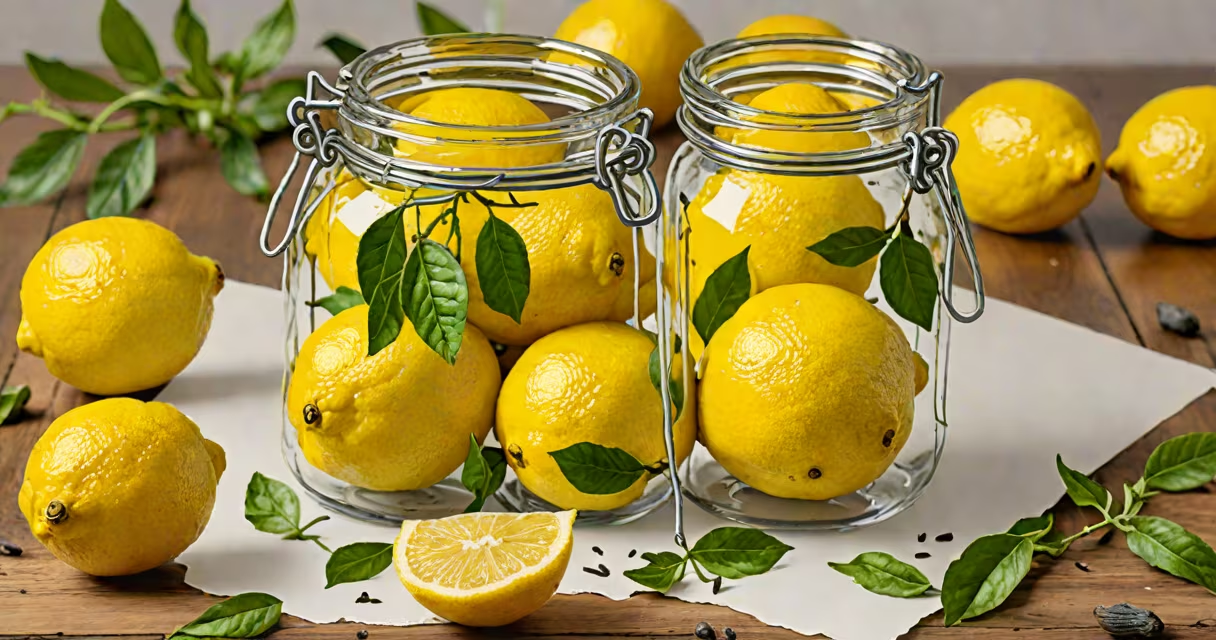
Preserving lemons involves curing whole lemons in salt and their own juices to create a tangy, aromatic ingredient used in Middle Eastern and North African cooking. This process prevents spoilage and develops complex flavors over time.
The core method uses salt to draw out moisture and inhibit microbial growth. Whole lemons are cut into quarters, layered with coarse salt, and left to ferment in their own liquid for four weeks or longer. The result is soft, pungent rinds with a balance of sour, salty, and umami notes.
This technique originated in Morocco and Tunisia, where preserved lemons are essential in tagines, salads, and marinades. They're not a substitute for fresh lemons but a distinct ingredient with a shelf life measured in months, not days.
Salting disrupts cell membranes in the lemon flesh, forcing water out through osmosis. As the lemon releases juice, it forms a brine that submerges the fruit. The high salt concentration creates an environment hostile to spoilage bacteria and mold.
Over time, lactic acid bacteria naturally present on the lemon skin begin fermentation. These microbes convert sugars into lactic acid, lowering pH and further preserving the fruit. The process is anaerobic-air exposure causes mold, so sealing the jar is critical.
After four weeks, the lemons develop a gelatinous texture and a deep yellow-orange hue. The rind becomes tender enough to eat, while the inner pulp remains firm. The flavor evolves from sharp citrus to a savory, fermented complexity.
Use unwaxed, organic lemons-wax coatings interfere with salt absorption. Choose firm, unblemished fruits. Wash them under cool water but do not scrub, as this removes natural microflora needed for fermentation.
Score each lemon vertically through the peel and flesh, making four cuts from stem to base. This allows salt to penetrate. For every 1 kg (about 2.2 lbs) of lemons, use 100 grams (3.5 oz) of coarse sea salt or kosher salt.
Layer lemons in a clean glass jar, pressing down between layers. After filling, pour in enough lemon juice to fully submerge the fruit. Leave 2.5 cm (1 inch) of headspace. Seal tightly and store at room temperature (18-22°C / 65-72°F).
While the basic method is consistent, regional differences exist. Moroccan recipes often include crushed garlic and dried herbs like thyme or rosemary. Tunisian versions may use less salt and shorter curing times.
| Region | Salt ratio | Cure time | Common additions |
|---|---|---|---|
| Morocco | 10% by weight | 4-6 weeks | Garlic, thyme, cumin |
| Tunisia | 8% by weight | 3-4 weeks | Bay leaf, black pepper |
| France (Provence) | 12% by weight | 6-8 weeks | Herbes de Provence, fennel seeds |
A common mistake is using iodized salt-it contains additives that can inhibit fermentation. Stick to non-iodized salt such as sea salt or kosher salt. Avoid aluminum or plastic containers; glass is ideal.
Preserved lemons appear in dishes like chicken tagine with apricots, couscous with harissa, and grilled fish with parsley and olive oil. Their acidity balances rich fats and adds depth without overwhelming.
They're also used in dressings, sauces, and as a garnish. A single preserved lemon can flavor a large pot of soup or improve a vinaigrette. The rind is typically used; the pulp is edible but often discarded due to bitterness.
One non-obvious fact: the brine is edible and flavorful. It contains fermented acids and dissolved salts. Use it in salad dressings or to deglaze pans. A tablespoon of preserved lemon brine adds complexity to a sauce in place of vinegar.
Many assume preserved lemons are pickled like cucumbers. They are not. Pickling uses vinegar and heat. Preserved lemons rely on salt and time, with no added acid. The fermentation process is slower and more subtle.
Another error is assuming they last indefinitely. While they can remain safe for up to a year, flavor degrades after six months. The rind loses vibrancy, and the brine may turn cloudy. Discard if mold appears on the surface-even a small patch indicates contamination.
I've made preserved lemons in my kitchen in Brooklyn during winter. After 42 days, the lemons had turned a warm amber color. The smell was intense-sour, floral, slightly animalic. I used them in a lamb stew with chickpeas. The dish developed a depth that fresh lemon couldn't provide. The flavor lingered in the broth for days.
Once opened, refrigerate preserved lemons. They'll stay safe for up to 6 months. Always use a clean utensil to remove pieces-cross-contamination risks mold growth.
For best results, use the rind only. Remove the inner pulp and discard it. Chop the rind finely or slice it into thin strips. Use sparingly-the flavor is potent.
When substituting, one preserved lemon (rind only) equals about 1 tsp of lemon zest plus ½ tsp of salt in a recipe. Adjust accordingly.
With proper technique, preserved lemons offer long-term food preservation and bold flavor. They are not a quick fix but a deliberate craft rooted in tradition and science.