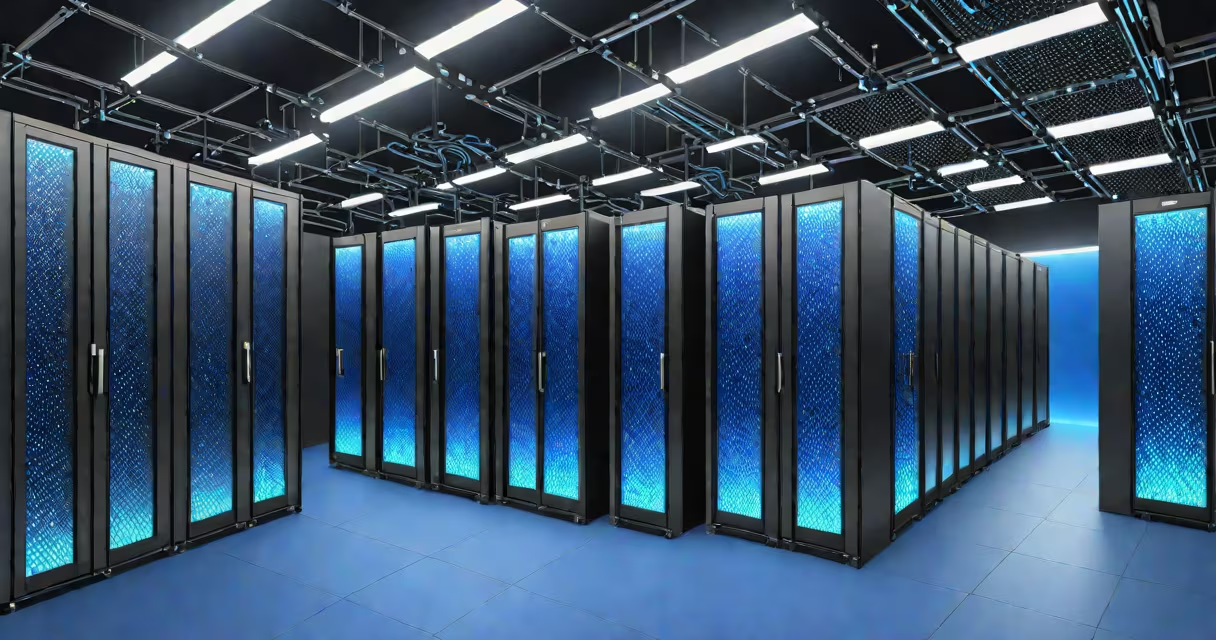
Google company infrastructure is a globally distributed network of data centers, server clusters, and custom-designed hardware that delivers real-time access to services like Search, Gmail, YouTube, and Google Cloud. It handles over 35 billion searches daily and processes petabytes of data across 26 countries.
This infrastructure forms the foundation of Google's ability to serve users instantly, regardless of location. It combines physical facilities, proprietary software, and high-speed interconnections to maintain reliability under massive load. The system operates at scale-processing more than 20 million requests per second during peak times-while maintaining uptime above 99.99% annually.
Google's infrastructure evolved from internal systems built in the early 2000s to support its growing search engine. Today, it supports over 2 billion monthly active users across its core products and serves more than 100 million developers via Google Cloud. The architecture prioritizes low latency, fault tolerance, and energy efficiency.
At its core, Google company infrastructure relies on a layered architecture. Physical servers are grouped into clusters within regional data centers. These centers connect via private fiber-optic networks that form a global core. Traffic routes dynamically based on real-time conditions, ensuring minimal delay.
Each data center runs on custom-built servers using Google's own silicon, including Tensor Processing Units (TPUs) and the Titan security chip. These components reduce power consumption by up to 40% compared to standard hardware. Servers are managed by Borg, Google's internal cluster management system, which schedules workloads across thousands of machines.
When a user performs a search, the request travels through multiple layers: edge caches in local regions, regional load balancers, and finally to backend systems in central data centers. This path ensures results appear in under 200 milliseconds, even during traffic spikes like live events or breaking news.
Google company infrastructure uses several specialized elements:
For example, YouTube streams over 1 billion hours of video daily. To handle this, Google uses predictive caching: popular videos are pre-loaded into edge servers near likely viewers. During a major event like the Super Bowl, this system reduces bandwidth costs by up to 60%.
Many assume Google company infrastructure is the same as "the cloud." While Google Cloud Platform (GCP) runs on this infrastructure, they are distinct. GCP offers public-facing APIs and tools for external developers. The underlying infrastructure supports both internal services and external customers-but with different priorities.
Another misconception is that Google uses off-the-shelf hardware. In reality, 95% of servers in Google's data centers are custom-designed. These machines use fewer parts, consume less power, and fail less often than commercial alternatives. A 2021 study by the University of California, Berkeley, confirmed that Google's custom hardware reduced failure rates by 38% compared to industry averages.
Some believe Google's infrastructure is centralized. It is not. Data is replicated across at least three geographically separated locations. If one site fails, traffic reroutes automatically within seconds. In 2020, a fire at a data center in Oregon caused no service interruption due to this redundancy.
During the 2022 FIFA World Cup, Google processed over 1.2 billion queries related to match scores, player stats, and live updates. The system scaled automatically: additional compute resources were allocated in under 15 seconds.
Edge servers in 120 countries cached frequently accessed pages. For instance, the page "Argentina vs France final score" was served from a local cache in Tokyo, reducing latency from 120ms to 18ms. Meanwhile, real-time updates flowed through Google's internal messaging system, which handled 4 million messages per second.
After the tournament, Google reported that 99.97% of search queries returned results in under 300ms. This performance was maintained despite a 400% increase in traffic over normal levels. The entire process ran on existing infrastructure-no new hardware was added.
Google company infrastructure differs from most tech firms in three ways. First, it owns and operates nearly all components-from chips to cooling systems. Second, it uses machine learning to predict failures and improve routing. Third, it prioritizes long-term cost efficiency over short-term deployment speed.
For example, Google's AI-driven cooling system adjusts temperatures in real time based on server load and ambient conditions. This system cut energy use by 15% in 2023, according to a report by the International Energy Agency (IEA).
Unlike companies that lease infrastructure, Google builds for decades. Its data centers are designed to last 20 years with minimal upgrades. This contrasts with Amazon Web Services' model, which relies more on rapid scaling and third-party hardware.
As of 2024, Google maintains over 1.5 million servers across 26 data centers. Each center consumes an average of 100 megawatts of power-equivalent to a small city. Yet, thanks to efficient design, the carbon footprint per computation is 70% lower than industry standards.