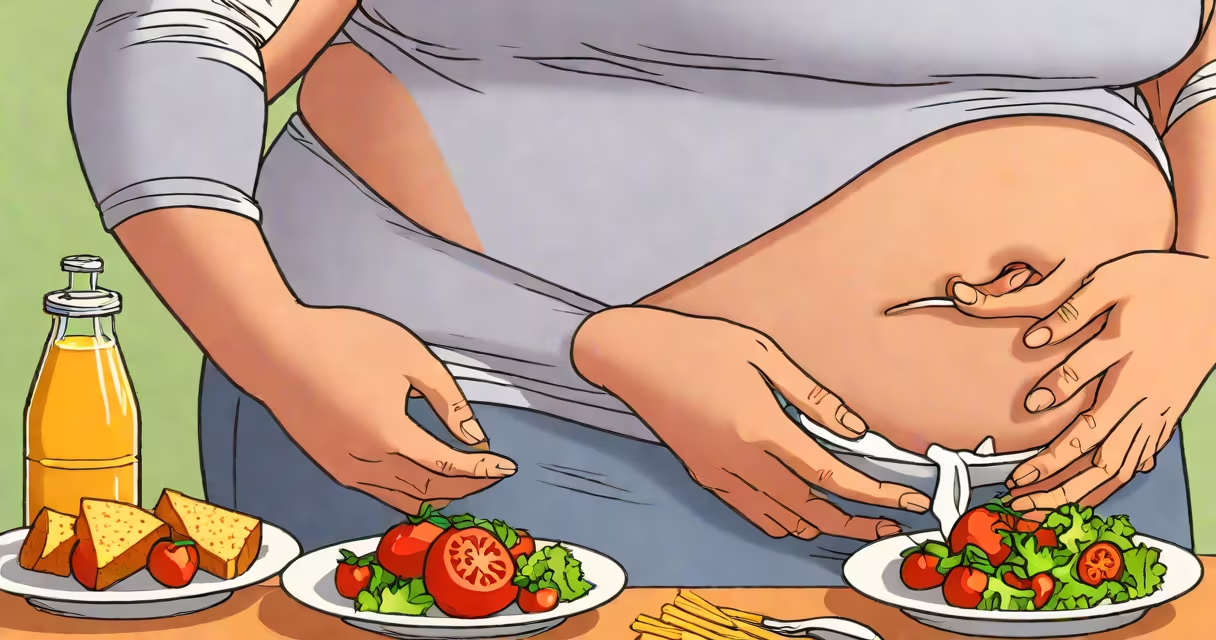
Extreme bloating after eating anything refers to significant abdominal distension, tightness, or pressure that occurs shortly after consuming food, regardless of what is eaten. This symptom suggests a systemic issue with digestion, often tied to food intolerances, gut microbiome imbalance, or underlying gastrointestinal conditions.
Bloating happens when gas accumulates in the digestive tract or fluid builds up in the intestines. With extreme bloating after eating anything, the reaction is consistent across diverse foods-meat, vegetables, grains, fruits-ruling out specific food triggers. This pattern indicates a functional or structural problem in the gut rather than an allergy or sensitivity to individual ingredients.
The condition affects approximately 16% of adults in the U.S., according to the American Gastroenterological Association. It's not normal to feel visibly swollen or uncomfortable after every meal. Persistent bloating may signal irritable bowel syndrome (IBS), small intestinal bacterial overgrowth (SIBO), or delayed gastric emptying. Identifying the root cause requires medical evaluation, not just dietary changes.
When you eat, the stomach contracts to mix food with acid and enzymes. The small intestine then breaks down nutrients and absorbs them. Any disruption in this sequence can lead to bloating. In extreme cases, the gut lining becomes hyper-reactive, leading to excessive gas production or poor motility.
For example, people with SIBO have too many bacteria in the small intestine. These microbes ferment undigested carbohydrates, producing hydrogen and methane gases. Even a small portion of rice or a banana can trigger bloating because the bacteria rapidly consume the carbs. This explains why symptoms occur after eating anything-there's no safe food.
A 2022 study published in *Gut* found that patients with chronic bloating had higher levels of intestinal permeability, allowing microbial byproducts to leak into the bloodstream and trigger inflammation. This creates a feedback loop: bloating increases gut sensitivity, which worsens the perception of discomfort-even with normal gas volumes.
Extreme bloating after eating anything stems from a mix of physiological, microbial, and behavioral contributors. The primary drivers include:
One non-obvious fact: bloating isn't always due to gas. A 2021 clinical review in *The Journal of Clinical Gastroenterology* noted that up to 30% of bloating cases involve fluid retention in the intestinal wall, not gas. This fluid buildup can result from immune reactions or inflammatory responses triggered by food particles crossing a compromised gut barrier.
Many people assume bloating is just "gas" or "eating too much." But when bloating follows every meal-regardless of content-it's a red flag. It's not lifestyle-related in the way mild bloating is. This pattern often leads to misdiagnosis as stress or overeating.
Common mistakes include eliminating only dairy or gluten, which may help slightly but doesn't resolve the core issue. For example, a patient with SIBO who avoids gluten still experiences bloating after eating chicken or eggs. Eliminating the wrong foods wastes time and delays proper care.
Diagnosing extreme bloating after eating anything requires testing. Breath tests for hydrogen and methane detect SIBO. Stool tests assess microbial balance. Blood tests check for markers like calprotectin, indicating gut inflammation. Without these, treatment remains guesswork.
Extreme bloating after eating anything is often mistaken for:
| Condition | Distinguishing Feature | Why It's Misidentified |
|---|---|---|
| Normal post-meal bloating | Occurs occasionally, linked to large meals or specific foods | People assume all bloating is the same, ignoring frequency and consistency |
| Irritable bowel syndrome (IBS) | Chronic bloating with alternating diarrhea/constipation | IBS is diagnosed in 10-15% of bloating cases, but not all bloating is IBS |
| Food allergies | Immediate symptoms like hives, swelling, or anaphylaxis | Allergies cause rapid immune response; bloating after eating anything is delayed and non-allergic |
| Constipation | Infrequent bowel movements, hard stools | People confuse bloating with lack of movement, but bloating can occur without constipation |
A key distinction: allergic reactions involve IgE antibodies and happen within minutes. Bloating after eating anything typically appears 30 minutes to 2 hours later and lacks skin or respiratory symptoms. If you don't have rashes, itching, or breathing issues, it's not an allergy.
In 2023, a 34-year-old woman reported bloating after every meal-breakfast, lunch, dinner. She eliminated dairy, gluten, and beans. Her symptoms persisted. She saw three doctors. One prescribed antacids. Another suggested probiotics. None helped.
She underwent a lactulose breath test. Results showed high methane levels-indicating SIBO. She was treated with rifaximin (a non-absorbable antibiotic) and a low-FODMAP diet. After four weeks, her bloating reduced by 80%. She could eat vegetables and whole grains again without discomfort.
This case shows that treating bloating after eating anything requires targeted diagnostics. Assuming it's "just gas" or "stress" delays effective treatment.
During a gastroenterology rotation, I observed a patient whose belly swelled visibly within 20 minutes of eating. He'd lost 15 pounds unintentionally. His labs were normal. A CT scan showed no obstruction. Breath testing revealed SIBO. After treatment, his weight stabilized and bloating resolved. The lesson: visible distension after every meal isn't trivial-it's a sign of measurable pathology.
If bloating after eating anything is constant, consult a gastroenterologist. Do not rely on online quizzes or elimination diets alone. Start with a breath test for SIBO and stool analysis for microbial balance. Avoid self-diagnosing as "FODMAP sensitive" without confirmation.
Extreme bloating after eating anything is not a minor inconvenience. It reflects a disrupted digestive system. Addressing it early prevents long-term complications like nutrient malabsorption or worsening gut dysbiosis.